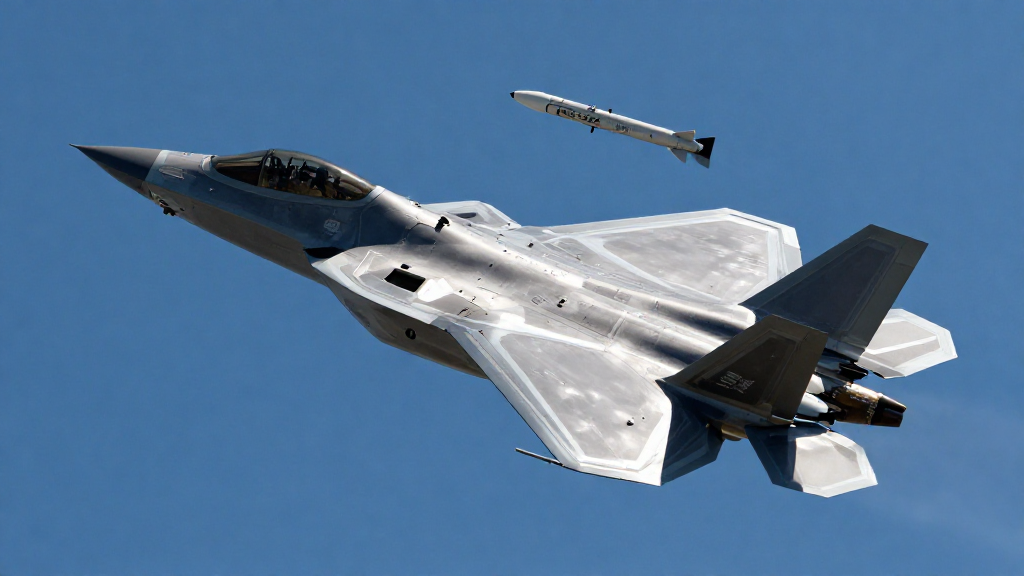

D-Propulse is exploring an ambitious future application for its Rotating Detonation Engine technology: a compact air-launched cruise missile capable of speeds above Mach 3 and designed for integration with lighter fighters such as India’s Tejas Mk1A. According to founder and CEO Saurav Jha, the envisioned weapon could carry a 200 kg warhead while offering a range comparable to BrahMos-A, potentially providing a capability currently associated mainly with the heavier Su-30MKI.
Overcoming the Platform Limitation
The proposed weapon is aimed at addressing a longstanding challenge associated with air-launched supersonic missiles. BrahMos-A entered Indian Air Force service in 2019 and delivers Mach 3-class performance with a conventional warhead in the 200–300 kg range. However, its substantial weight of approximately 2.5–2.9 tonnes limits its compatibility with smaller fighter aircraft.
The Su-30MKI has become the principal platform for BrahMos-A integration because it provides the required payload capacity and structural strength. To expand compatibility, DRDO has been developing BrahMos-NG, a significantly lighter variant of approximately 1.3 tonnes intended for aircraft including the Tejas, Rafale, and MiG-29.
D-Propulse’s concept follows a different path toward the same objective. Instead of achieving weight reduction primarily through missile miniaturization, it seeks to use a more efficient propulsion system to maintain high performance within a smaller airframe.
RDE as the Enabling Technology
At the core of the concept is Rotating Detonation Engine technology and its pressure-gain combustion principle. An RDE uses a continuous detonation process that can increase pressure during combustion, potentially improving propulsion efficiency compared with conventional combustion approaches.
D-Propulse believes that a compact 5 kN RDE could provide sufficient efficiency to support a missile with a BrahMos-A-like range while reducing the overall size of the weapon. This could potentially allow a lighter fighter such as the single-engine Tejas Mk1A to carry the missile.
The company has already made progress in developing the underlying propulsion technology. Its 5 kN air-breathing RDE combustor, paired with an aerospike nozzle, has reportedly undergone hot-fire testing and achieved Technology Readiness Level 5 at a DRDO facility in Hyderabad. The design is intended to maintain efficient operation across a broad altitude range.
Supporting a Multi-Tier Strike Concept
The proposed missile fits into D-Propulse’s wider concept of a “mixed-tier” strike architecture. The underlying idea is that premium missiles such as BrahMos may be too costly to use in large quantities during saturation attacks against sophisticated air-defence systems.
A less expensive RDE-powered missile operating at Mach 3–5 could potentially complement higher-end weapons by providing a larger-volume strike option. Under such an approach, premium missiles could be allocated to high-value targets, while larger numbers of more affordable weapons could be used to place greater pressure on enemy sensors, radars, and interceptors.
For the Tejas Mk1A, this capability could be particularly significant. As India expands its indigenous fighter fleet, a compact long-range supersonic weapon could provide the aircraft with a standoff strike capability that is currently unavailable at the level offered by BrahMos-A on the Su-30MKI.
A Long-Term Development Objective
The proposed Tejas-compatible missile is still a future objective and should not be considered an operationally ready system. D-Propulse has outlined a staged development roadmap, with the company targeting TRL 7 through a powered sustainer flight by December 2027.
An unguided cruise-missile-shaped vehicle is also planned for flight testing in 2027 to demonstrate the RDE’s performance in free flight. The company expects guided RDE-powered munitions to reach Indian military user trials by December 2029.
A fully developed missile combining a 200 kg warhead, high supersonic speed, long range, and compatibility with the Tejas Mk1A would therefore represent a later stage of development after successful propulsion and flight demonstrations.
Implications for India’s Defence Industry
The concept also reflects the growing contribution of Indian private companies to advanced defence propulsion research. D-Propulse is among several emerging firms examining RDE technology for future military applications, including potential uses in loitering munitions and unmanned systems.
Successful development could allow RDE technology to evolve from an experimental propulsion concept into a practical enabler for smaller, faster, and potentially more efficient standoff weapons. In the longer term, sustained speeds beyond Mach 5 could open the door to entirely new classes of compact high-speed weapons.
Bottom Line
A Tejas Mk1A-compatible RDE-powered cruise missile with BrahMos-A-like range would potentially give India’s indigenous fighter fleet a major long-range strike capability. However, the proposal remains at an early developmental stage. Its eventual realization will depend on demonstrating the RDE in progressively demanding flight tests, integrating guidance and control systems, and completing military evaluation and qualification.