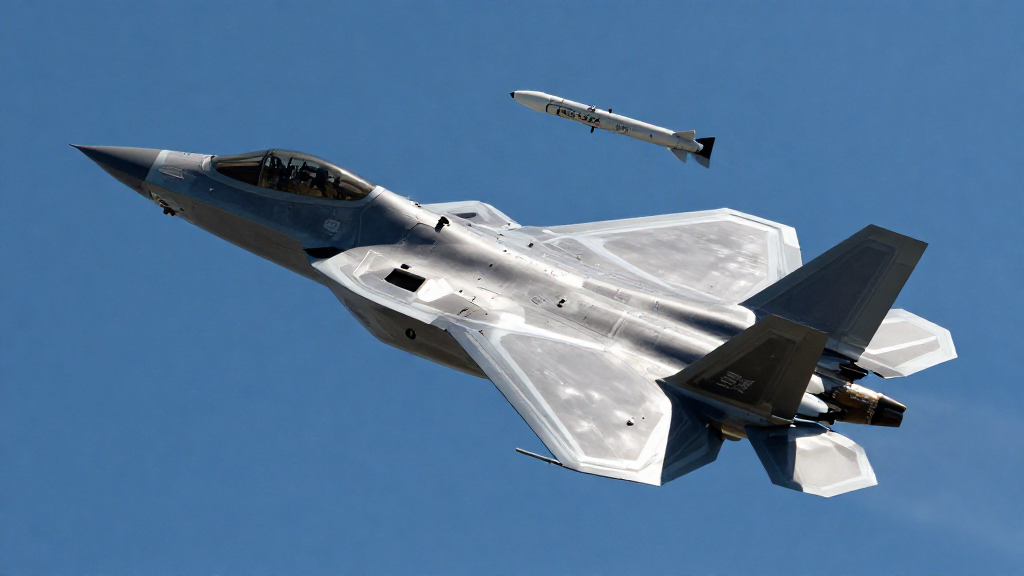
India’s Advanced Medium Combat Aircraft (AMCA) programme is approaching a critical stage in the development of its indigenous fifth-generation stealth fighter. As the programme moves from conceptual design towards prototype manufacturing, its technological requirements, industrial partnerships, and development timelines are receiving increasing attention from defence experts and military planners.
Initially conceptualised around 2006–2007, the programme has experienced an extended development journey, highlighting the challenges associated with designing and manufacturing an advanced combat aircraft. With growing regional military competition, India faces increasing pressure to accelerate the programme, strengthen industrial coordination, and address critical technological requirements.
Former Air Chief Marshal RKS Bhadauria has highlighted that technological capability was no longer the primary obstacle following the Light Combat Aircraft (LCA) achieving Initial Operational Clearance (IOC). Instead, he pointed to competing priorities, procedural complexities, and organisational decision-making structures as factors contributing to delays in India’s indigenous fighter development efforts.
Private Sector Participation in AMCA Development
One of the most significant developments in the AMCA programme is the increasing involvement of private-sector companies in prototype development and manufacturing. Under the Development-cum-Production Partner (DcPP) model, the competitive selection process has focused on three major private-sector contenders and their industrial capabilities.
The participating groups include:
– TATA Advanced Systems Limited (TASL): A standalone contender with established expertise in aerospace structures, component manufacturing, and aircraft final assembly operations.
– Larsen & Toubro (L&T) Consortium: Supported by companies such as Dynamatic Technologies, the consortium brings capabilities in heavy engineering, precision manufacturing, actuators, and weapons-bay mechanisms.
– Bharat Forge (Kalyani Group) Consortium: With partners such as Data Patterns, the group offers expertise in advanced metallurgy, structural forgings, high-strength landing gear assemblies, and electronic systems.
The involvement of private manufacturers is expected to introduce greater industrial competition, improve project execution, and strengthen manufacturing efficiency. It also represents a shift towards a broader aerospace production ecosystem in which public-sector organisations and private companies share responsibility for developing advanced military aircraft.
Establishing dedicated production infrastructure in Bengaluru and other participating industrial locations could create long-term manufacturing opportunities across India’s aerospace supply chain.
Critical Technologies Driving AMCA Development
The operational effectiveness of the AMCA will depend on the integration of advanced radar systems, electronic warfare equipment, propulsion technologies, and sophisticated onboard computing capabilities.
AESA Radar and Electronic Warfare Systems
The indigenous Uttam Active Electronically Scanned Array (AESA) radar is an important component of India’s efforts to develop advanced airborne sensor technologies. Continued development of indigenous radar systems, electronic warfare suites, and sensor integration capabilities will be essential to reducing dependence on imported equipment.
For the AMCA, advanced sensors will support target detection, tracking, threat identification, and situational awareness in contested operational environments.
Engine Development and Propulsion Requirements
The initial AMCA production configuration is planned around the General Electric F414 engine, while subsequent development is expected to focus on a more powerful next-generation propulsion system.
India is also exploring international technology collaboration involving Safran and the Gas Turbine Research Establishment (GTRE) to advance indigenous high-thrust engine development.
A successful propulsion programme will be essential for achieving the aircraft’s required performance, operational range, acceleration, and overall mission capabilities.
Internal Weapons Carriage and Artificial Intelligence
The AMCA’s internal weapons bays are designed to accommodate air-to-air missiles, precision-guided munitions, and stand-off weapons while preserving the aircraft’s low-observable characteristics.
Weapons integration is expected to include India’s Astra missile family and other advanced air-combat and strike systems.
Artificial intelligence, meanwhile, is expected to play an increasingly important role in sensor-data fusion, threat assessment, mission planning, and network-centric warfare. Integration with space-based surveillance and communication assets could further enhance the aircraft’s battlefield awareness and coordination with other military platforms.
Regional Security Challenges and the Need for Indigenous Capabilities
The evolving security environment in South Asia is adding urgency to India’s fifth-generation fighter development efforts. China’s deployment of advanced combat aircraft, particularly the J-20 and its emerging J-35 programme, presents an important consideration for India’s long-term airpower planning.
At the same time, the Indian Air Force faces challenges associated with declining fighter squadron strength and the need to modernise its existing aircraft fleet.
Interim programmes, including the Tejas Mk-2 and upgrades to existing combat aircraft, will remain important for addressing near-term operational requirements. However, defence analysts increasingly emphasise that India must retain control over critical technologies, including propulsion, radar, electronic warfare, flight-control systems, and stealth materials.
Dependence on complete off-the-shelf imports could create long-term limitations involving technology access, upgrades, maintenance, and future operational requirements. Developing domestic expertise in these areas is therefore central to establishing a sustainable indigenous combat aviation ecosystem.
AMCA Programme: The Road Ahead
The AMCA programme represents a major test of India’s ability to develop, manufacture, and sustain advanced fifth-generation combat aircraft independently. Its success will depend not only on technological innovation but also on effective coordination between the Ministry of Defence, DRDO, the Aeronautical Development Agency (ADA), certification authorities, and private-sector manufacturing partners.
Maintaining development schedules, ensuring technology integration, strengthening supply chains, and establishing clear industrial responsibilities will be essential to achieving programme objectives.
Greater private-sector participation could provide the manufacturing scale and industrial competitiveness required to support long-term production. Meanwhile, continued investment in indigenous engines, sensors, stealth technologies, and advanced avionics will determine India’s ability to achieve genuine technological independence.
If these elements progress as planned, the AMCA could become a cornerstone of India’s future airpower strategy and establish the country as a significant player in the global fifth-generation combat aircraft industry.