
The Australian Army’s National Advanced Surface-to-Air Missile System (NASAMS) has reached final operational capability, strengthening Australia’s integrated air and missile defense network.
The milestone confirms that NASAMS has fulfilled its operational requirements and is now ready to support Australian Defence Force (ADF) missions.
Procured under the Short Range Ground Based Air Defence (SRGBAD) project, NASAMS serves as the inner layer of Australia’s broader Joint Integrated Air and Missile Defence capability. The system is replacing the Army’s existing short-range air defense assets, including the RBS-70, as its primary air defense solution.
Domestic Industry and Australian Configuration
Australia approved the SRGBAD project in 2017 and expanded the capability in 2019 by integrating Active Electronically Scanned Array (AESA) radars developed by Canberra-based CEA Technologies.
Australian industry has played a significant role in delivering the NASAMS capability, including the integration of major components and providing in-country sustainment and support.
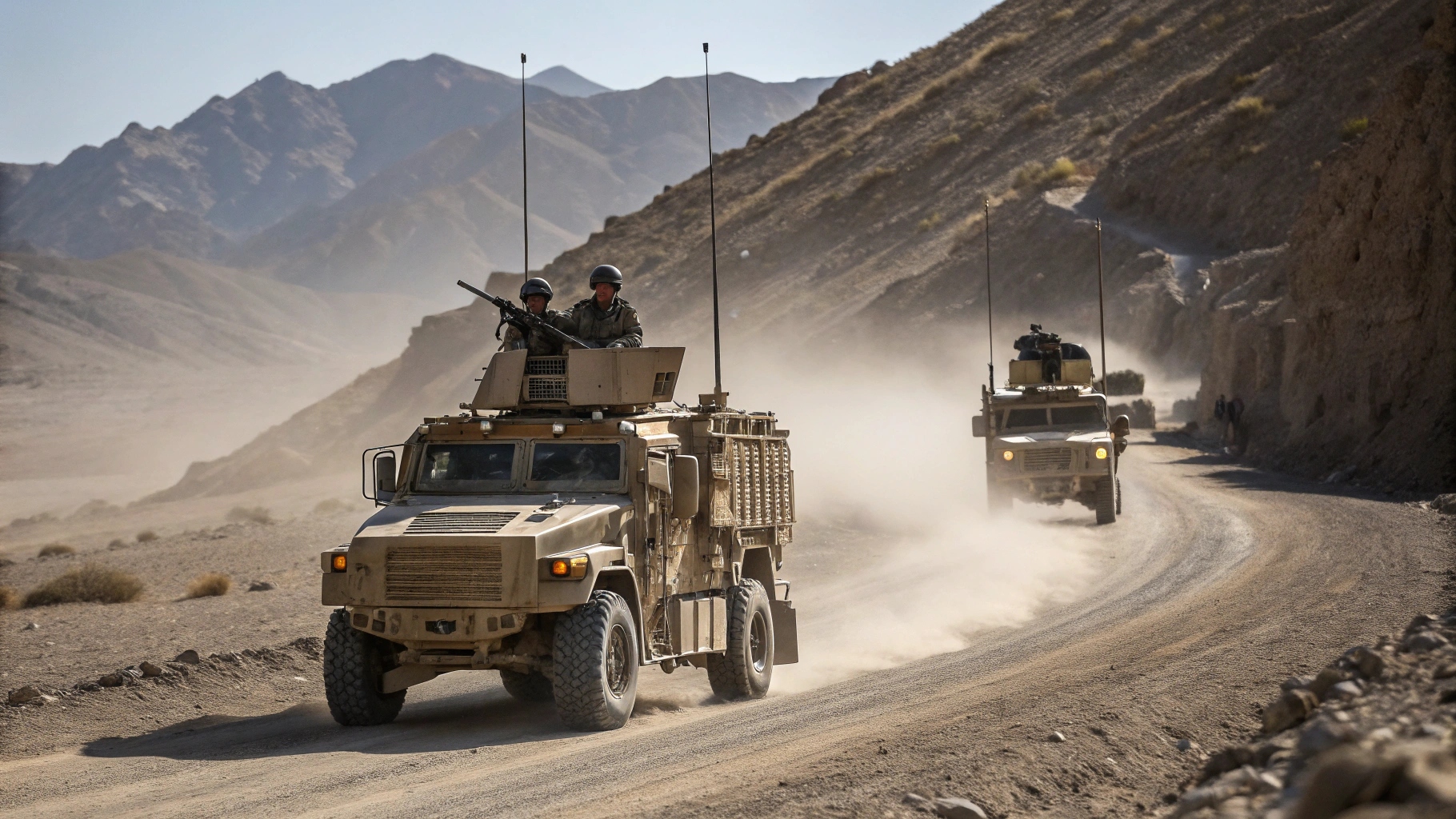
The Australian Army operates an enhanced NASAMS configuration incorporating Australian radar technology, a Hawkei-based launcher, and an infrared/optical sensor. The system can fire AMRAAM or Sidewinder missiles from Hawkei-based high-mobility launchers or Mk II canister launchers installed on HX77 heavy trucks. Each platform can carry up to six missiles.
Each NASAMS troop is equipped with three launchers. The Adelaide-based 110th Battery of 16 Regiment is the first Australian Army unit to receive the system, with the regiment planned to operate two NASAMS batteries as part of its future force structure.
NASAMS
NASAMS is a ground-based air defense system developed jointly by Norway’s Kongsberg Defence & Aerospace and US defense company Raytheon in cooperation with the Royal Norwegian Air Force. The system uses interceptors equipped with high-explosive blast-fragmentation warheads.
A NASAMS launcher can carry up to six missiles and engage fixed-wing and rotary-wing aircraft, unmanned aerial systems, and cruise missiles at ranges of up to 60 kilometers (37 miles).
Its distributed sensor architecture can detect threats at distances of approximately 120 kilometers (75 miles) and engage targets at altitudes of up to 21,000 meters (69,000 feet).
NASAMS is currently in service with, or being procured by, more than a dozen countries, including Australia, Ukraine, Chile, Spain, and the United States.