
DRDO’s Lightweight A2G Missile Aims to Boost Precision Strike Capability of Indian UAVs
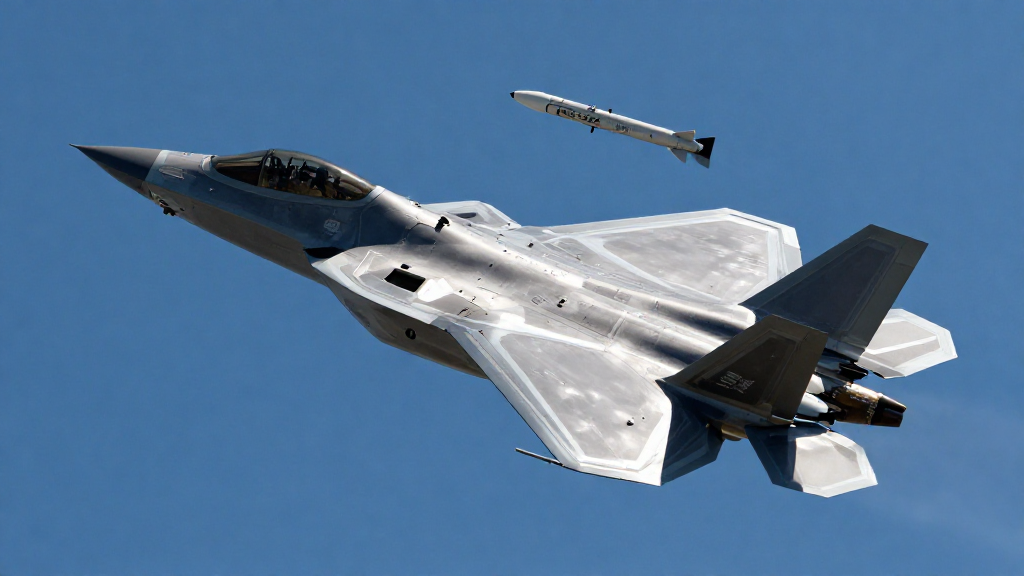
The Defence Research and Development Organisation (DRDO) is developing a compact air-to-ground missile intended to equip India’s future fleet of MALE UAVs, HALE drones, and Unmanned Combat Aerial Vehicles (UCAVs). Designed as a lightweight precision-guided munition, the missile is expected to provide versatile strike capability while maximizing the number of weapons that unmanned platforms can carry during operational missions.
Current information indicates that the missile will weigh approximately 10–15 kilograms, feature a length of around 1.5–2 meters, and carry a 1–2 kg warhead. Navigation will rely on an Inertial Navigation System integrated with a SAASM-enabled GPS receiver, enhancing resistance against electronic warfare, signal jamming, and GPS spoofing.
The missile’s compact size has generated discussion regarding its reported ability to defeat heavily armoured targets. Technically, penetrating around 700 mm of Rolled Homogeneous Armour would present a significant engineering challenge for a missile of this size.
Most modern anti-tank guided missiles capable of defeating 700–1,000 mm RHA employ large tandem HEAT warheads with substantial shaped charges. Armour penetration is primarily determined by warhead diameter, making it difficult to achieve comparable performance within the limited space available in a lightweight missile.
After accommodating the guidance package, propulsion system, batteries, flight controls, and structural components, only a relatively small volume remains for the warhead. Consequently, defeating thick armour protected by Explosive Reactive Armour would likely exceed the missile’s intended design objectives.
Instead, the system appears optimized as a precision strike weapon for engaging a diverse range of battlefield targets rather than serving as a direct replacement for dedicated anti-tank missiles such as HELINA, Dhruvastra, or Nag.
Likely targets include artillery batteries, air-defence systems, command centres, logistics hubs, communications facilities, fuel depots, parked aircraft, coastal surveillance assets, infantry fighting vehicles, and lightly armoured combat vehicles. Accurate delivery of even a relatively small warhead can produce significant tactical effects against such objectives.
The missile may also retain usefulness against main battle tanks through top-attack engagement profiles. Since the roof sections of tanks are generally less protected than frontal armour, attacks targeting the turret roof, engine deck, or external sensors could disable or significantly degrade enemy armour without requiring maximum penetration capability.
Additional warhead options, including fragmentation, thermobaric, and multi-role blast designs, could further broaden the missile’s effectiveness against bunkers, troop concentrations, and lightly fortified positions.
A major operational advantage lies in the missile’s lightweight design. Payload limitations on MALE and HALE UAVs often restrict the number of heavy weapons carried during a mission. A compact 10–15 kg missile enables a single platform to carry multiple precision-guided munitions, increasing mission endurance and allowing operators to engage numerous targets during a single sortie.
Future platforms such as TAPAS, Archer-NG, indigenous HALE drones, and the Ghatak UCAV could benefit significantly from this capability by delivering sustained precision fire support across extended operational areas.
The missile’s SAASM-enabled navigation system further strengthens its battlefield effectiveness. By combining encrypted GPS authentication with inertial navigation, the system maintains accurate guidance even when satellite signals are degraded or deliberately jammed by enemy electronic warfare systems.
As electromagnetic warfare becomes an increasingly important element of modern conflict, resilient navigation solutions will play a critical role in ensuring successful precision strikes under contested conditions.
Cost efficiency also represents a major advantage. Experience from recent conflicts has highlighted the importance of affordable precision-guided weapons that can be produced in large numbers. A low-cost indigenous missile would enable frequent strike operations without relying exclusively on expensive long-range anti-armour weapons.
Rather than replacing India’s existing heavy anti-tank missile inventory, the proposed system appears intended to complement it by providing a highly accurate, cost-effective, and electronically resilient air-to-ground weapon capable of expanding the operational flexibility of India’s future unmanned aerial combat platforms.