
India’s ET-LDHCM (Extended Trajectory Long Duration Hypersonic Cruise Missile) program may eventually extend beyond ground-based applications, with defense planners reportedly evaluating an air-launched variant capable of deployment from future Indian Air Force fighter aircraft. If developed, the missile would provide a major boost to India’s long-range strike capabilities by combining advanced hypersonic propulsion with the flexibility of airborne launch platforms.
The concept under consideration involves a hypersonic Waverider configuration powered by a Dual-Mode Ramjet propulsion system. By integrating both ramjet and scramjet technologies into a single engine, the system would be capable of operating efficiently across a broad range of speeds, from high supersonic flight to sustained hypersonic cruise.
Air-breathing propulsion offers significant advantages over traditional rocket-powered missiles because it draws oxygen directly from the atmosphere rather than carrying an onboard oxidizer supply. This improves fuel efficiency and extends operational range. However, maintaining stable combustion during the transition from ramjet to scramjet operation remains one of the most complex challenges in hypersonic flight.
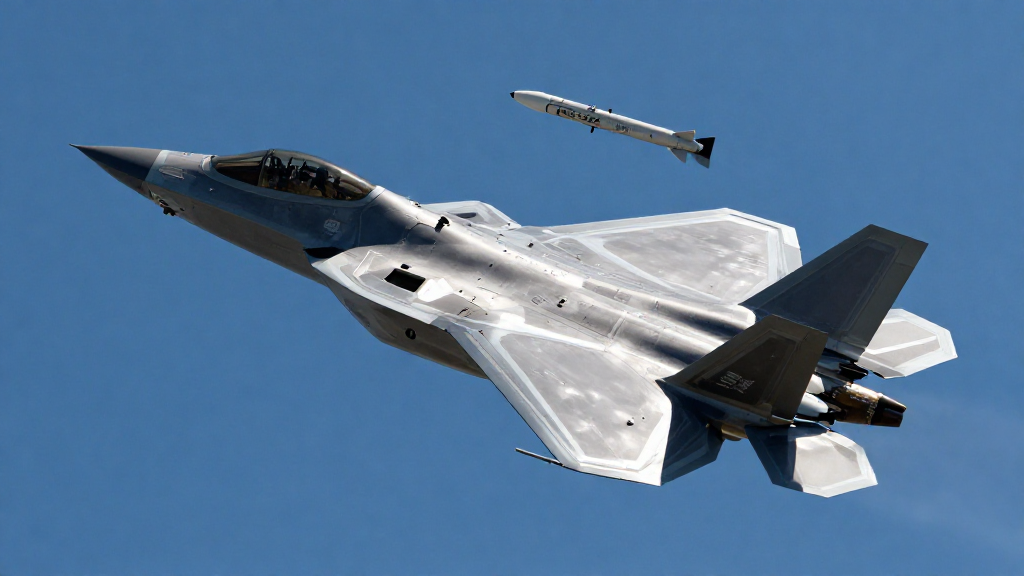
The proposed missile would likely be launched from platforms such as the Su-30MKI, Rafale, TEDBF, or AMCA. Following release from the aircraft, a solid rocket booster would propel the missile to approximately Mach 3, creating the conditions necessary for ramjet ignition.
At this speed, the missile enters the ramjet phase, where engine inlets compress and slow incoming air before it reaches the combustion chamber. Fuel is then injected and burned, generating thrust while simultaneously producing high-temperature gases that help prepare the propulsion system for subsequent hypersonic operation.
As the missile accelerates beyond Mach 5, the limitations of conventional ramjet propulsion become increasingly apparent. Slowing airflow to subsonic speeds at such velocities generates excessive drag and thermal stress. To overcome these limitations, the engine transitions into scramjet mode.
A scramjet maintains supersonic airflow throughout the combustion process, allowing efficient operation at extreme speeds without the aerodynamic penalties associated with traditional ramjets. This capability enables sustained hypersonic cruise and represents one of the most advanced propulsion technologies currently under development worldwide.
The missile’s aerodynamic performance would be enhanced through the use of a Waverider design. Unlike conventional missile shapes that attempt to minimize shockwave effects, a Waverider exploits them to generate additional lift.
During hypersonic flight, intense compression shockwaves form beneath the vehicle. The airframe is carefully shaped to ride these shockwaves, trapping high-pressure air under the body and converting it into useful aerodynamic lift. This approach improves overall efficiency by reducing drag while increasing lift generation.
The resulting improvement in lift-to-drag ratio provides several operational benefits, including longer range, greater maneuverability, and reduced fuel consumption. Additionally, the design minimizes dependence on large aerodynamic control surfaces, which are prone to significant drag and extreme thermal loading at hypersonic speeds.
From a strategic perspective, an air-launched ET-LDHCM would offer substantial advantages. Launching from a fighter aircraft provides a valuable energy boost through altitude and forward velocity, allowing the missile to reach hypersonic speeds more quickly and efficiently. The combination of aircraft range and missile endurance would create a powerful stand-off strike capability.
Such a system could enable Indian combat aircraft to engage critical targets from significant distances while remaining outside hostile air-defense envelopes. Potential targets could include strategic command facilities, hardened infrastructure, naval task groups, and sophisticated integrated air-defense networks, enhancing India’s ability to conduct rapid, long-range precision strikes in future conflicts.