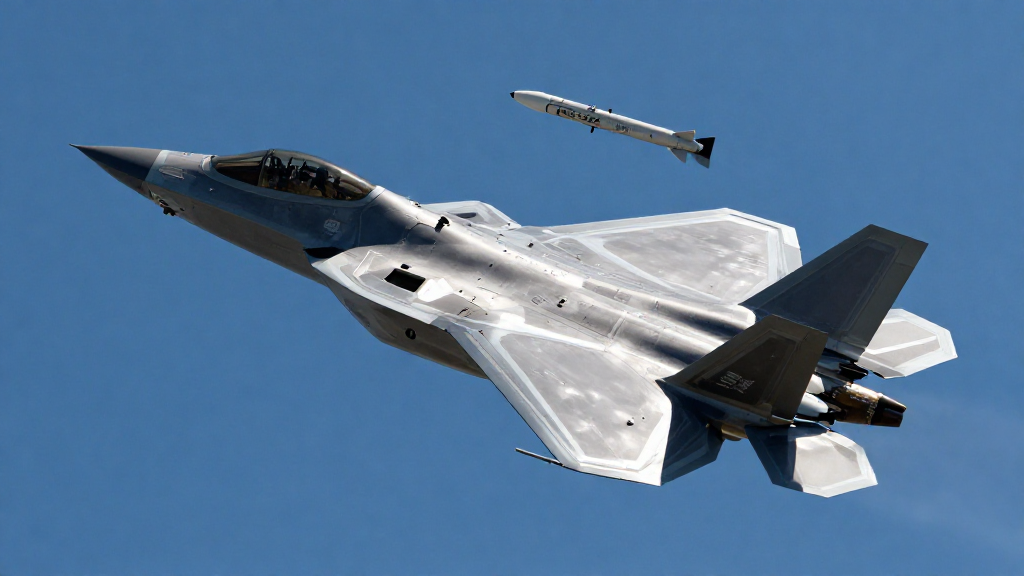

The Astra Mk-I beyond-visual-range air-to-air missile (BVRAAM) is expected to undergo range-extension trials later this year, potentially before the end of 2026. The upgrade is intended to increase the missile’s engagement range to around 160 km, compared with its current range of approximately 110 km.
The development was confirmed earlier this year by Ankathi Raju, Chief of the Armament Research and Development Establishment (ARDE), following detailed discussions with the Indian Air Force after Operation Sindoor.
The trials were initially expected to take place around the middle of 2026. However, additional optimisation work is reportedly underway to achieve the targeted range, resulting in the trials being postponed until the upgraded missile is cleared for testing.
The Indian Air Force has already cleared the Astra Mk-I for deployment on the Su-30MKI, Tejas Mk-I, and Tejas Mk1A. The Rafale is also expected to become another platform for the missile in the future.
Speculation that the recovery of a Chinese PL-15E BVRAAM may have contributed to improvements in Astra’s range has been rejected by DRDO officials in comments to idrw.org.
The planned modifications are expected to focus primarily on the missile’s propulsion system and flight profile, along with improvements to guidance and energy management. These changes are intended to enable the Astra Mk-I to maintain higher speed and maneuverability over longer distances, increasing its effective range without requiring a fundamental redesign of the missile.
Indian authorities have indicated that work on these modifications will begin shortly, marking the transition from the design stage toward implementation and testing.
The decision to enhance the Astra Mk-I following Operation Sindoor also highlights an emerging approach in India’s weapons-development strategy. Rather than relying exclusively on entirely new missile programs, the focus is increasingly shifting toward upgrading existing systems to rapidly improve operational capabilities.
Such incremental upgrades could allow the Indian Air Force to respond more quickly to evolving battlefield threats while extending the service life and effectiveness of weapons already integrated with its fighter fleet.