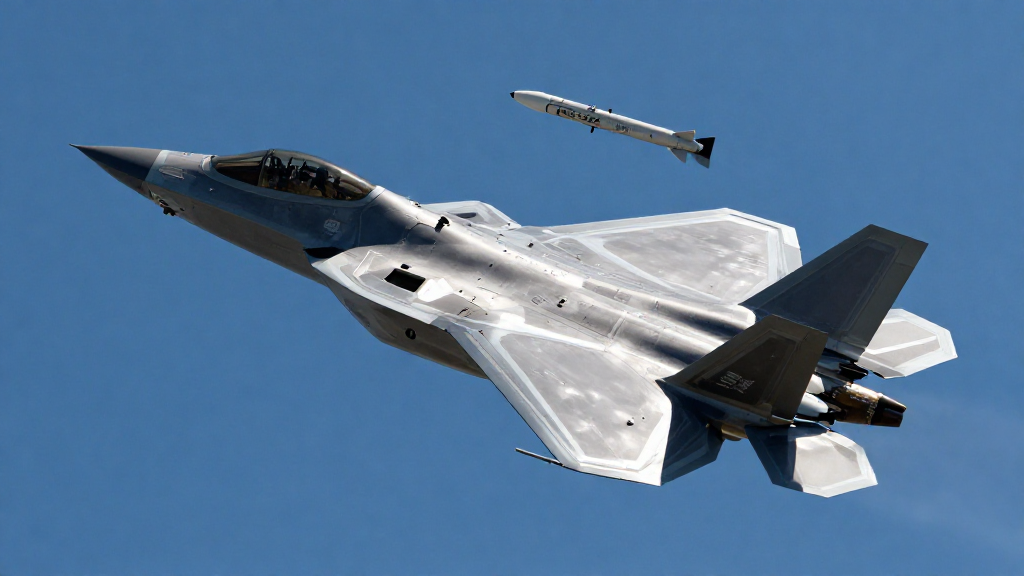

The US Navy has completed the first stage of its F-35C LRASM integration program, progressing efforts to arm the fifth-generation carrier-based fighter with a long-range anti-ship weapon capable of operating in highly contested maritime theaters.
A cornerstone of the US military’s Indo-Pacific deterrence strategy, the Lockheed Martin-developed LRASM is engineered with advanced sensing technology, autonomous target recognition, and reduced-observable features to engage critical naval targets while minimizing exposure to enemy defenses.
As part of an extensive two-year evaluation campaign, the missile was carried externally on the F-35C during a series of flight tests designed to examine aircraft performance and handling throughout its operational flight envelope. Following the successful completion of captive-carry trials, the program will move on to weapon-release testing, guided missile evaluations, and ultimately live-fire exercises. The Navy has yet to announce a timeline for operational deployment.
Advanced Anti-Ship Weapon
The AGM-158C LRASM was created through a collaboration between DARPA and the US Navy to replace and enhance capabilities previously provided by the AGM-84 Harpoon anti-ship missile.
Based on the JASSM-ER cruise missile, LRASM is optimized for operations in GPS-denied and electronically contested environments. Its onboard intelligence enables the weapon to independently detect, classify, and attack moving ships without requiring continuous external guidance or precise pre-launch targeting information.
The missile is equipped with a multi-mode passive RF seeker, datalink connectivity, and an improved altitude-sensing system. Depending on mission requirements, it can use launch-platform targeting data, receive updates during flight, or autonomously locate and engage hostile vessels. Its range of more than 200 nautical miles provides commanders with a valuable stand-off strike option against heavily defended naval targets.
Enhancing Naval Strike Operations
The LRASM is already operational aboard the F/A-18E/F Super Hornet and B-1B Lancer. Integrating the missile with the F-35C will further expand the Navy’s maritime strike toolkit by combining stealth, advanced sensing, and long-range precision attack capabilities within a single platform.
Unlike legacy aircraft, the F-35C can approach contested areas with a lower probability of detection, allowing it to collect targeting information and maintain situational awareness closer to enemy forces. Coupled with LRASM’s autonomous strike capabilities, this integration is expected to substantially improve the Navy’s effectiveness against high-value surface combatants operating within sophisticated A2/AD defense networks.