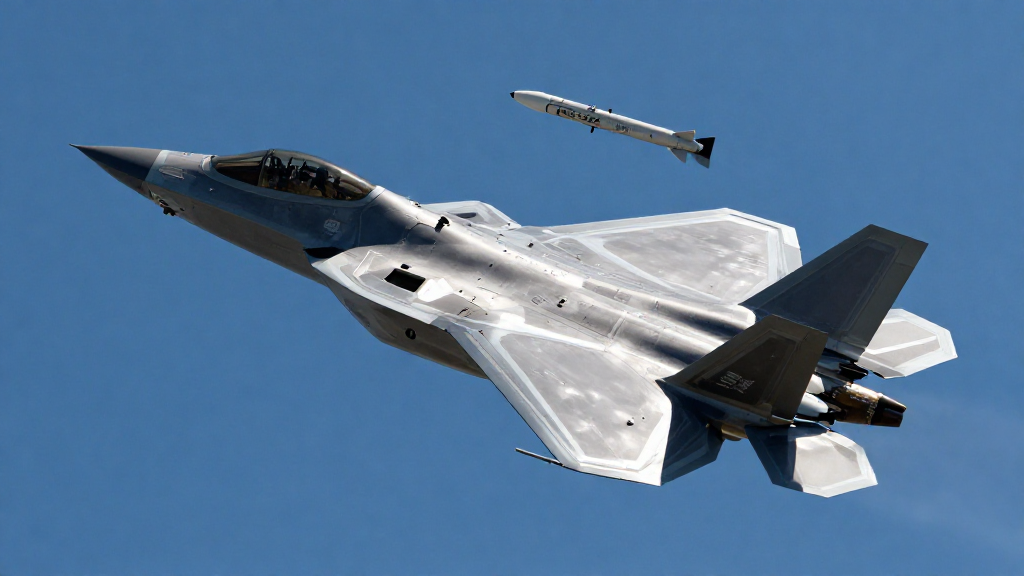

India is reportedly future-proofing its Advanced Medium Combat Aircraft (AMCA) program through a propulsion architecture designed to support next-generation engine technologies well beyond the aircraft’s initial operational life. Sources indicate that the new engine being co-developed by Safran and GTRE is being structured around a modular design philosophy that could eventually enable the integration of variable cycle engine technology, a capability commonly associated with sixth-generation fighters.
Unlike earlier fighter programs that relied on fixed propulsion architectures, the AMCA is being developed with long-term upgrade flexibility in mind. Engineers are reportedly designing the aircraft’s engine compartment, mounting geometry, and integration interfaces to accommodate future propulsion systems without requiring major structural changes.
The first AMCA aircraft are expected to fly with imported GE F414 engines, while later production variants will transition to an indigenous Safran-GTRE turbofan. However, the broader vision extends beyond these powerplants, with plans to create an adaptable engine ecosystem capable of evolving alongside future technological requirements.
Central to this effort is a modular core architecture. The external engine structure and mounting points would remain largely unchanged throughout the aircraft’s service life, while internal components responsible for compression, combustion, and airflow management could be upgraded as new technologies become available.
This strategy could pave the way for future adoption of variable cycle propulsion systems. Unlike conventional turbofan engines, variable cycle designs can switch between fuel-efficient and high-performance operating modes by dynamically adjusting airflow through multiple bypass channels. Such flexibility improves range, fuel economy, acceleration, and sustained supercruise capability.
Another major advantage lies in thermal management. Future combat aircraft are expected to carry increasingly powerful electronic warfare systems, sensors, and other energy-intensive equipment. A variable cycle engine’s additional airflow stream can act as a heat sink, helping dissipate thermal loads and enabling the integration of advanced mission systems that would otherwise strain aircraft cooling capacity.
Developing such a propulsion system would require major advances in software, materials, and engine control technologies. Adaptive FADEC systems, high-temperature composite materials, and Ceramic Matrix Composite structures are expected to play a critical role in supporting future engine evolution.
The long-term significance of this approach is strategic flexibility. By designing the AMCA around a modular propulsion framework, India is seeking to ensure that the aircraft can continuously evolve with emerging technologies, potentially extending its relevance from the fifth-generation era into the age of sixth-generation air combat.