
Applied Intuition has secured a contract with the US Navy to deploy an artificial intelligence (AI)-powered system designed to improve vessel detection, tracking and maritime situational awareness. The initial deployment will cover five Arleigh Burke-class guided-missile destroyers, introducing AI-assisted perception capabilities to support shipboard operations.
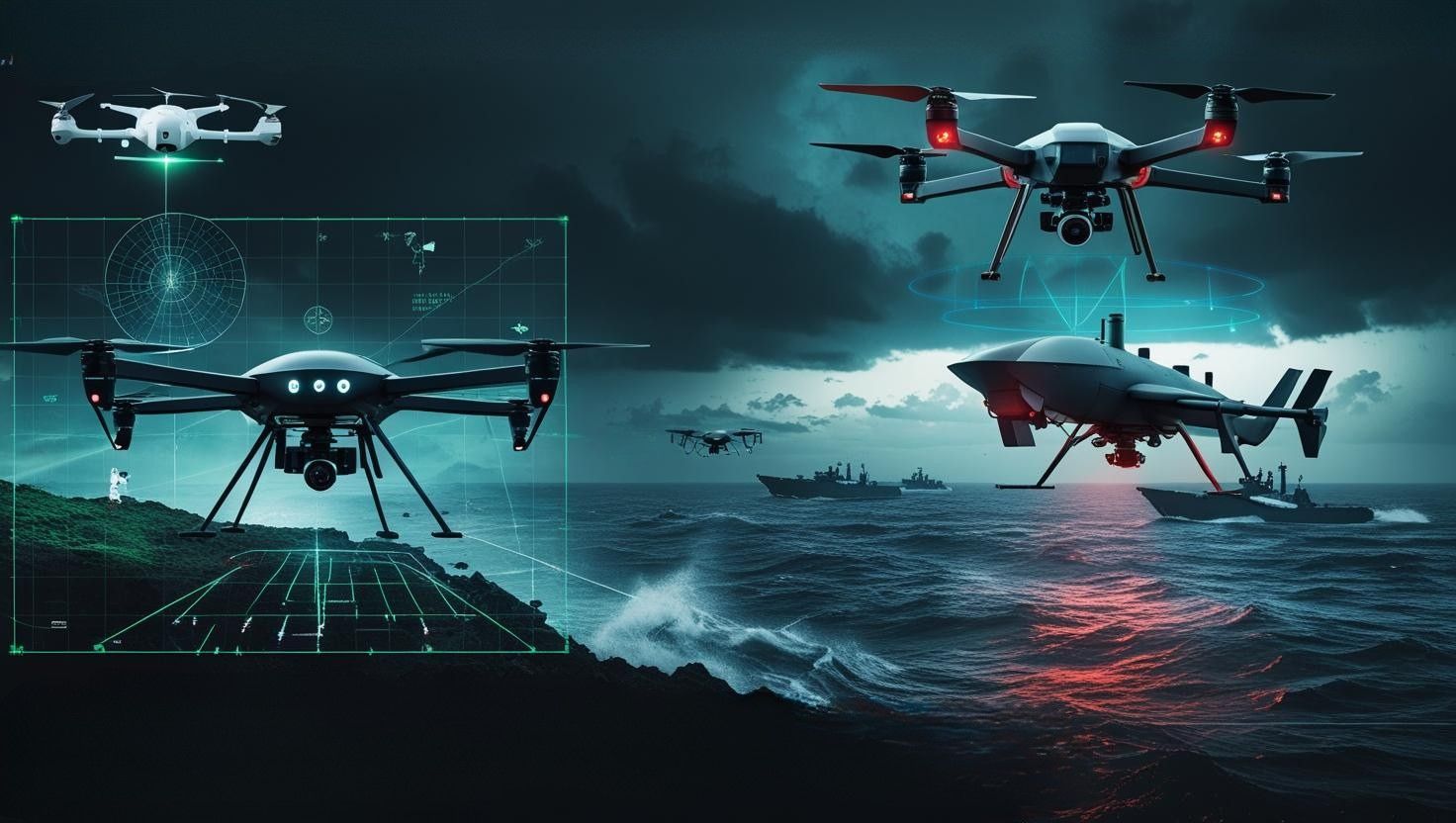
The company’s Intelligent Perception System (IPS) will integrate data from shipboard cameras, infrared sensors and other navigation equipment to provide crews with a clearer understanding of nearby maritime activity. The system is designed to identify and classify vessels in real time, display their predicted movements and alert operators when detected contacts appear to be following potentially hazardous courses.
Information generated by IPS will be available to personnel on the ship’s bridge and in the combat information center. These capabilities are intended to support navigation decisions, improve awareness of nearby surface contacts and help crews respond to developing maritime situations.
AI-Driven Vessel Detection and Tracking
The Intelligent Perception System uses multiple sensor inputs to develop a consolidated picture of the surrounding maritime environment. By combining visual, infrared and navigation data, the system aims to improve the identification and tracking of vessels operating near naval ships.
Its real-time processing capabilities are designed to classify detected contacts, estimate their future trajectories and flag potentially dangerous movement patterns. This could help personnel assess nearby vessel activity more efficiently while maintaining human oversight of navigation and operational decisions.
Beyond the initial deployment, Applied Intuition stated that the computing and data infrastructure installed under the contract could support additional AI applications. The architecture could also be extended to other crewed and uncrewed naval platforms, subject to future requirements and deployment decisions.
Shipboard Data Infrastructure for Continuous AI Improvement
Alongside IPS, Applied Intuition will provide onboard and shore-based infrastructure to collect operational data and support the continuous improvement of AI models.
Under the proposed workflow, sensor data collected during naval operations can be transferred ashore for analysis and model training. Updated AI models can subsequently be delivered remotely to deployed vessels, reducing the need for ships to return to port solely for software or model updates.
This approach is intended to create a continuous development cycle in which operational data informs model improvements, while updated capabilities can be distributed across the fleet.
IPS will also generate digital records of detected vessels. These records could support the analysis and sharing of contact information across participating platforms, reducing reliance on handwritten logs and improving consistency in maritime data management.
Building on Earlier Naval AI Development
The contract builds on Applied Intuition’s earlier work with the US Navy through the Data Edge Collection Kit, a prototype designed to collect shipboard sensor data for AI training and development.
The company delivered the prototype to the Navy in March, establishing an initial foundation for gathering operational data and supporting the development of AI-enabled maritime applications.
The new contract expands this effort by combining data collection infrastructure with an operational perception system intended to assist crews with vessel detection and tracking.
Advancing AI Integration Across Naval Operations
The introduction of AI-assisted perception technology reflects the broader adoption of data-driven systems across naval operations. By combining sensor integration, real-time vessel tracking and remote model updates, the IPS programme aims to strengthen maritime situational awareness while creating infrastructure for future AI applications.
If expanded successfully, the approach could support wider deployment across crewed and uncrewed vessels and enable more consistent sharing of maritime contact data. The initial installation on five Arleigh Burke-class destroyers will provide a foundation for assessing the system’s operational utility and potential wider application across the US Navy fleet.