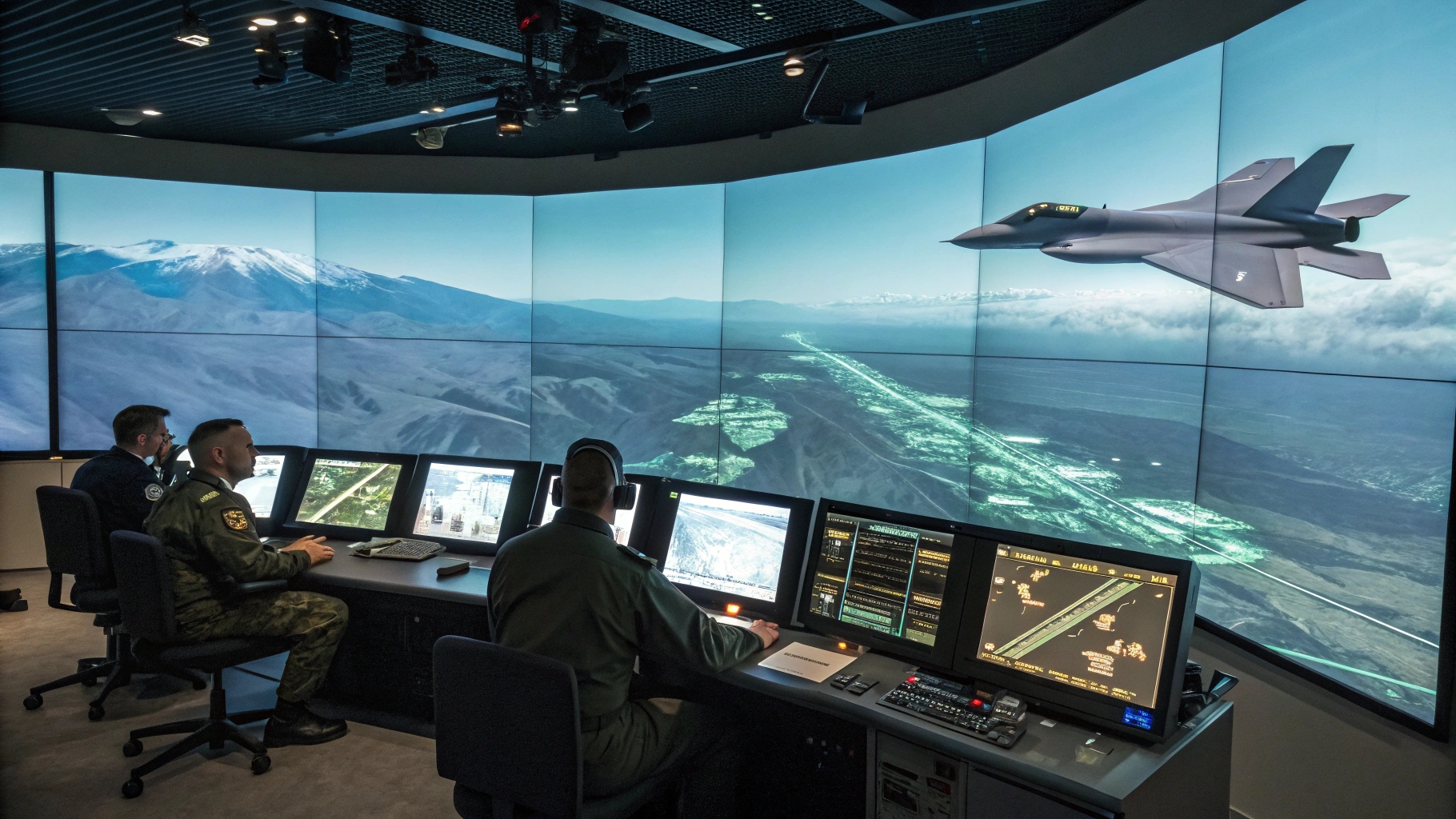

The future of aerial warfare is increasingly moving toward coordinated teams of crewed and uncrewed aircraft rather than relying solely on conventional fighter jets. Leading this transformation is the MQ-28 Ghost Bat, an autonomous combat aircraft designed to operate alongside manned military platforms.
Developed as an intelligent aerial teammate, the Ghost Bat can enhance surveillance, electronic warfare, and strike-support capabilities while reducing the exposure of human pilots to high-risk missions. As air forces explore new approaches to combat operations, the aircraft is emerging as an important example of how autonomous systems could reshape future airpower.
Explore the origins, key technologies, operational advantages, limitations, and future prospects of the MQ-28 Ghost Bat.
What Is the MQ-28 Ghost Bat?
The MQ-28 Ghost Bat is an autonomous combat aircraft developed to function as a loyal wingman for crewed military aircraft. Its primary objective is to provide additional combat capacity at a comparatively lower cost while minimizing risks to human personnel.
Designed to operate alongside fighter jets, surveillance aircraft, and other airborne platforms, the aircraft can support a range of missions, including intelligence gathering, reconnaissance, electronic warfare, and strike operations.
Originally developed under the name Boeing Airpower Teaming System (ATS), the MQ-28 is the result of collaboration between Boeing Defence Australia (BDA) and the Royal Australian Air Force (RAAF).
To expand the platform’s international market potential, Boeing Defence Australia has also partnered with Rheinmetall. The partnership brings together German defence companies Diehl Defence and Rohde & Schwarz to contribute expertise in weapons integration, communications, electronic warfare, and mission systems.
Origins and Development of the MQ-28 Ghost Bat
The MQ-28 program began in 2019 when Boeing Defence Australia and the RAAF initiated the Airpower Teaming System project. The objective was to develop an autonomous aircraft capable of collaborating with crewed fighters and supporting demanding combat missions.
The initiative represented a major milestone for Australia’s aerospace industry, marking Boeing’s first military aircraft designed and developed in the country in more than five decades.
A full-scale prototype was unveiled in 2020, followed by its maiden flight in 2021. This achievement marked a significant moment in Australia’s military aviation history, demonstrating the country’s renewed capability to develop advanced combat aircraft.
In 2022, the RAAF officially designated the platform the MQ-28A Ghost Bat, reflecting its growing importance in Australia’s future air combat strategy.
Since its initial flight, the program has progressed through multiple testing campaigns designed to assess autonomous flight, collaboration with crewed aircraft, modular payload integration, and weapons-related capabilities. These trials have helped establish the technical foundation for the aircraft’s intended operational role.
Subsequent Block 2 development has focused on improving mission systems, payload adaptability, and overall operational readiness. These advancements are supporting the Ghost Bat’s transition from an experimental platform toward a more mature collaborative combat aircraft.
How the MQ-28 Ghost Bat Works
The MQ-28 combines autonomous flight technologies, modular mission equipment, and collaborative combat capabilities to support modern air operations. Its design allows it to perform assigned tasks alongside crewed aircraft while remaining under appropriate human supervision.
Key Features of the MQ-28 Ghost Bat
1. Autonomous Teaming System
The Ghost Bat is designed to operate as a collaborative combat aircraft, using onboard autonomy to fly alongside crewed fighters and execute assigned mission tasks with limited direct operator input.
Rather than replacing human pilots, it serves as an autonomous teammate that can support complex operations, extend mission coverage, and help distribute workloads across multiple aircraft.
2. Modular Mission Payloads
A reconfigurable nose section allows the aircraft to accommodate different mission-specific systems. Depending on operational requirements, it can be adapted for intelligence, surveillance, reconnaissance, electronic warfare, and other specialized roles.
This modular approach enables mission capabilities to evolve without requiring a complete redesign of the aircraft, potentially reducing upgrade costs and simplifying long-term maintenance.
3. Extended Operational Range
The MQ-28 is designed to achieve a range exceeding 2,000 nautical miles, equivalent to approximately 3,700 kilometres or 2,302 miles.
This extended range could allow the aircraft to accompany crewed platforms over considerable distances, improve operational reach, and support missions in contested environments while keeping human pilots farther from potential threats.
4. Open Architecture Design
The aircraft incorporates an open mission systems architecture intended to facilitate the integration of new sensors, software, and payloads as requirements change.
This design philosophy can support faster technological upgrades, improve interoperability with other military platforms, and help the aircraft remain relevant as autonomous combat technologies advance.
Major Strengths of the MQ-28 Ghost Bat
One of the Ghost Bat’s principal advantages is its potential to increase combat capacity without requiring a proportional increase in the number of expensive crewed aircraft.
Operating alongside conventional fighters, the aircraft could extend sensor coverage, distribute mission responsibilities, and increase the number of available airborne assets during complex operations. This approach may also reduce the exposure of human pilots to hostile air defence systems and other battlefield threats.
Its modular design provides another important advantage. By accommodating different mission systems and evolving autonomous capabilities, the platform can be adapted to emerging operational requirements rather than being restricted to a single role.
The Ghost Bat could also support more flexible force structures, enabling air forces to combine crewed aircraft with multiple uncrewed teammates. Such arrangements may improve mission resilience, expand tactical options, and help commanders allocate resources more efficiently.
However, these benefits will ultimately depend on the aircraft’s demonstrated performance, acquisition and operating costs, and successful integration into operational air forces.
Limitations and Challenges
Despite its potential, the MQ-28 Ghost Bat faces several technical and operational challenges as it progresses toward wider deployment.
Its intended collaborative combat capabilities require extensive testing and validation before the aircraft can be relied upon across a broad range of operational scenarios. Achieving dependable coordination between autonomous aircraft and crewed platforms remains a complex engineering challenge.
Communications resilience is another critical consideration. The aircraft must exchange mission information securely and reliably with other aircraft and command networks, including in environments affected by electronic jamming or disrupted communications.
Autonomous decision-making systems must also operate predictably within established rules of engagement and human command structures. Ensuring that these systems remain dependable under changing battlefield conditions will be essential to operational acceptance.
In addition, the long-term success of the program will depend on affordability, maintainability, weapons integration, and interoperability with existing military infrastructure.
Global Interest and Operational Potential
Although the MQ-28 Ghost Bat is still progressing toward operational maturity, it has attracted international attention as an example of emerging collaborative combat aircraft technology. Australia’s continued investment in the program has also created opportunities for broader defence cooperation.
Key areas of international interest include the following:
Exercise Valiant Shield 2026: The aircraft’s reported appearance at the multinational exercise highlighted interest in evaluating collaborative combat concepts alongside US and allied forces.
India–Australia Air Staff Talks 2026: The Ghost Bat was showcased in the context of discussions concerning aerospace cooperation and the future of autonomous airpower, reflecting the growing relevance of advanced aviation technologies to bilateral defence engagement.
US–Australia Defence Cooperation: Boeing Defence Australia and US defence stakeholders have explored the aircraft’s potential within broader collaborative combat aircraft initiatives. These efforts reflect shared interest in developing systems that can work alongside crewed fighters and contribute to distributed air combat operations.
Japan–Australia Cooperation: In 2025, Japan’s Acquisition, Technology & Logistics Agency and Australia’s Defence Science and Technology Group initiated joint research into autonomous teaming technologies. The Ghost Bat has provided a relevant reference point for examining future loyal-wingman concepts and potential bilateral collaboration.
The operational requirements of these countries differ, but the broader interest reflects a common shift toward autonomous teaming, adaptable mission systems, and coordinated crewed-uncrewed operations.
As these technologies mature, platforms such as the MQ-28 could influence how air forces approach surveillance, electronic warfare, force multiplication, and future combat aircraft development.
Future Outlook for the MQ-28 Ghost Bat
The MQ-28 Ghost Bat program is progressing beyond its original technology-demonstration phase toward a more defined acquisition and operational pathway.
Block 2 is intended to build on the capabilities demonstrated by the Block 1 test aircraft, with development activities supporting the RAAF’s objective of achieving initial operational capability by 2028.
In December 2025, Boeing Defence Australia announced an order from the RAAF for seven additional Ghost Bat aircraft under a third production tranche valued at A$754 million. The order comprises six Block 2 aircraft and the first Block 3 aircraft, representing a further step in the program’s development.
Block 3 is being developed with international customers in mind as air forces assess the potential of lower-cost, attritable uncrewed aircraft capable of operating alongside platforms such as the F-35 and future sixth-generation fighters.
Reported design changes include a three-metre wing extension on each side, intended to increase fuel capacity by approximately 30%. The additional fuel could improve endurance, extend mission radius, and allow the aircraft to remain on station for longer periods.
Meanwhile, the US Air Force’s collaborative combat aircraft initiatives and similar international programs are accelerating interest in autonomous aerial teammates. The Ghost Bat’s flight-test experience and developing teaming architecture could provide valuable lessons for these efforts.
Nevertheless, international adoption will depend on several factors, including procurement costs, mission performance, weapons compatibility, technology-transfer arrangements, and export approvals. Potential customers will also assess how effectively the aircraft integrates with their existing fighters, sensors, and command-and-control systems.
If these challenges are addressed successfully, the MQ-28 Ghost Bat could become an important component of future air combat formations, combining human decision-making with autonomous systems to expand operational reach and flexibility.
Conclusion
The MQ-28 Ghost Bat represents a significant step toward a future in which crewed fighters operate alongside autonomous combat aircraft as coordinated teams. Its emphasis on modular payloads, extended range, and autonomous collaboration reflects the changing priorities of modern military aviation.
Although technical validation, affordability, and international integration remain important challenges, the program demonstrates how uncrewed platforms could supplement conventional aircraft and provide additional operational options.
As Australia advances the Ghost Bat toward operational service, its development will offer valuable insights into the role of collaborative combat aircraft in future air warfare.