
Leidos is preparing to expand production of thousands of cruise missiles by coordinating suppliers across 14 US states, supporting the Pentagon’s efforts to strengthen domestic manufacturing capacity and increase long-range strike capabilities.
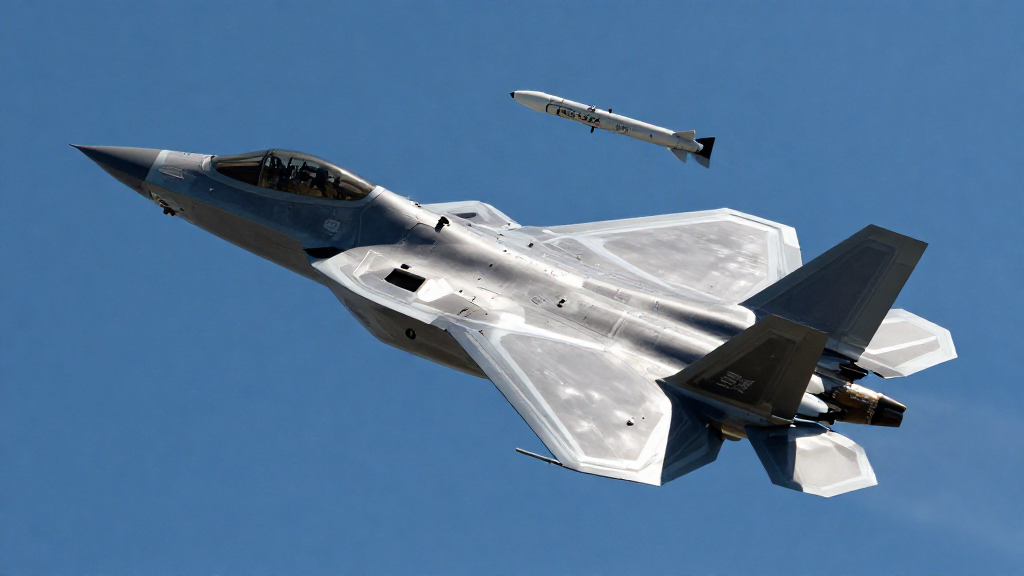
The defence contractor recently convened key missile-component suppliers at its headquarters to coordinate manufacturing capacity, production requirements, delivery schedules, and programme timelines for its Low-Cost Containerized Missile (LCCM) and AGM-190A Havoc Spear systems.
The initiative follows a May 13 framework agreement with the US Department of Defense covering an initial procurement of 3,000 LCCM weapons. In parallel, Leidos is preparing to scale up Havoc Spear production, with initial deliveries to Air Force Special Operations Command already underway.
Manufacturing activities will primarily be centred in Huntsville, Alabama, and McEwen, Tennessee. The first LCCM missiles are expected to be delivered in 2027 for testing and evaluation, followed by the planned transition to full-rate production during 2028 and 2029.
US Accelerates Cruise Missile Manufacturing Capacity
Leidos’ production expansion aligns with broader US Department of Defense initiatives to increase cruise missile manufacturing capacity and strengthen the domestic defence industrial base. Several major contractors are advancing production programmes covering established missile platforms and emerging lower-cost weapon systems.
In August, RTX’s Raytheon secured a seven-year contract valued at approximately $22.9 billion to accelerate Tomahawk cruise missile production for the US Navy. The agreement follows framework arrangements with the Pentagon aimed at increasing annual Tomahawk production to more than 1,000 missiles.
The US Air Force is also pursuing expanded procurement of its Joint Air-to-Surface Standoff Missile (JASSM) and Long-Range Anti-Ship Missile (LRASM). A July procurement notice outlined plans to acquire up to 16,450 missiles across both programmes over the coming years, with Lockheed Martin serving as the manufacturer.
Separately, the Pentagon announced framework agreements in July with Anduril, CoAspire, and Zone 5 Technologies to advance the development of affordable, air-launched cruise missiles under its Family of Affordable Mass Missiles programme.
These initiatives reflect the US military’s growing emphasis on production scalability, supply-chain coordination, and affordable long-range strike capabilities to support future operational requirements.