India’s Zorawar light tank program, jointly developed by the Defence Research and Development Organisation (DRDO) and Larsen & Toubro (L&T), could face a delay of up to two years after the Indian Army reportedly sought protection beyond NATO’s STANAG Level 4 standard, according to the Times of India.
The additional protection requirement could shift the tank’s planned induction from the earlier 2027 target to 2028 or 2029. Engineers are working to enhance the vehicle’s survivability while keeping its weight below the critical 25-tonne threshold considered important for high-altitude operations in areas such as Ladakh.
Balancing Protection and Mobility
STANAG protection standards established by NATO define the level of ballistic and blast protection provided by armoured vehicles against threats including small-arms fire, artillery fragments and mines. STANAG Level 4 is designed to provide protection against heavy machine-gun fire and mine blasts equivalent to approximately 10kg of TNT.
Higher protection levels provide greater resistance but also increase vehicle weight and cost. Level 5 is designed to withstand 25mm autocannon ammunition, while Level 6 provides protection against 30mm armour-piercing rounds and greater resistance to heavy artillery threats.
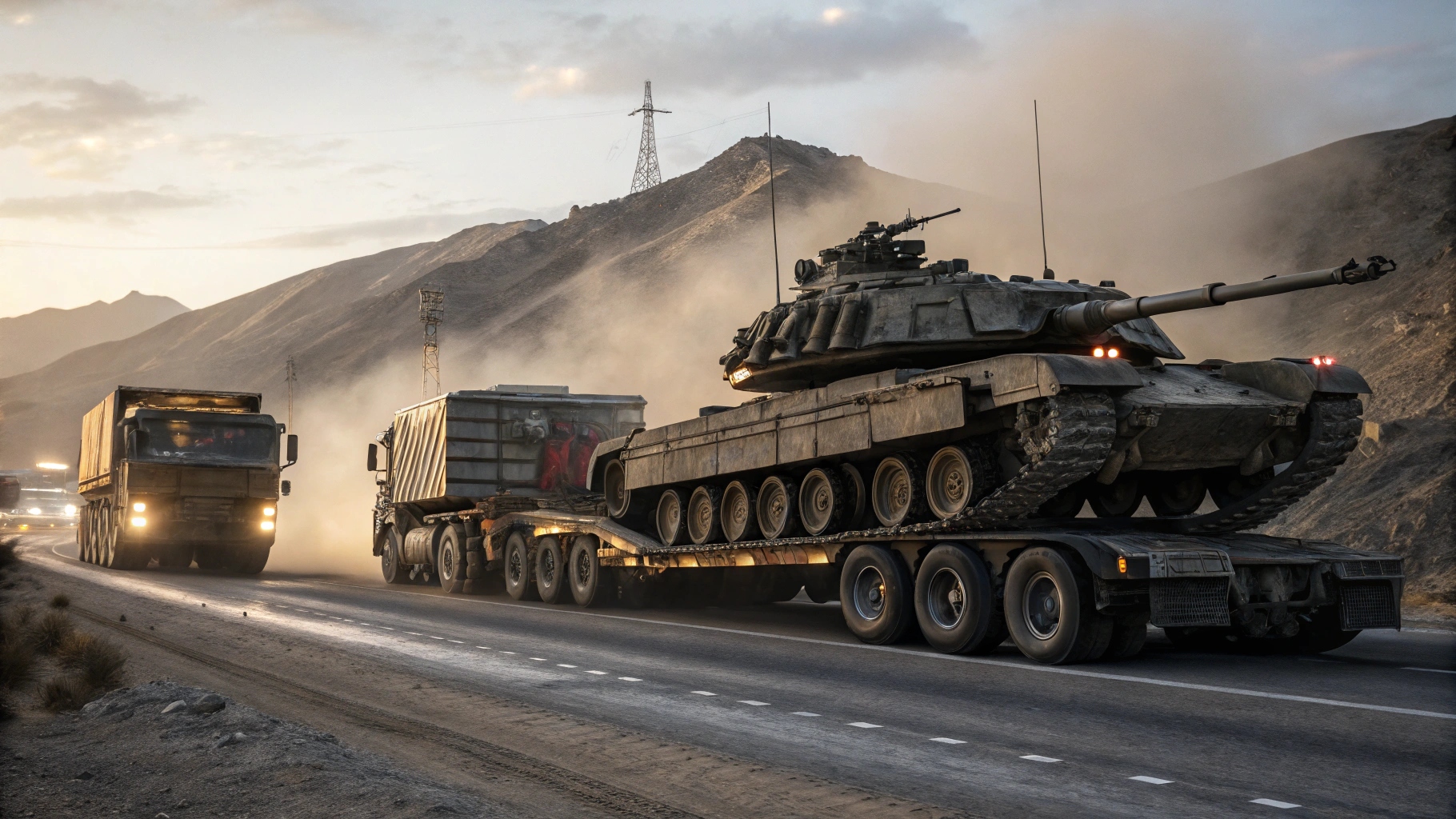
For the Zorawar, increasing protection must be balanced against the mobility requirements associated with high-altitude warfare. Additional armour can affect the tank’s ability to operate in mountainous terrain and may also limit the number of military transport aircraft capable of airlifting the platform.
Zorawar Developed for Himalayan Operations
The Zorawar program was initiated following China’s deployment of Type 15 light tanks during the 2020 military standoff in eastern Ladakh. India plans to acquire 354 Zorawar tanks, with an initial batch of 59 units scheduled for production by Larsen & Toubro at its Hazira facility.
The tank was recently showcased to Prime Minister Narendra Modi during his visit to Hazira, underlining the platform’s role in India’s ongoing armoured warfare modernisation efforts.
Developed in approximately 19 months, the Zorawar is designed as an indigenous light tank specifically suited to high-altitude and mountainous operations. It is named after General Zorawar Singh, historically associated with campaigns in Ladakh.
The platform is lighter than China’s Type 15 light tank while incorporating a substantial weapons package.
Firepower and Mobility
The Zorawar is equipped with a Belgian John Cockerill 3105 turret featuring a 105mm autoloading cannon. Its secondary armament includes a coaxial 7.62mm machine gun, a 12.7mm remotely controlled weapon station and twin launchers for Nag Mk 2 anti-tank guided missiles.
The tank is powered by a Cummins 760hp diesel engine coupled with a Renk transmission. It is designed to achieve a maximum road speed of approximately 70km/h and a range of around 450km.
Its relatively low weight also enables strategic air mobility. Aircraft such as the C-390, which is being considered by India under the Indian Air Force’s Medium Transport Aircraft competition, could potentially expand the options for transporting the platform.
If the tank’s weight exceeds 25 tonnes, however, the number of suitable transport aircraft could decline, potentially concentrating deployment options around larger platforms such as the Airbus A400M, Ilyushin Il-76 and Boeing C-17.
During the 2020 Ladakh standoff, India employed Il-76 and C-17 aircraft to move heavier T-72 and T-90 tanks, highlighting the logistical challenges associated with transporting heavy armoured vehicles into mountainous areas.
Protection Requirements Shape Development
The reported delay reflects the challenge of balancing survivability, firepower and mobility in modern high-altitude combat. Armoured platforms increasingly face threats from autocannons, anti-tank guided missiles, loitering munitions and drone swarms.
The additional development time could allow Indian industry to explore advanced composite armour, modular protection solutions and active protection technologies while attempting to preserve the tank’s weight and mobility requirements.
The outcome will determine how the Zorawar balances enhanced protection with the air mobility and high-altitude performance requirements for which the platform was originally conceived.