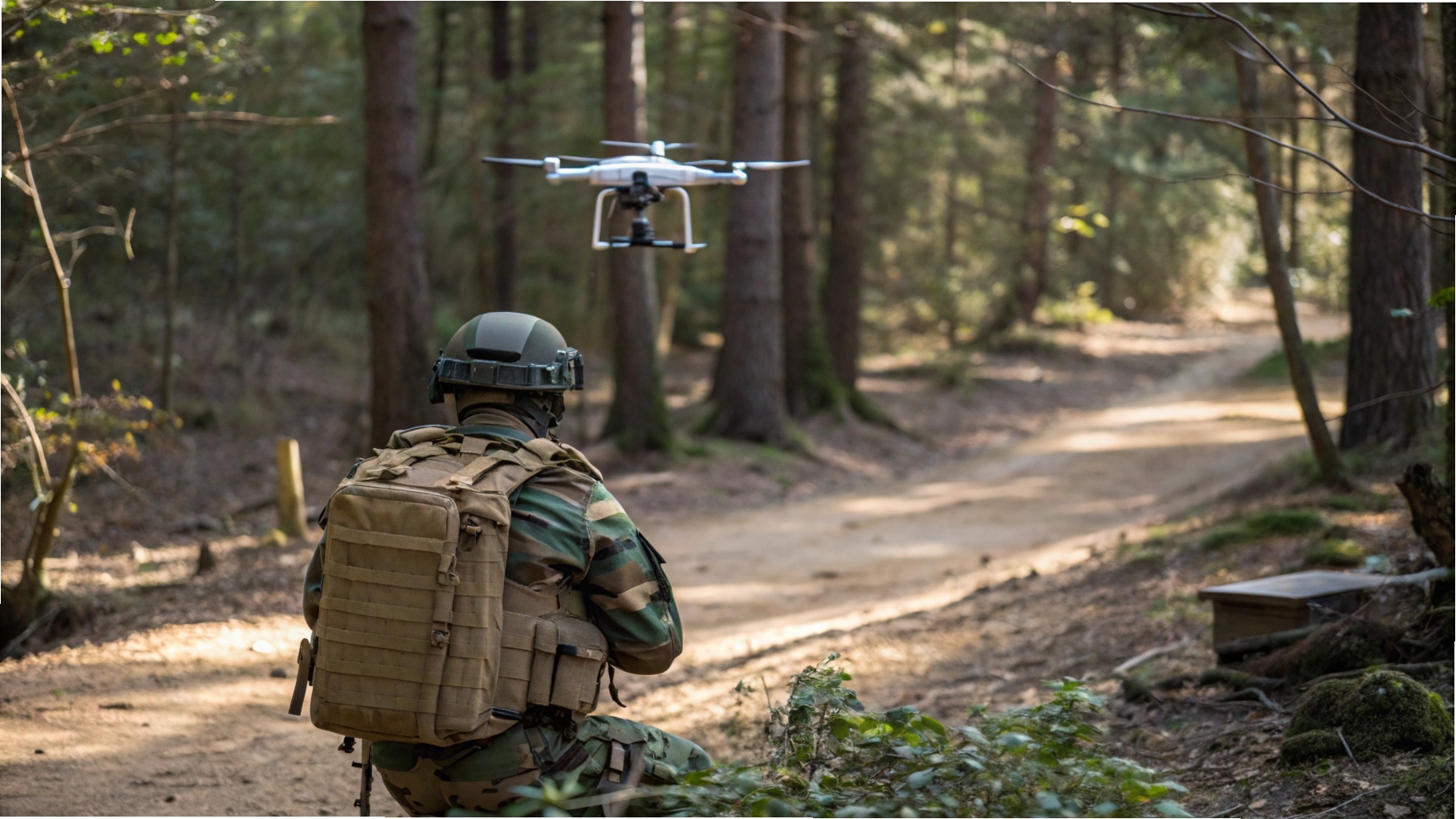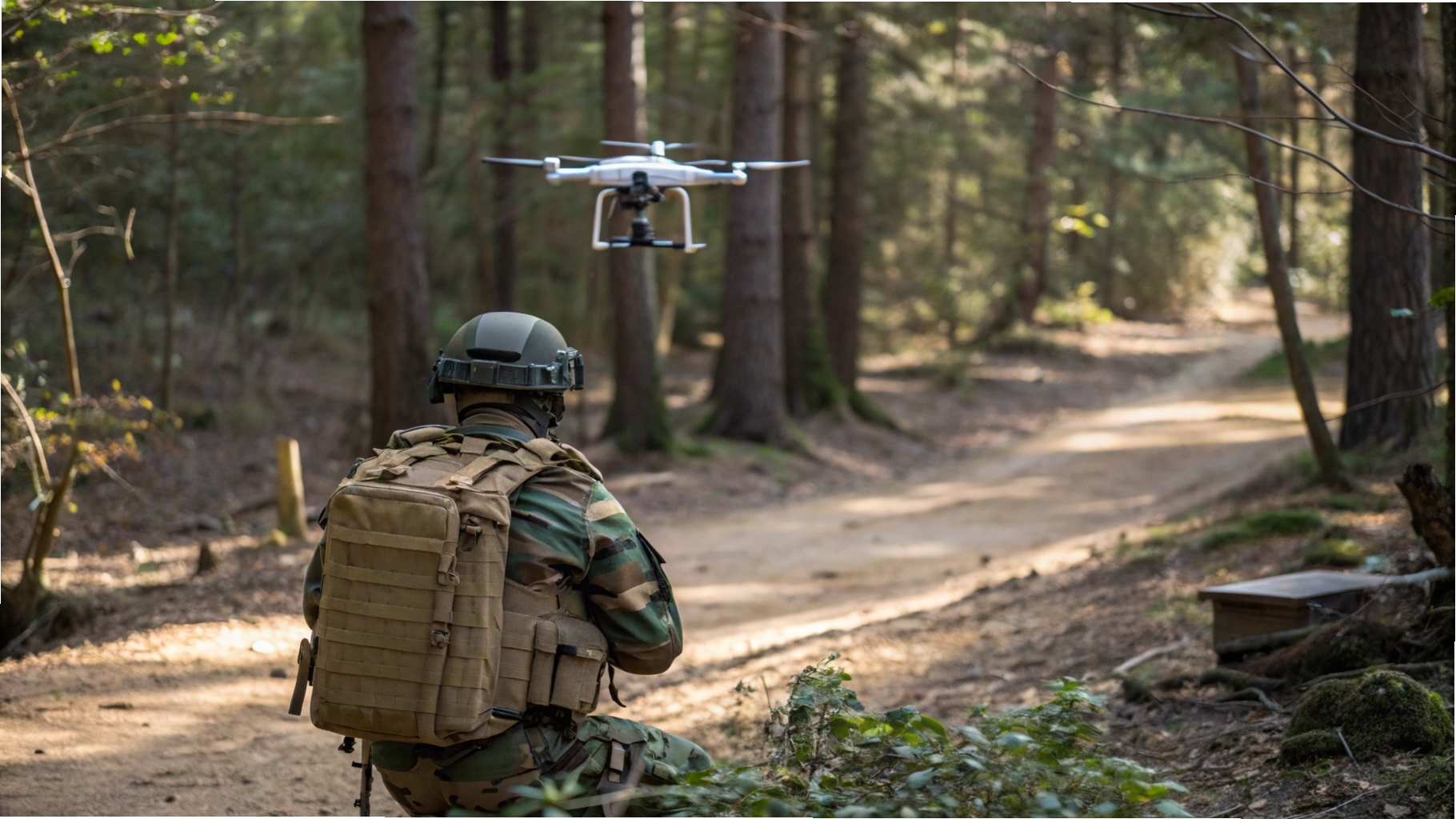

The Indian Army is implementing a major survivability upgrade for its K9 Vajra-T artillery system, enhancing its ability to defend against evolving aerial threats. Positioned near forward areas, these systems are increasingly targeted by loitering munitions like Harop and Lancet, along with FPV attack drones, prompting the need for advanced protection measures.
The upgrade introduces a multi-layered anti-drone suite that integrates hard-kill, soft-kill, and passive defenses. Central to this is a Remote Weapon Station (RWS), which replaces the manual machine gun and enables automated engagement using programmable airburst rounds in 12.7mm and potentially 30mm calibers. These munitions are designed to detonate near aerial targets, producing fragmentation capable of disabling drones in flight.
Advanced electro-optical and thermal sensors allow the RWS to detect and track fast-moving threats with high precision, reducing reaction time. Supporting this capability is a soft-kill electronic warfare system derived from the D4 suite, which employs directional jammers to disrupt drone communications and navigation. The system can also create a protective electronic field to obscure the platform from enemy reconnaissance.
To further enhance survivability, the K9 is fitted with passive defenses such as modular cope cages and slat armor, which help neutralize incoming loitering munitions by triggering early detonation away from the vehicle. These structures are designed for flexibility, ensuring full operational mobility and unrestricted gun movement.
In addition, integration with the Akashteer network provides real-time situational awareness. Through this system, the K9 Vajra-T can receive early warnings from battlefield sensors and air defense radars, enabling crews to respond quickly to emerging drone threats in a networked combat environment.