The Indian Air Force (IAF) is seeking greater operational independence under its proposed acquisition of 114 additional Rafale fighter aircraft from France, with unrestricted integration of indigenous weapons emerging as a key non-negotiable condition of the procurement programme.
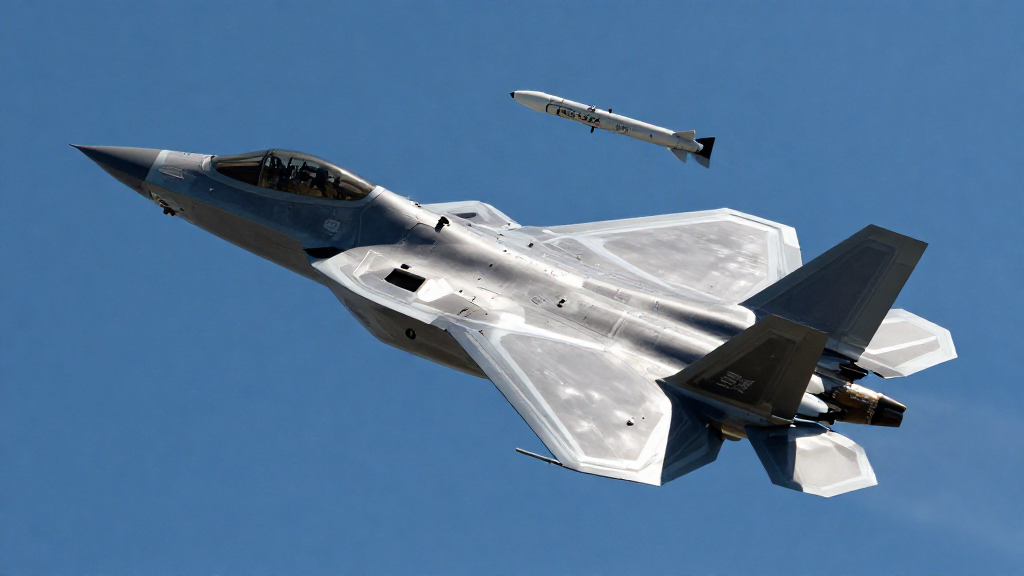
According to an exclusive report by ThePrint, India has insisted that the incoming Rafale aircraft should support the integration of domestically developed weapons, including the Astra Beyond Visual Range Air-to-Air Missile (BVRAAM), without requiring additional approval from foreign manufacturers. The capability could also be extended to the existing Rafale fleet if operationally required.
The proposed arrangement is expected to strengthen India’s defence self-reliance by reducing dependence on overseas suppliers for critical weapon systems. It would also provide the IAF with greater flexibility to upgrade combat capabilities and respond to evolving operational requirements.
A second source reportedly confirmed that the Astra missile would be integrated into the Rafale fleet, with the arrangement covering both the 36 aircraft currently operated by the IAF and the additional fighters proposed under the new procurement programme.
Developed domestically, the Astra missile represents a significant milestone in India’s indigenous air-to-air weapons development. Its beyond-visual-range engagement capability supports the country’s broader objective of incorporating locally manufactured defence technologies into frontline military platforms.
In addition to weapons integration, India is seeking access to specialised ground support equipment, including weapons test benches. These facilities would allow the IAF to independently test, calibrate, and configure integrated weapon systems without excessive reliance on foreign manufacturers.
Secure Communications and Network-Centric Warfare
Another major condition concerns the software-defined radio (SDR) systems fitted to the proposed 114 Rafale aircraft. India has reportedly insisted that these systems must facilitate secure and rapid information exchange with all existing and future IAF platforms, irrespective of their country of origin.
The requirement is intended to strengthen network-centric warfare capabilities by enabling seamless communication between fighter aircraft, radar systems, remotely piloted aircraft, command centres, and other operational assets. It would also ensure that the additional Rafales can operate effectively alongside India’s diverse inventory of Western, Russian, and indigenous military platforms.
The capability is becoming increasingly important as regional security challenges evolve, particularly with the emergence of stealth combat aircraft, advanced missile systems, and interconnected battlefield technologies.
The enhanced communication architecture is expected to support the IAF’s ‘Any Sensor, Best Shooter’ operational concept. This approach enables multiple military platforms to exchange targeting information and operational data in real time, allowing the most suitable available platform to engage a designated threat.
However, India has not sought access to the Rafale’s source code, and this is not expected to form part of the proposed agreement. Sources have indicated that access to the aircraft’s core software architecture is generally not provided even under domestic manufacturing arrangements. Such access is also not considered essential for independent weapons integration or advanced network-centric operations.
India’s ₹2.7 Lakh Crore Rafale Procurement Programme
The proposed acquisition of 114 Rafale fighters received Acceptance of Necessity (AoN) from the Defence Acquisition Council (DAC), marking an important step in India’s defence procurement process. The programme is estimated to be worth approximately ₹2.7 lakh crore and will require final approval from the Cabinet Committee on Security (CCS), chaired by the Prime Minister.
Under the Multi-Role Fighter Aircraft (MRFA) programme, France is expected to supply the initial 18 aircraft in fly-away condition, while the remaining fighters will be manufactured in India. Indigenous content is expected to progressively increase to approximately 55–60%, supporting domestic aerospace manufacturing and technology development.
Dassault Aviation has reportedly submitted its commercial proposal, with a significant portion of the aircraft manufacturing expected to take place in India. Defence Secretary Rajesh Kumar Singh has confirmed that the submitted bids are under evaluation, with a decision expected before the end of the year.
Subject to the completion of negotiations and necessary approvals, deliveries of the initial fly-away aircraft are expected to commence from 2030 onwards.
Strengthening India’s Combat Aircraft Capabilities
The IAF currently operates 36 Rafale fighters acquired under the 2016 procurement agreement with France. Separately, the Indian Navy ordered 26 carrier-capable Rafale Marine aircraft in 2025 to strengthen its naval aviation capabilities.
Developed by France’s Dassault Aviation, the Rafale is a twin-engine, multirole 4.5-generation combat aircraft designed to perform air superiority, interception, reconnaissance, and precision-strike missions.
The proposed 114-aircraft acquisition would significantly expand India’s Rafale fleet while strengthening its combat readiness, domestic aerospace manufacturing ecosystem, and indigenous weapons integration capabilities. If the proposed conditions are incorporated into the final agreement, the programme could also establish a stronger foundation for India’s long-term operational autonomy and network-centric air warfare capabilities.