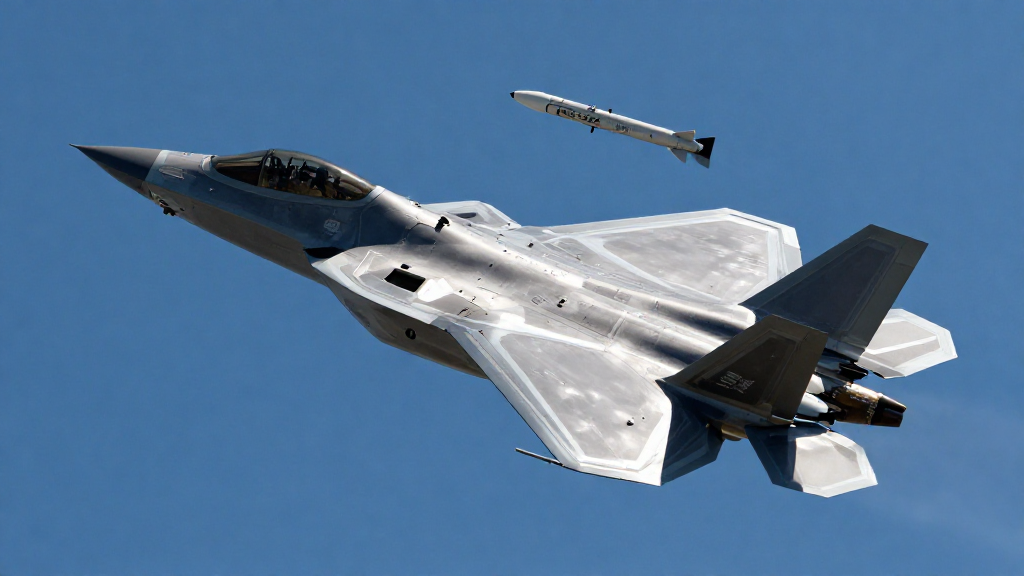

The US Army has awarded five separate Other Transaction Authority agreements to begin prototype development of the Precision Strike Missile (PrSM) Increment 4, initiating efforts to create a rocket artillery munition with a range of at least 1,000 kilometers (621 miles).
Anduril, Castelion, Lockheed Martin Missiles and Fire Control, Mach Industries, and RTX have been selected to develop competing prototypes compatible with the M142 High Mobility Artillery Rocket System (HIMARS).
The PrSM Increment 4 is expected to engage moving maritime targets as well as relocatable land targets at ranges of 1,000 kilometers or more. This would approximately double the range of the current PrSM variants.
The initial prototype phase is scheduled to culminate in a competitive fly-off and down-selection during fiscal 2027, with the evaluation based on the maturity of the proposed designs. A final competitive fly-off involving the selected companies is planned for fiscal 2028.
PrSM Increment 4 Builds on Earlier Variants
The latest development follows a $1.21 billion contract awarded to Lockheed Martin in September for the PrSM Increment 2 Early Operational Capability.
The baseline PrSM Increment 1 was primarily designed to strike land-based targets. Increment 2 expanded the weapon’s mission set by adding the capability to engage maritime and relocatable land targets at ranges of up to 500 kilometers (310 miles). Increment 4 is intended to further extend these capabilities and is being developed primarily with operations in the Indo-Pacific in mind.
PrSM Increment 2 incorporates a new multimode seeker capable of detecting, tracking, and engaging moving targets. The Increment 4 extended-range configuration is expected to retain this seeker technology.
Ramjet Propulsion Enables Extended Range
Achieving the required range will depend heavily on advanced propulsion technology. L3Harris Technologies, which is partnering with Lockheed Martin on its Increment 4 prototype, is providing ramjet propulsion technology.
The propulsion architecture combines a rocket booster with a ramjet engine. Following the initial boost phase, the ramjet uses atmospheric oxygen to sustain combustion, reducing the requirement to carry an onboard oxidizer during the weapon’s cruise phase.
The missile will be launched from existing HIMARS platforms and is being designed to maintain effectiveness in GPS-denied environments. Its high maneuverability and terminal velocity are also intended to make interception more difficult in anti-access/area-denial environments.
The accelerated development of Increment 4 reflects the US Army’s growing focus on long-range precision fires in the Indo-Pacific. The weapon is intended to provide the capability to hold distant land and maritime targets at risk from mobile ground-based launch platforms.
The US Army employed PrSM Increment 1 in combat for the first time in March during the conflict with Iran. Reuters subsequently reported in August that the United States had used nearly all of its ATACMS and PrSM stocks, citing individuals familiar with the data. The developments have further highlighted the importance of expanding US long-range precision-strike capacity.