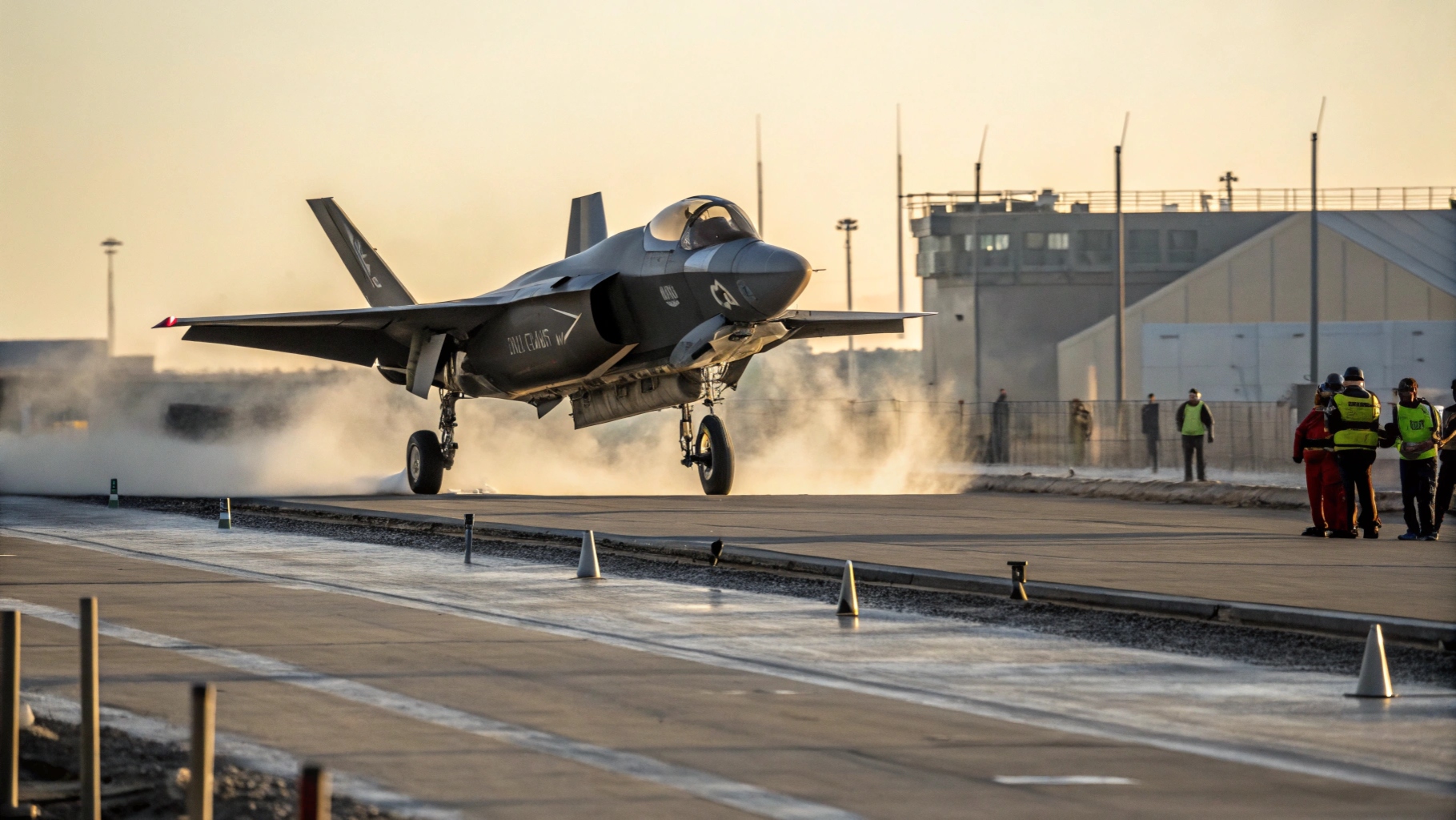

Russia has reportedly presented an extensive package of advanced air-launched weapons and unmanned systems that could accompany any future Indian acquisition of the Su-57 stealth fighter. According to information cited by IDRW.org, Moscow’s proposal goes beyond the aircraft itself, offering an integrated ecosystem of next-generation weapons designed to take advantage of the Su-57’s low-observable design and internal weapons carriage.
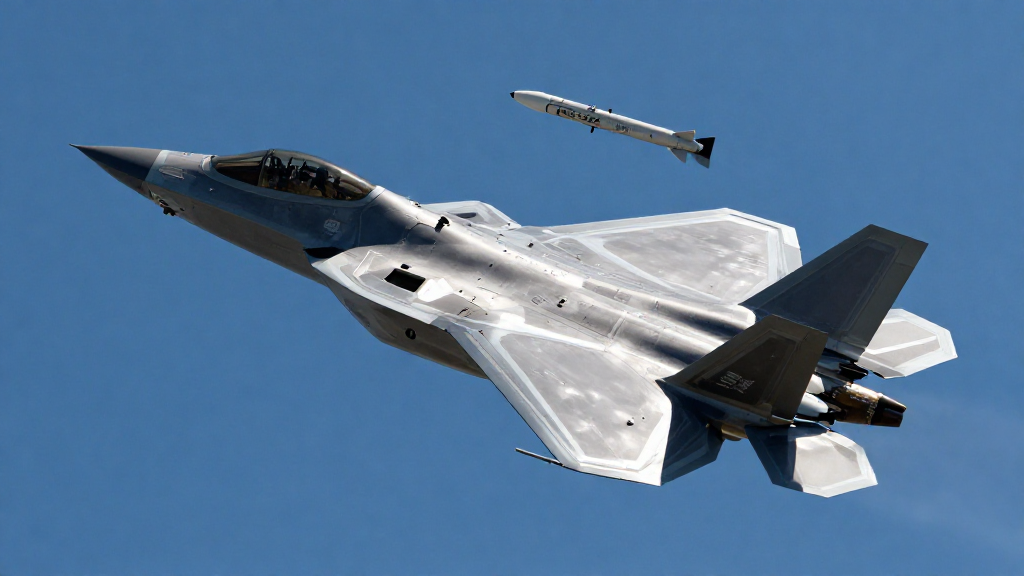
Unlike fourth-generation platforms such as the Su-30MKI, which predominantly carry weapons externally, the Su-57 was designed with internal weapons bays to preserve its low radar signature during combat operations. The aircraft features two large tandem bays beneath the fuselage, along with smaller side-mounted compartments for short-range air-to-air missiles. Russia has consequently developed a new generation of compact munitions intended specifically for internal carriage.
A key element of the reported package is the Kh-69 stealth cruise missile, a next-generation land-attack and suppression of enemy air defenses (SEAD) weapon. Its square-section fuselage and folding wings are designed to facilitate internal carriage while supporting reduced radar observability. The missile is intended to conduct terrain-following flight at very low altitudes and reportedly has an export range of around 290 km. Its guidance architecture combines inertial navigation with electro-optical and imaging-infrared technologies, allowing it to maintain targeting accuracy in environments where satellite-navigation signals may be disrupted.
Russia is also reportedly offering the R-77M, or Izdelie 180, its advanced beyond-visual-range air-to-air missile intended for frontline fighter operations. Developed from the R-77 family, the missile incorporates aerodynamic control surfaces suited to internal carriage aboard the Su-57. It is believed to feature an active electronically scanned array (AESA) seeker and a dual-pulse rocket motor, with estimated engagement ranges of approximately 160–200 km. The weapon is intended to enhance the Su-57’s ability to engage modern fighter aircraft at extended ranges.
Another major weapon is the R-37M, which has gained a reputation as an “AWACS killer” because of its long range and intended high-value targets. Although already integrated with aircraft such as the MiG-31BM and Su-35S, Russia is highlighting its compatibility with the Su-57’s Sh121 Multifunctional Integrated Radio Electronic System. With reported speeds approaching Mach 6 and an engagement range of up to 400 km, the R-37M is designed to threaten airborne early-warning aircraft, aerial tankers and intelligence platforms.
Perhaps the most strategically ambitious element is a reported miniaturised version of the Kh-47M2 Kinzhal hypersonic missile. The standard Kinzhal is too large for internal carriage and is currently associated with specialised platforms such as the MiG-31K. Russian design organisations are reportedly exploring a smaller variant compatible with the Su-57’s internal weapons bays. Although details remain limited, reports suggest that such a weapon could retain hypersonic performance approaching Mach 10 while offering a range of up to 2,000 km. If realised, it could significantly expand the Su-57’s role as a long-range precision-strike platform.
The reported package also includes the S-71K Kover, described as a low-observable strike system that combines characteristics of a cruise missile and an unmanned aerial vehicle. The system reportedly uses radar-absorbent composite materials, carries a 250-kg warhead and has a range of approximately 300 km. Its data-link architecture is designed to support both autonomous operation and real-time control by the aircraft crew, potentially providing greater flexibility for dynamic targeting.
Beyond conventional weapons, Russia is promoting the S-70 Okhotnik-B stealth unmanned combat aerial vehicle as part of a broader Su-57 ecosystem. The heavy stealth UAV is intended to operate as a “loyal wingman,” performing reconnaissance, electronic-warfare and strike missions alongside manned fighters.
Russian concepts for a twin-seat Su-57D variant reportedly include the ability to control multiple Okhotnik drones simultaneously. Such an arrangement could enable a crew to coordinate a networked group of unmanned combat aircraft operating in contested airspace, expanding the fighter’s situational awareness and strike capabilities.
Taken together, the reported package reflects Russia’s effort to position the Su-57 as more than a standalone fifth-generation fighter. By combining stealth-compatible cruise missiles, long-range air-to-air weapons, potential hypersonic strike systems and loyal-wingman UAVs, Moscow is presenting the aircraft as the core of an integrated combat ecosystem designed around networked fifth-generation warfare.