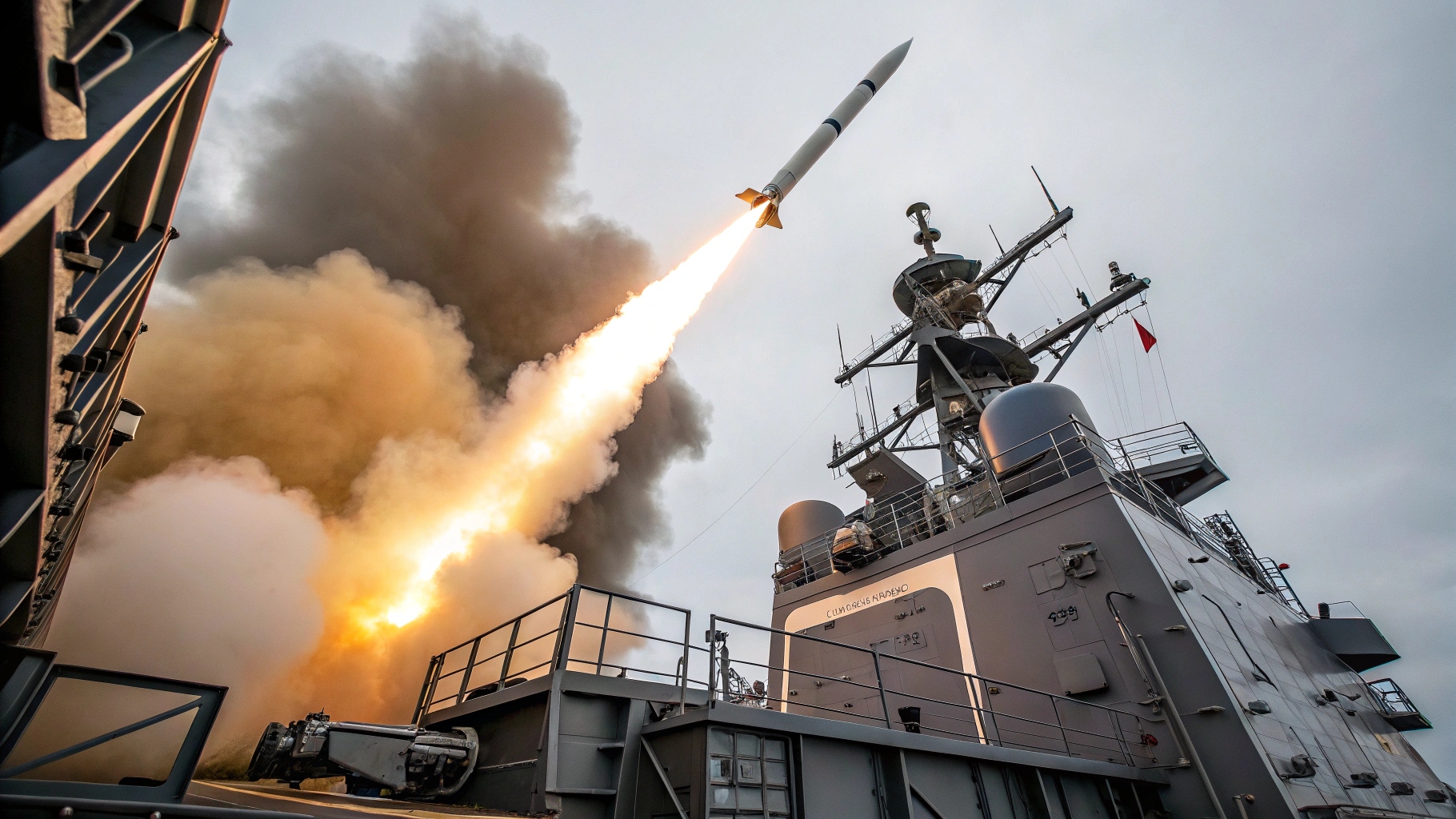

India is reportedly transforming its STAR (Supersonic Target Resembling Missile) program from a training asset into an operational tactical strike missile, creating a new indigenous weapon designed to deliver supersonic performance at a fraction of the cost of existing strategic systems. The resulting STAR-T variant is expected to support both land-attack and maritime strike missions while enhancing India’s ability to field large missile inventories for sustained combat operations.
The STAR platform was originally developed by DRDO’s ADE and DRDL as a supersonic target vehicle used to replicate cruise missile threats during air defense testing. Designed to fly at speeds approaching Mach 3 while simulating sea-skimming attack profiles, the system provided a realistic representation of modern missile threats.
According to sources, the transition toward an operational strike role was driven by the realization that the platform’s aerodynamic design and propulsion architecture were already well suited for offensive missions. The STAR-T concept therefore seeks to leverage existing technology to create a lower-cost tactical missile optimized for high-volume deployment.
The missile forms part of a broader strategy focused on balancing expensive strategic weapons with more affordable tactical alternatives. While systems such as the BrahMos would remain reserved for high-priority targets, STAR-T could be employed against radar installations, logistics hubs, communication nodes, air-defense sites, and other battlefield objectives where cost efficiency becomes a major consideration.
Projected to cost roughly half as much as a BrahMos missile, STAR-T is expected to deliver speeds between Mach 2.5 and Mach 3.2. Its cost advantage stems from the use of indigenous SFDR propulsion technology, which simplifies production, storage, and maintenance while eliminating reliance on foreign partners.
Unlike the Indo-Russian BrahMos program, STAR-T is being developed entirely within India, ensuring that intellectual property, manufacturing expertise, and economic benefits remain within the domestic defense sector. The missile’s smaller size and lighter payload also contribute to lower production costs while supporting its intended role as a tactical strike weapon.
Operationally, the system could enable saturation attacks against modern integrated air defense networks by allowing multiple missiles to be launched for the cost of a single strategic weapon. Such an approach reflects lessons from recent conflicts, where missile quantity and cost-exchange ratios have become increasingly important factors in offensive operations.
The STAR-T program underscores India’s growing focus on indigenous, scalable, and economically sustainable strike capabilities, providing a complementary option alongside premium systems while strengthening long-term self-reliance in missile technology.