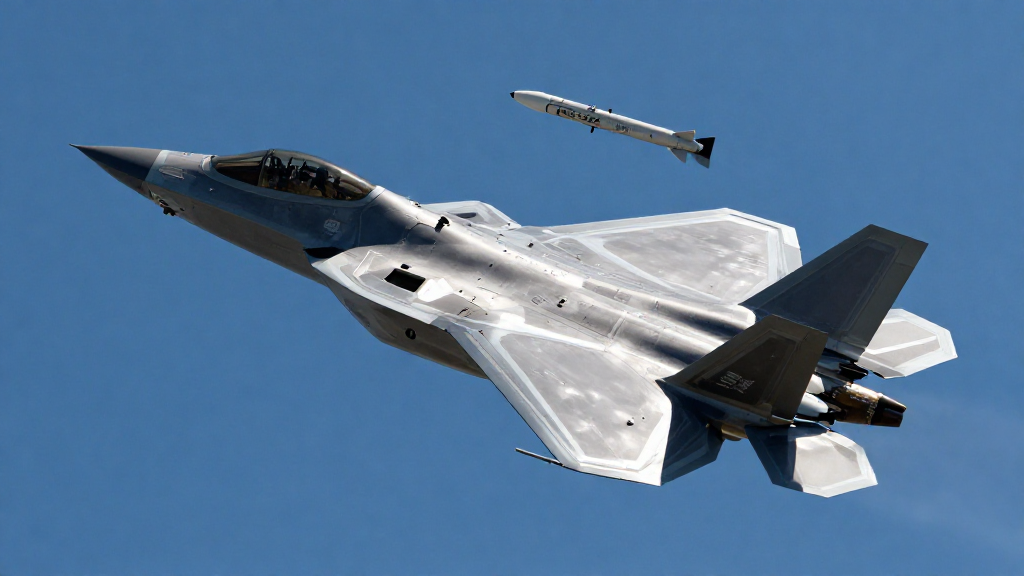

India’s Astra Mk-I BVRAAM has emerged as a significant milestone in the country’s indigenous aerospace and defense development. Already operational with the Indian Air Force, the missile has demonstrated performance relevant to modern medium-range air-to-air combat. Its growing maturity has created opportunities for overseas sales, but exporting the missile presents a challenge beyond production and procurement: integration with foreign fighter aircraft.
Unlike conventional unguided weapons, a modern BVRAAM must operate as part of the fighter’s wider combat system. The missile can depend on the aircraft’s radar, mission computer, weapon-management system, and secure datalink to receive and exchange information during an engagement. Consequently, integrating Astra with a new aircraft can require extensive engineering, testing, and certification.
Access to aircraft software and radar interfaces is one of the most important challenges. During a typical engagement, the fighter’s radar detects and tracks the target before launch. Once airborne, the missile may receive updates from the aircraft during the mid-course phase and later use its own active seeker for terminal targeting.
This requires close coordination between Astra and the aircraft’s mission systems. Fighter manufacturers generally protect their avionics software, radar technologies, and source-code access because these systems contain sensitive intellectual property. Major manufacturers, including Dassault Aviation, Lockheed Martin, Saab, and Sukhoi, maintain strict control over their aircraft architectures.
As a result, DRDO cannot necessarily integrate Astra independently with every foreign fighter. In many cases, the aircraft manufacturer would need to participate in software development, system integration, flight testing, and certification. Such involvement could increase both the cost and duration of an export program.
Hardware integration is another significant requirement. Modern fighters use digital avionics networks, including MIL-STD-1553 and manufacturer-specific data architectures, to communicate with weapons. Astra must be able to exchange targeting, command, status, and diagnostic information reliably with the host aircraft.
The missile’s physical interface must also be compatible with the fighter. Astra Mk-I has already been integrated with platforms such as the Su-30MKI and Tejas. Adapting it to another aircraft could require new launch interfaces, structural evaluations, aerodynamic assessments, and safe-release testing to ensure reliable separation from the aircraft.
Its secure datalink creates an additional integration requirement. Since the missile can receive guidance information from the launch aircraft, its communication system must work with the host platform’s avionics. Some customers may require customized datalink interfaces or additional equipment to achieve compatibility.
Political and regulatory factors can further influence export opportunities. Countries operating US or European fighter aircraft may require approval from the original manufacturer and the relevant government before introducing a third-party weapon. Export-control arrangements and end-user agreements can restrict modifications to sensitive aircraft systems.
Consequently, integrating Astra with platforms such as the F-16, Gripen, or Rafale could require cooperation from multiple stakeholders. Even when a customer is interested in the missile, regulatory or technical restrictions could delay or prevent integration.
Russian-origin fighter fleets could offer a comparatively favorable path because India already has substantial experience integrating Astra with the Su-30MKI. This experience provides a foundation for addressing software, avionics, launcher, and flight-testing requirements on compatible Russian-designed platforms.
Potential markets could include countries operating Russian-built fighters, such as Malaysia, Algeria, Vietnam, and selected African operators. These countries may also be seeking greater diversification of their weapons supplies due to geopolitical developments and changing defense supply chains.
For future variants, India could focus on open-system architectures that make Astra easier to integrate across different fighter platforms. Greater cooperation with aircraft manufacturers during the early stages of export campaigns could also streamline testing and certification, reduce integration timelines, and improve Astra’s competitiveness in international markets.