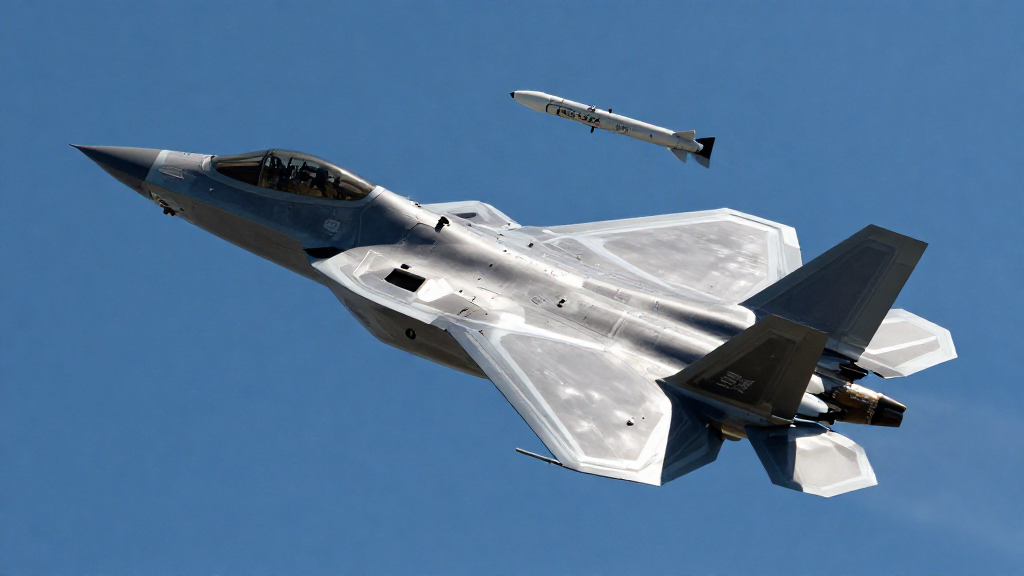

Russia’s Sukhoi is advancing studies to integrate a heavy air-to-surface or air-to-sea missile onto the Su-30 fighter following a requirement from an undisclosed customer. The proposed upgrade is expected to involve relatively limited modifications to the aircraft while significantly enhancing its long-range strike capabilities against maritime and land-based targets.
The development was confirmed on 22 November by Oleg Pankov, Chief Designer at the Sukhoi Experimental Design Bureau (OKB Sukhoi), during an interview on the Russian television programme Voennaya Priemka, broadcast by the Zvezda channel.
The initiative builds on previous experience within the Su-30 family, particularly the integration of the BrahMos-A supersonic cruise missile onto the Indian Air Force’s Su-30MKI fleet. That programme demonstrated the feasibility of adapting a heavy stand-off weapon for carriage and launch from a frontline fighter, although it required substantial engineering modifications.
Jointly developed by India’s Defence Research and Development Organisation (DRDO) and Russia’s NPO Mashinostroyenia, the BrahMos-A is among the most prominent examples of a heavy air-launched missile integrated with a combat aircraft. The missile is approximately eight metres long, has a diameter of 670 mm and weighs nearly 2.5 tonnes at launch.
Powered by a solid-fuel booster and a liquid-fuel ramjet, the BrahMos-A can reach speeds of up to Mach 2.8 and engage targets at ranges exceeding 300 kilometres. It carries a warhead weighing up to 300 kg and is designed to strike both naval and land-based targets using advanced navigation and terminal guidance systems.
Integrating the missile onto the Su-30MKI required structural, mechanical, electrical and software modifications to the aircraft. The missile itself was also redesigned to meet airborne launch requirements, including a weight reduction of approximately 500 kg to ensure compatibility with the fighter.
Although the BrahMos-A programme provides an important technical reference, its modifications cannot necessarily be transferred directly to other Su-30 variants, as aircraft configurations and integration requirements may differ.
Statements made during the television broadcast indicate that the latest missile integration effort could be intended for export customers. During the same programme, United Aircraft Corporation Director General Vadim Badeja highlighted the BrahMos project as a successful example of technological cooperation between Russia and India. He also noted that experience gained through the programme is being applied to other development initiatives.
Badeja further discussed ongoing enhancements to the Su-30 family based on Russian operational experience and referred to the Su-30SME, a variant developed specifically for international customers. These comments suggest that Russia is exploring ways to incorporate enhanced strike capabilities into future Su-30 export offerings.
If successfully integrated, the new missile would significantly expand the Su-30’s stand-off attack capabilities. It could provide greater effectiveness in anti-ship missions and strikes against high-value land targets, allowing aircraft to engage threats from extended distances while remaining farther away from hostile air-defence systems.
Recent combat operations have also highlighted the challenges posed by high-speed missiles to modern air-defence networks. Supersonic weapons generally offer defenders less time to detect, track and intercept incoming threats compared with subsonic cruise missiles, potentially increasing the difficulty of engagement even for layered air-defence systems.
The identity of the prospective customer and the specific missile being considered have not been disclosed. Nevertheless, Sukhoi’s confirmation that integration studies are already underway indicates that the initiative has progressed beyond an initial concept and entered the engineering assessment stage.