
HENSOLDT has unveiled the first upgraded COBRA (Counter-Battery Radar) system for the German Armed Forces, representing a significant step in the modernisation of the country’s artillery detection capabilities.
The upgraded radar was showcased during celebrations marking the 25th anniversary of the Organisation Conjointe de Coopération en Matière d’Armement (OCCAR), the multinational defence procurement organisation responsible for overseeing the modernisation programme.
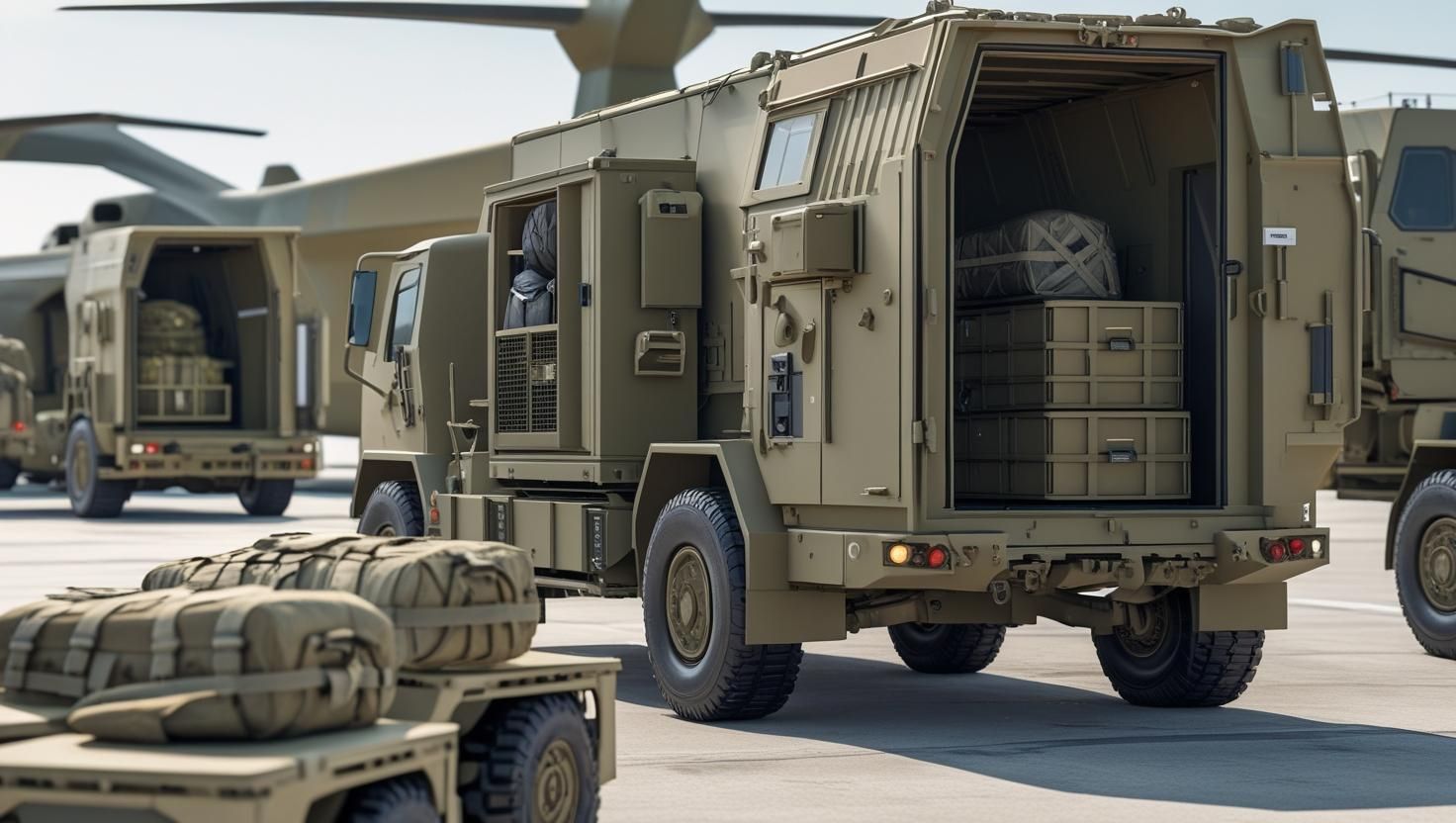
The system is integrated onto a new German carrier vehicle, demonstrating improvements in mobility and deployment flexibility. The Mid-Life Update (MLU) programme involves both Germany and France, with modernisation activities across the two countries’ radar fleets expected to be completed by 2027. Initiated in 2019, the programme focuses on enhancing system performance, extending operational service life and replacing obsolete components.
Major upgrades include the integration of a third-generation data system, a new inertial navigation unit, an improved power supply and an advanced signal processor. The modernisation package also incorporates new testing and validation equipment, including a radar target generator and a radar environment simulator.
According to OCCAR, the programme has progressed beyond development and qualification into the fleet implementation phase. These improvements are intended to enhance system reliability and maintain operational availability for future battlefield requirements.
COBRA Counter-Battery Radar: Capabilities and Operational Role
COBRA is a mobile counter-battery radar designed to detect and identify enemy artillery systems, rocket launchers and mortar positions by analysing the flight trajectories of incoming projectiles. The system also supports friendly artillery units by helping them register targets and adjust firing accuracy.
Jointly developed by Germany and France, COBRA entered operational service in 2005, with deliveries completed in 2007. It employs an Active Electronically Scanned Array (AESA) antenna to monitor incoming artillery fire and calculate the launch locations of hostile weapons.
Once detected, target coordinates and related information are transmitted to military command networks, enabling armed forces to identify hostile firing positions and coordinate appropriate responses.
According to OCCAR, the radar offers a detection range of up to 100 kilometres (62 miles) and can detect and classify as many as 40 artillery batteries within two minutes. It can also estimate the impact locations of incoming projectiles, providing military commanders with valuable information for threat assessment, force protection and battlefield decision-making.