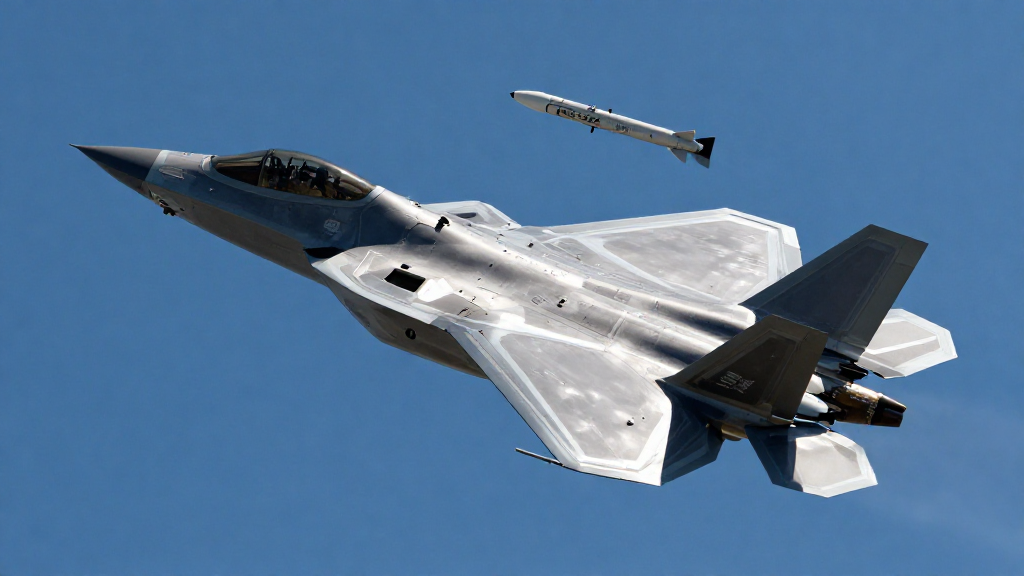
The US Air Force has awarded Lockheed Martin an $825.97 million contract modification for additional Long-Range Anti-Ship Missile (LRASM) and Joint Air-to-Surface Standoff Missile (JASSM) systems.
The modification raises the contract’s cumulative value to $10.46 billion, up from $9.64 billion. Work will be carried out in Orlando, Florida, with completion scheduled for July 31, 2030.
Funding will be drawn from fiscal years 2024 through 2026 appropriations covering missile and weapons procurement, research and development, and operations and maintenance. The agreement also includes $11.1 million in Foreign Military Sales funding.
Expanding Missile Production
The latest contract comes as the US Air Force prepares to substantially increase production of JASSM and LRASM missiles following extensive use of JASSM during the conflict with Iran.
Current plans could result in the procurement of up to 11,200 JASSM and LRASM missiles across Lots 27–33 and 13–19, respectively, over the next five to seven years. This would translate into an average production rate exceeding 1,000 missiles annually.
The planned increase represents a significant expansion compared with the fiscal 2025 budget, which provided funding for 450 JASSMs and 115 LRASMs.
Extensive JASSM Employment
The JASSM-ER is capable of engaging targets more than 500 nautical miles (575 miles/965 kilometers) away. It carries a 992-pound (450-kilogram) warhead and incorporates low-observable features designed to penetrate sophisticated air defenses and attack hardened targets.
A Center for Strategic and International Studies report published April 21 stated that US forces employed more than 1,000 JASSMs, primarily AGM-158B JASSM-ER variants, against Iranian targets. The report described the missile as the most extensively used US offensive munition during the campaign, surpassing the Tomahawk.
Bloomberg also reported that the United States transferred JASSM stocks previously allocated to other regions, including the Indo-Pacific, to US Central Command and Europe. This reportedly reduced the number of JASSM-ER missiles available for other theaters to approximately 425, compared with a prewar inventory of around 2,300.
Shared Missile Architecture
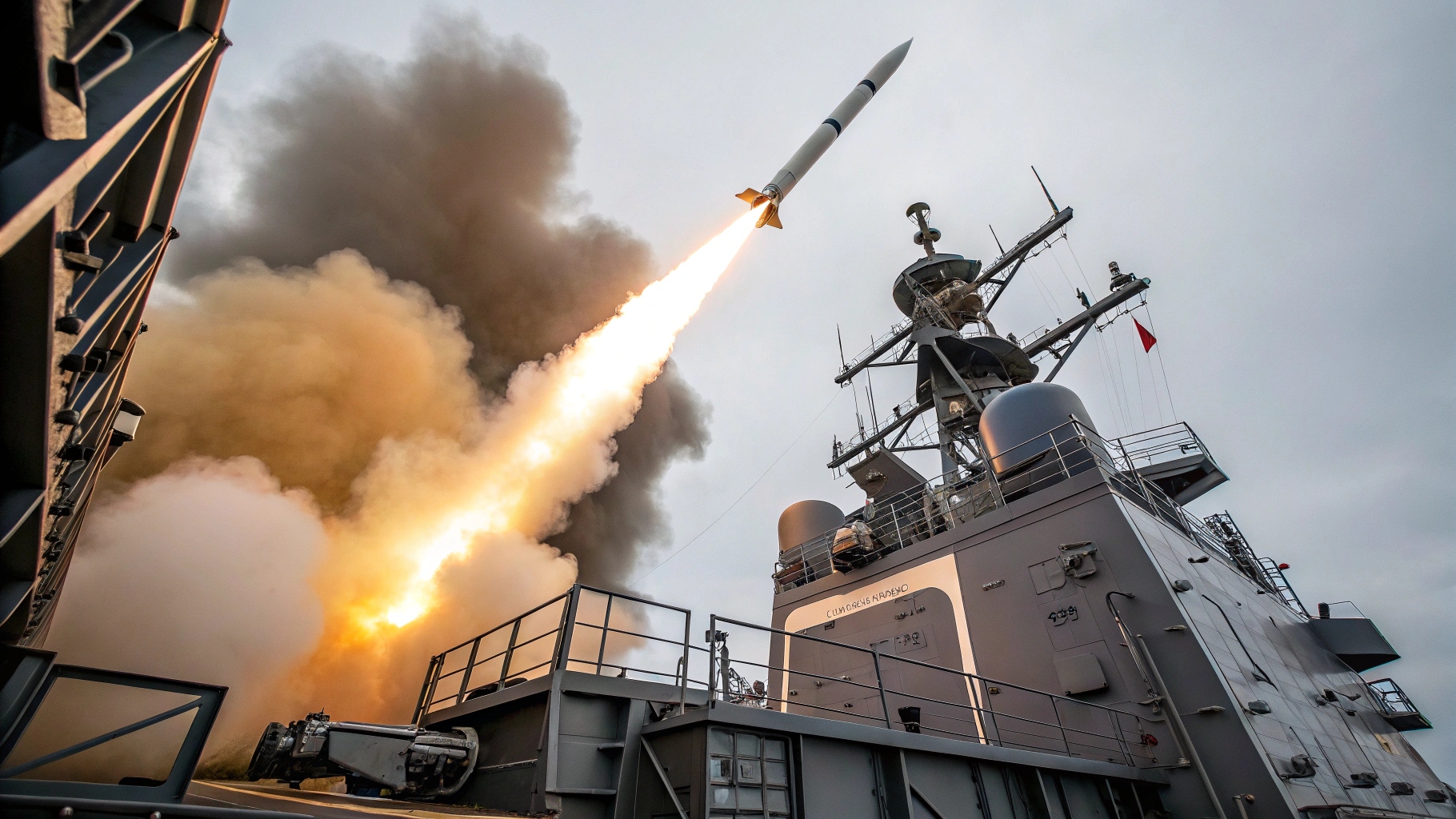
The LRASM, designated AGM-158C, is derived from the JASSM-ER (AGM-158B) and shares several major components and technologies. These include the stealth-optimized airframe, Williams F107 turbofan engine, wings, tail assembly, fuel system, and various avionics and manufacturing processes.
Both missiles are low-observable cruise missiles equipped with a 992-pound (450-kilogram) penetrating blast-fragmentation warhead.
The JASSM uses GPS-aided inertial navigation and an imaging infrared seeker to engage fixed land targets. LRASM, meanwhile, incorporates passive radio-frequency sensors, an infrared seeker, a two-way datalink, and autonomous targeting capabilities to engage maritime targets, including warships, even in GPS-denied environments.
Although the Pentagon has not confirmed whether LRASM was employed during the Iran campaign, the missile remains an important component of US long-range strike planning, particularly in the Indo-Pacific.
In June, the US Air Force demonstrated the integration of LRASM with the B-2 Spirit during Exercise Valiant Shield 2026, conducting a live-fire strike against a decommissioned vessel. The test highlighted the missile’s role in extending the US long-range anti-surface warfare capability.