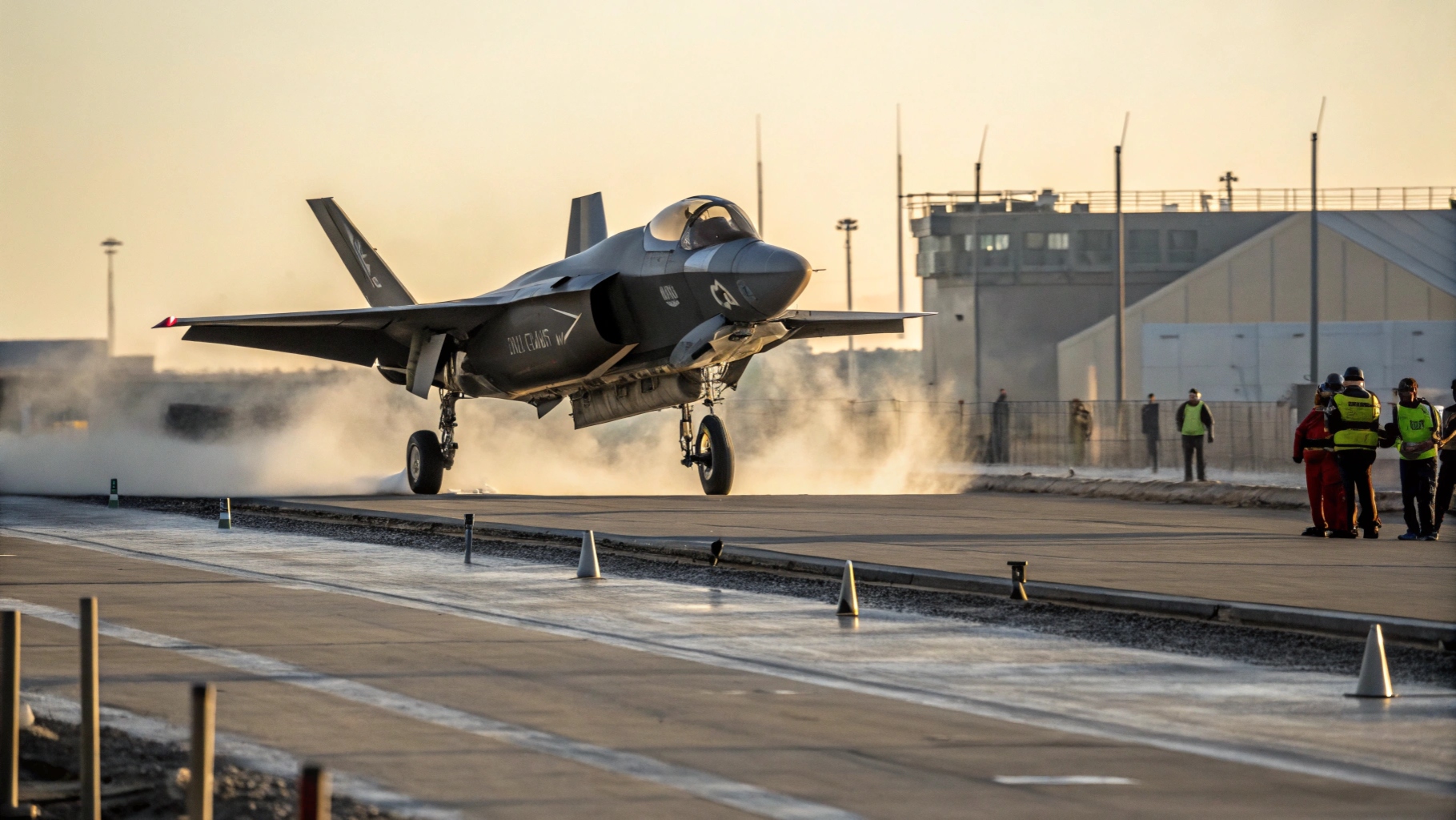

Hindustan Aeronautics Limited (HAL) has faced repeated delays in delivering the two-seat TEJAS variant, with engine supply constraints from GE Aerospace emerging as a major challenge. The US company supplies the F404 and F414 engines that have played a central role in India’s Light Combat Aircraft program and also power platforms such as the Saab Gripen-F.
Engine delivery delays have affected both TEJAS production and testing schedules. HAL is now completing the original 40-aircraft TEJAS MK-1 order with the delivery of its final two twin-seat trainer aircraft, while simultaneously accelerating production of the upgraded TEJAS MK-1A.
The MK-1A program is supported by expanded manufacturing capacity and a more distributed supply chain. Despite continuing engine constraints, the Indian Air Force (IAF) is targeting the formation of its first MK-1A squadron by March 2027.
TEJAS MK-1 Program
The IAF’s original TEJAS MK-1 contract covered 40 aircraft, comprising 16 Initial Operational Clearance (IOC) single-seat fighters, 16 Final Operational Clearance (FOC) single-seat aircraft, and eight twin-seat trainers.
With the final two trainers now being delivered, HAL has effectively completed the initial 40-aircraft order, marking an important milestone for India’s indigenous fighter aircraft program.
The company is now concentrating on the TEJAS MK-1A, which incorporates significant improvements intended to address operational requirements and enhance combat effectiveness.
Engine Supply Challenges
Production of the MK-1A has been affected by delays in deliveries of GE Aerospace’s F404-IN20 engines. Although 10 engines have been delivered so far, the program remains more than two years behind its original schedule.
HAL has assembled approximately 30 MK-1A airframes, with around 20 having completed preliminary flight activities. However, several aircraft remain grounded while awaiting engines.
HAL has invoked contractual penalties against GE Aerospace over delayed deliveries. GE has subsequently committed to increasing production to 24 engines during 2026–27 and 30 engines annually thereafter.
The IAF is seeking to establish its first MK-1A squadron by March 2027, with an initial fleet of approximately 18–20 aircraft, including trainers. The timeline is particularly important as the service faces a fighter squadron shortage. The IAF currently operates around 29 fighter squadrons against an authorized requirement of approximately 42–42.5 squadrons, a gap that has been further affected by the retirement of MiG-21 aircraft.
Expanding Production Capacity
HAL has expanded its manufacturing infrastructure to support higher TEJAS production rates. A new production line at Nashik, inaugurated in October 2025, has increased annual capacity to 24 aircraft, with plans to raise output to 30 aircraft annually by fiscal year 2028.
The Nashik facility also broadens the TEJAS manufacturing footprint beyond Bengaluru, providing additional resilience and reducing dependence on a single production location.
Private-sector companies have become increasingly important to the MK-1A supply chain. Firms including Larsen & Toubro, Lakshmi Machine Works, and Dynamatic Technologies are contributing complex components and sub-assemblies, including wings, fuselage sections, and precision aerospace structures.
The distributed industrial network extends across multiple Indian locations, with center fuselage assemblies produced in Hyderabad and wing-related manufacturing activities carried out in Coimbatore. The model reflects India’s broader strategy of using private-sector participation to increase defense production capacity and efficiency. Analysts estimate that the wider TEJAS industrial ecosystem represents a potential ₹40,000 crore market opportunity.
MK-1A Technology Upgrades
The TEJAS MK-1A incorporates several significant technological improvements over the earlier MK-1 configuration. These include the EL/M-2052 Active Electronically Scanned Array (AESA) radar, an indigenous electronic warfare suite, beyond-visual-range missile capability, software-defined communications, and improved maintainability supported by advanced diagnostic systems.
Two aircraft have already been modified for system and weapons integration testing. The platform has successfully undergone trials involving the ASRAAM short-range air-to-air missile and Astra beyond-visual-range missile.
The IAF has agreed to certain exemptions to facilitate early aircraft deliveries. However, the service requires critical capabilities, including radar and electronic warfare integration and missile firing trials, to be completed before aircraft are inducted into operational service.
HAL has stated that five MK-1A aircraft are fully ready for handover with the contracted capabilities incorporated. Another nine aircraft have been manufactured and flown but remain dependent on engine availability.
The company had planned to deliver five fighters by March 2026, with production expected to accelerate as engine supplies improve. A follow-on agreement covering 113 additional engines was signed in November 2025 to support the second batch of 97 MK-1A aircraft and provide continuity for the longer-term program.
Impact on the Indian Air Force
The completion of the original TEJAS MK-1 order and the expansion of MK-1A production represent an important stage in the modernization of India’s fighter fleet.
The TEJAS program is contributing not only to the replacement of aging combat aircraft but also to the development of a broader domestic aerospace manufacturing ecosystem. Increased participation from Indian private-sector companies is strengthening the industrial base needed to support future fighter production and potential exports.
Meeting MK-1A delivery schedules will remain critical for the IAF’s operational readiness. Successful execution of the program could also strengthen India’s position as a manufacturer and potential exporter of modern lightweight combat aircraft.