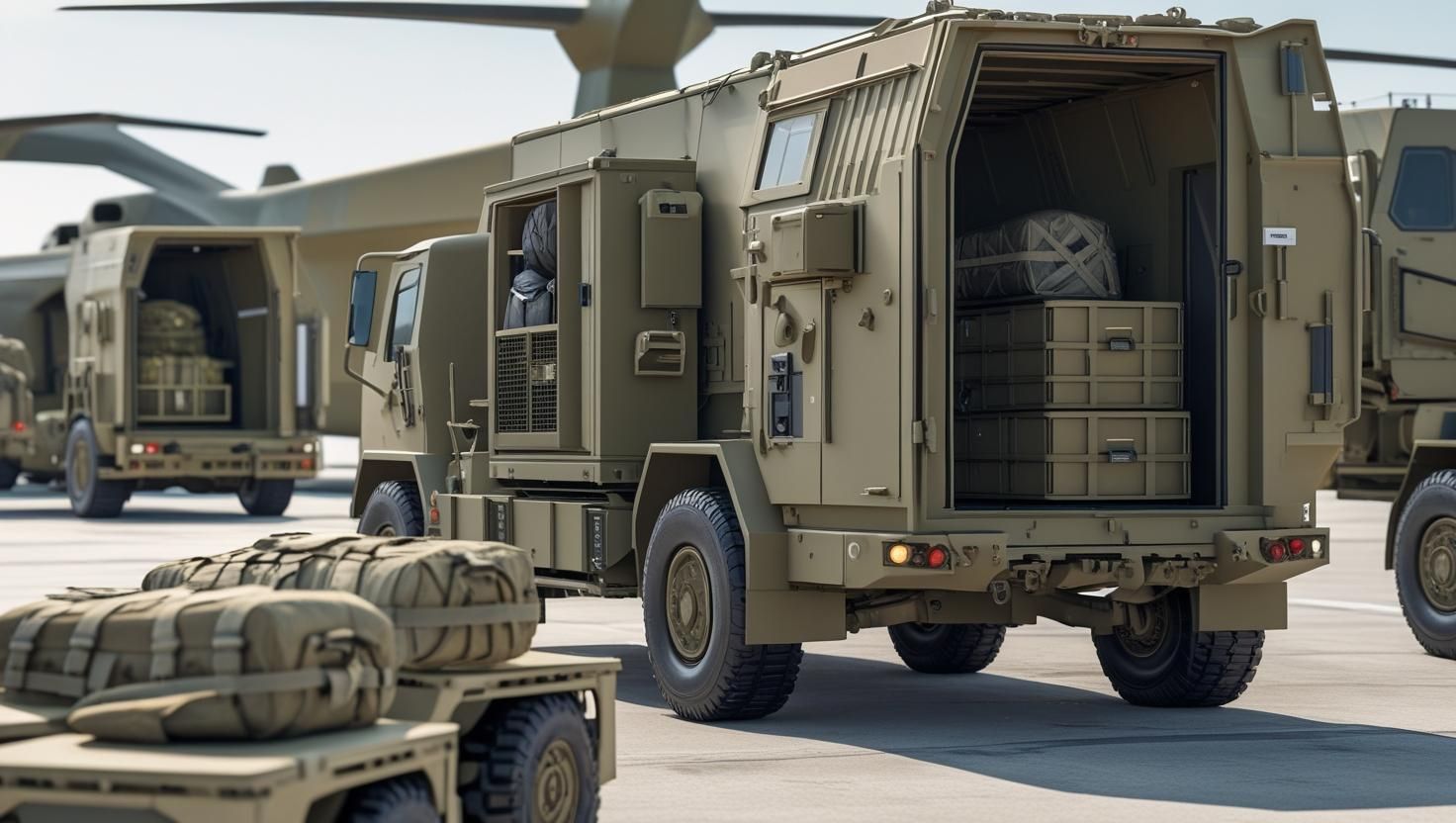
India is progressing towards establishing an integrated defence logistics framework to strengthen coordination among the Army, Navy and Air Force, particularly during military conflicts. The initiative forms part of preparations for the proposed theatre command structure, according to The Times of India.
The initiative is being spearheaded by the Department of Military Affairs (DMA) and draws inspiration from the integrated logistics framework used by the United States. The objective is to streamline logistics infrastructure across the three services, enabling more efficient management of supplies, maintenance, inventories and operational support through a unified system.
The development came to light through a communication from Rear Admiral Kunal Singh Rajkumar, Joint Secretary (Navy and Defence Staff) in the DMA, to Rajya Sabha MP Ajeet Madhavrao Gopchade. The communication followed Gopchade’s letter to Prime Minister Narendra Modi, recommending an examination of a unified defence logistics and fuel management framework modelled on the US Defence Logistics Agency (DLA).
In his representation, Gopchade highlighted the DLA’s role as a centralised organisation responsible for providing combat logistics support across the US Department of Defence. Its functions include fuel supply, military procurement, spare parts distribution, warehousing, technical support, defence standardisation, petroleum quality assurance, artificial intelligence-enabled logistics and global supply-chain management.
The MP pointed out that India’s existing defence logistics infrastructure remains distributed across several service-specific organisations. These include the Army Service Corps, Army Ordnance Corps, Corps of Electronics and Mechanical Engineers, naval logistics branches, Air Force maintenance networks, fuel depots and various procurement and inventory management systems. Integrating these arrangements could improve coordination and reduce duplication across the armed forces.
According to Gopchade, the DMA has indicated that relevant international best practices suited to India’s operational requirements are being incorporated into the developing logistics framework to support future theatre commands.
To facilitate this transition, specialised bodies have been established, including the Joint Operations Logistics Committee, Joint Services Study Groups, Joint Working Groups and Inter-Service Maintenance Working Groups. These organisations are tasked with aligning logistics procedures, improving coordination and standardising support processes across the Army, Navy and Air Force.
A key element of the initiative is the development of a Tri-Services Logistics Management Application, which is intended to provide real-time visibility of inventory held across the three services. The digital platform is also expected to integrate service-specific enterprise resource planning systems into a common framework, enabling better resource tracking and coordination.
India is also advancing work on a National Defence Codification System to standardise the identification, classification and management of defence inventory across the services. A common codification structure could simplify inventory management, improve supply-chain visibility and facilitate the movement of resources between service branches.
Alongside these digital initiatives, the government plans to expand shared logistics infrastructure through additional joint logistics nodes, followed by joint ammunition depots, air stores supply parks and material organisations across the country. These facilities are expected to strengthen the availability of supplies and maintenance resources while supporting more coordinated military operations.
Another initiative under development is the PM Gati Shakti Defence Portal, which is expected to connect military logistics with the National Logistics Policy and the Unified Logistics Interface Platform. The proposed system aims to establish a defence-focused logistics interface that can operate across service boundaries and future theatre commands.
Artificial intelligence (AI) and machine learning are also expected to play an increasingly important role in improving inventory management, logistics planning and operational efficiency. Predictive maintenance technologies are being introduced in selected areas of military logistics to identify potential equipment failures, support timely repairs and improve the availability of operational assets.
In parallel, efforts are under way to modernise existing financial and procurement systems to facilitate more effective joint logistics management. These reforms are intended to improve resource allocation and ensure that supplies, fuel, spare parts and maintenance support can be accessed across service boundaries through a common network.
Gopchade has also proposed several additional measures, including a unified defence fuel management system, a secure military fuel card network, AI-enabled predictive logistics and maintenance mechanisms, and an integrated petroleum quality assurance framework. These measures are aimed at strengthening fuel distribution, improving supply reliability and enhancing logistics readiness during military contingencies.
The integration of defence logistics is closely linked to India’s proposed theatre command structure, which seeks to improve joint operational planning and coordination among the armed services. A unified logistics network would help military planners deploy and sustain resources more efficiently across land, maritime and air theatres, supporting future multi-domain operations.
The DMA has indicated that developing a joint logistics architecture comparable in concept to the US Defence Logistics Agency remains a strategic priority for the Ministry of Defence. The broader objective is to establish an integrated, technology-enabled and theatre-command-ready logistics ecosystem that strengthens interoperability, reduces duplication and enhances the operational readiness of India’s armed forces.