
Indian Air Force Chief Air Chief Marshal AP Singh has highlighted ongoing efforts to integrate the indigenous ASTRA Mk-2 beyond-visual-range air-to-air missile with additional fighter platforms, while preparatory activities for the next-generation ASTRA Mk-3 are also progressing.
The developments underscore the Indian Air Force’s focus on creating a layered and diversified air-combat arsenal that combines domestically developed weapons with selected foreign systems to meet a wide range of operational requirements.
ASTRA Mk-2 Integration Advances
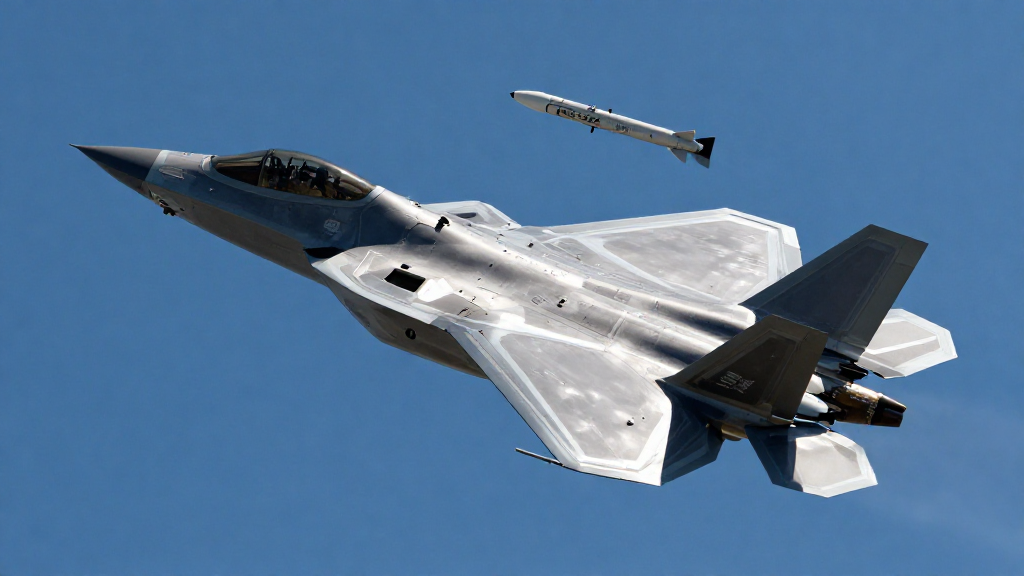
The integration of ASTRA Mk-2 with additional and larger combat platforms is expected to strengthen the reach and effectiveness of India’s indigenous air-to-air missile family. The missile is designed to offer a considerably longer engagement range than the operational ASTRA Mk-1, enabling fighter aircraft to engage airborne targets from greater distances.
Developed by the Defence Research and Development Organisation (DRDO), the ASTRA missile family is a major indigenous air-combat program aimed at reducing dependence on overseas suppliers while expanding India’s domestic missile-development capabilities. The weapons are intended for integration across multiple fighter aircraft operated by the Indian Air Force.
The latest comments from Air Chief Marshal AP Singh indicate that development efforts are increasingly focused not only on missile performance but also on integrating the weapon across a broader range of aircraft. Such compatibility is critical because an air-to-air missile must work effectively with an aircraft’s radar, avionics, mission computer and data-link systems to deliver its full combat potential.
ASTRA Mk-2 is expected to provide a substantial improvement in beyond-visual-range combat capability through advanced guidance, propulsion and electronic-warfare resistance. Reports have indicated that the missile could use a dual-pulse propulsion system designed to preserve energy during the terminal phase of an engagement, supporting manoeuvrability and effectiveness against agile targets.
The missile is also expected to incorporate an advanced seeker and network-enabled features that can support mid-course guidance updates. These capabilities are particularly relevant for long-range engagements, where target positions can change significantly between launch and interception.
ASTRA Mk-3 and Future Air Combat Capability
Alongside ASTRA Mk-2 integration, preparatory work is progressing on the next-generation ASTRA Mk-3, also known as Gandiva. The missile is expected to offer significantly greater engagement ranges and represent another advancement in India’s indigenous air-to-air missile capabilities.
The progress of the ASTRA Mk-3 program indicates that Indian defense agencies are planning beyond current operational requirements and preparing for increasingly sophisticated threats. Long-range air combat has become a critical element of modern warfare, as the ability to detect, track and engage adversary aircraft before visual contact can provide a major tactical advantage.
A next-generation long-range missile could enhance India’s ability to counter advanced air-to-air weapons deployed by major regional air powers while providing greater flexibility to its fighter fleet.
Balanced Indigenous and Imported Weapon Strategy
Despite the progress of indigenous missile programs, Air Chief Marshal AP Singh has indicated that the Indian Air Force will continue to rely on a combination of domestic and imported weapon systems. This approach reflects the need to maintain operational readiness while addressing diverse mission requirements.
The Indian Air Force has historically operated a mix of Indian-developed and foreign-origin weapons, allowing it to maintain flexibility while gradually increasing the share of indigenous defense technology. The development and integration of the ASTRA family are central to this effort, particularly in strategically important areas such as long-range air combat.
At the same time, selected imported weapons can help bridge capability gaps and provide access to mature technologies when required. This combination allows the service to maintain combat effectiveness while supporting the long-term objective of greater defense self-reliance.
The parallel advancement of ASTRA Mk-2 integration, ASTRA Mk-3 development and foreign weapon acquisitions therefore reflects a broader force-modernization strategy. Together, these efforts are intended to provide the Indian Air Force with a flexible portfolio of air-to-air weapons capable of addressing evolving threats across different operational scenarios.
The latest update from Air Chief Marshal AP Singh highlights continued progress in India’s indigenous missile-development program while reinforcing the Indian Air Force’s broader objective of building a resilient, technologically advanced and adaptable air-combat force for present and future security challenges.