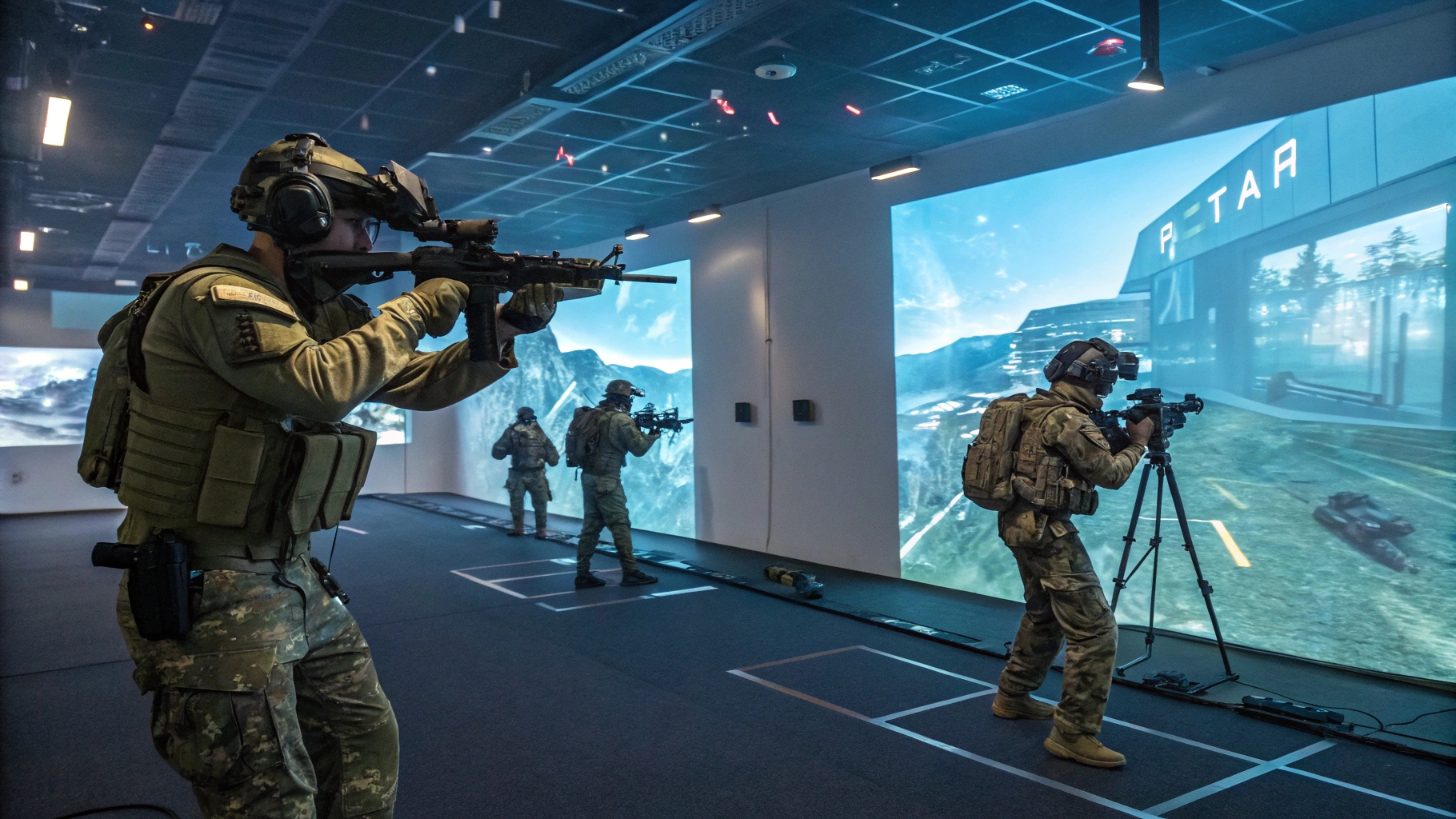

Photonis Defense has received a US Army order for 1,600 Binocular Night Observation Device, or BiNOD, systems as the program moves toward production.
The US Army established the BiNOD program to create a cost-effective, helmet-mounted binocular night-vision system capable of amplifying available light and improving soldier visibility during operations in dark or low-light conditions.
The first systems are expected to be delivered before the end of 2026, with the bulk of deliveries planned for 2027.
The latest order comes under a contract awarded in March 2026 with a maximum potential value of $352.6 million. However, the financial value of this specific order has not been revealed.
The contract award advances the program beyond its development, testing, and qualification stages into Low-Rate Initial Production. This phase will involve the manufacture of a limited number of systems before the Army potentially proceeds with large-scale production.
Photonis Defense will assemble, manufacture, and test the complete devices at its US production facility, using image intensifier tubes supplied by Exosens, its France-based parent company.
Exosens Expands Infrared and Night-Imaging Capabilities
The latest BiNOD order is part of a broader expansion of Exosens’ imaging and infrared technology activities.
The company recently announced plans to triple its thermal camera manufacturing capacity to address increasing demand for compact imaging solutions used on unmanned aerial systems and counter-drone platforms.
In June, BROLIS selected Exosens to supply 17,000 image intensifier tubes for night-vision equipment procured by the Czech Armed Forces. The technology works by amplifying available ambient light to create visible images in darkness.
Exosens has also joined the SPIRIT program, a four-year European Defence Fund project valued at 39 million euros ($45 million). The initiative is focused on enhancing infrared detector resolution, sensitivity, and onboard processing while developing a stronger European supply chain for semiconductor components, detector manufacturing, and camera integration.