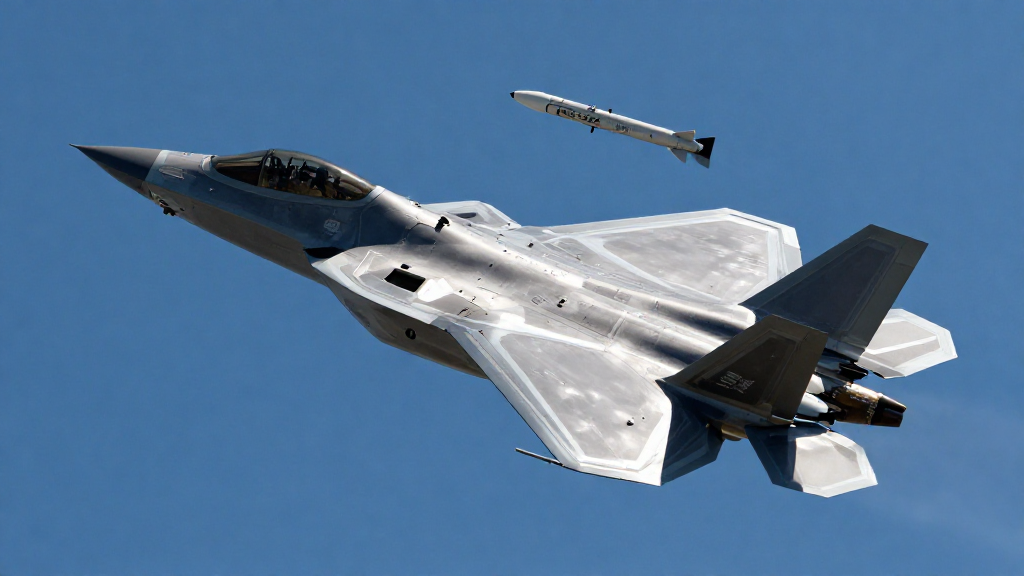

India’s decision to bring private industry into the development of the Advanced Medium Combat Aircraft (AMCA) represents a major shift in the country’s defence manufacturing strategy. While companies such as Tata Advanced Systems Limited (TASL), Larsen & Toubro (L&T), and Bharat Forge are expected to assume substantial responsibilities, the programme remains firmly under the sovereign control of the Government of India, with the Aeronautical Development Agency (ADA) continuing as the design authority.
The selected private-sector consortia will work alongside ADA to develop and manufacture AMCA prototypes. This represents the first time India’s flagship fighter programme has opened such a significant portion of its development and manufacturing activities to private industry. Their responsibilities are expected to cover prototype production, production engineering, systems integration, industrialisation and preparation for the transition from development to serial manufacturing.
Despite this expanded industrial role, the programme’s core architecture, design authority and strategic intellectual property remain with ADA and the Ministry of Defence. Key decisions involving aircraft configuration, stealth characteristics, mission systems, flight-control laws, software architecture and certification remain under government direction.
This distinction forms the foundation of the AMCA development model. Manufacturing and industrial responsibilities can be distributed among capable private companies to improve efficiency, innovation and production capacity, while the aircraft itself remains a strategic national asset protected by the government.
Calibrated Openness to Foreign Technology
The AMCA programme is also expected to follow a policy of calibrated openness, enabling India to collaborate selectively with foreign original equipment manufacturers in areas where critical technologies are not yet available domestically.
Potential areas of cooperation could include propulsion, advanced avionics, specialised materials and other niche technologies required for a fifth-generation fighter. Such partnerships would be structured through technology-transfer agreements, security arrangements and clearly defined areas of responsibility.
Foreign OEMs may provide specific technologies, components or subsystems, but such participation would not transfer ownership or design authority of the AMCA programme to external entities.
Protecting Sensitive Technologies
Personnel security is another critical component of the AMCA development framework. Private companies involved in the programme may employ international specialists for commercial, advisory or non-sensitive activities elsewhere within their organisations. However, access to classified areas of AMCA development—including sensitive aircraft design, mission software, stealth technologies and systems integration—is expected to remain restricted to appropriately cleared Indian personnel.
This approach reflects practices followed by major countries developing advanced combat aircraft. Programmes involving stealth technology, electronic warfare, secure communications, mission computers and classified software generally impose strict personnel-security requirements before access is granted.
Restricting access to sensitive programme elements protects not only technical information but also operational concepts, manufacturing techniques and future upgrade capabilities. Maintaining sovereign control over these technologies will allow India to modify and upgrade the AMCA throughout its service life without excessive dependence on foreign entities.
Government Ownership of Core Intellectual Property
Intellectual property ownership will also remain central to the programme. Although industrial partners will manufacture and integrate significant portions of the aircraft, core intellectual property—including aircraft design, flight-control algorithms, mission architecture and indigenous technologies—is expected to remain under government control.
Such ownership would provide India with greater freedom to conduct future upgrades, develop new capabilities and potentially export the aircraft without requiring external approval for critical technologies.
The AMCA public-private partnership therefore represents a carefully structured balance. It combines the manufacturing capacity, investment and engineering capabilities of India’s private aerospace industry with continued government control over strategic technologies, intellectual property and national-security interests.