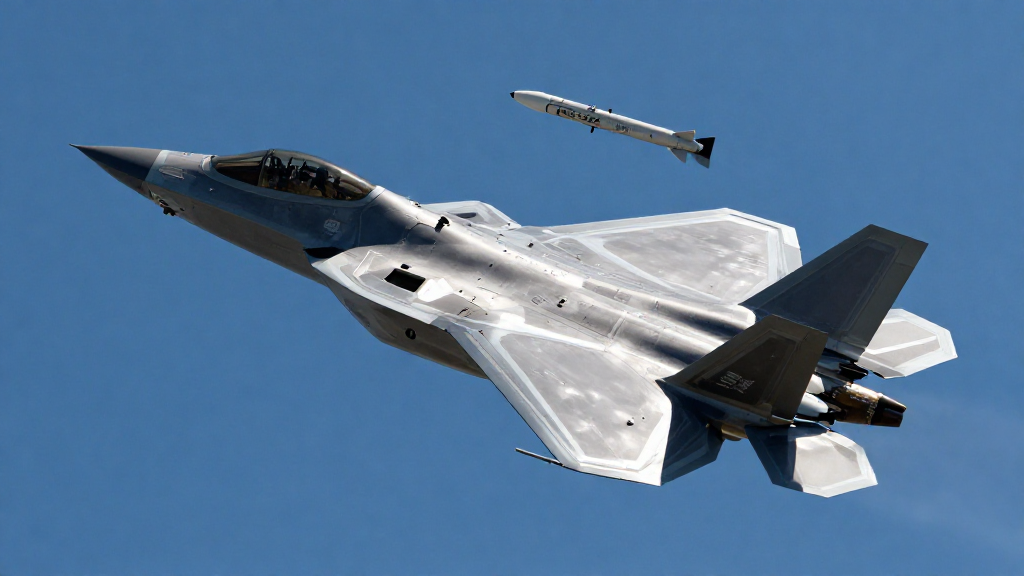

MBDA’s TESEO MK2/E anti-ship missile has successfully completed a validation firing for the Italian Navy, marking a significant milestone toward the completion of its development and qualification program.
The approximately 20-minute piloted cruise flight validated the missile’s range and confirmed key aspects of its design. The test brings the weapon closer to qualification and production, with deliveries expected to begin in 2028.
Introduced in 2021, the TESEO MK2/E represents an entirely new weapon system designed to significantly expand the capabilities of the TESEO missile family. It will operate alongside the Mk2/A, which is already deployed on the Italian Navy’s FREMM and Horizon-class frigates.
Under a production contract signed in 2025, the MK2/E is planned to arm Italy’s next generation of surface combatants, including FREMM EVO frigates, PPA offshore patrol vessels, and the future DDX-class destroyers.
TESEO MK2/E Capabilities
The TESEO MK2/E has been developed for long-range maritime and land-attack missions. While building on the capabilities of the Mk2/A, the new missile incorporates advanced technologies intended to improve its targeting, navigation, and mission flexibility.
Its dual-mode seeker combines an AESA-based radio-frequency sensor with electronic counter-countermeasure capabilities and an electro-optical sensor. This configuration enables the missile to engage both maritime and land-based targets with greater precision.
An automated mission-planning system generates firing solutions while allowing operators to modify mission parameters based on changing tactical conditions.
The missile also features a two-way data link that supports in-flight control functions, including target updates, target reassignment, and mission termination. It cruises at high-subsonic speed and incorporates high-G terminal maneuvering capability.
With an advertised range exceeding 350 kilometers (217 miles), the TESEO MK2/E offers nearly twice the reach of the Mk2/A, which has a range of approximately 180 kilometers (112 miles).
For navigation, the missile combines an inertial navigation system (INS) and GPS with a radar altimeter, enabling both sea-skimming and overland flight profiles.