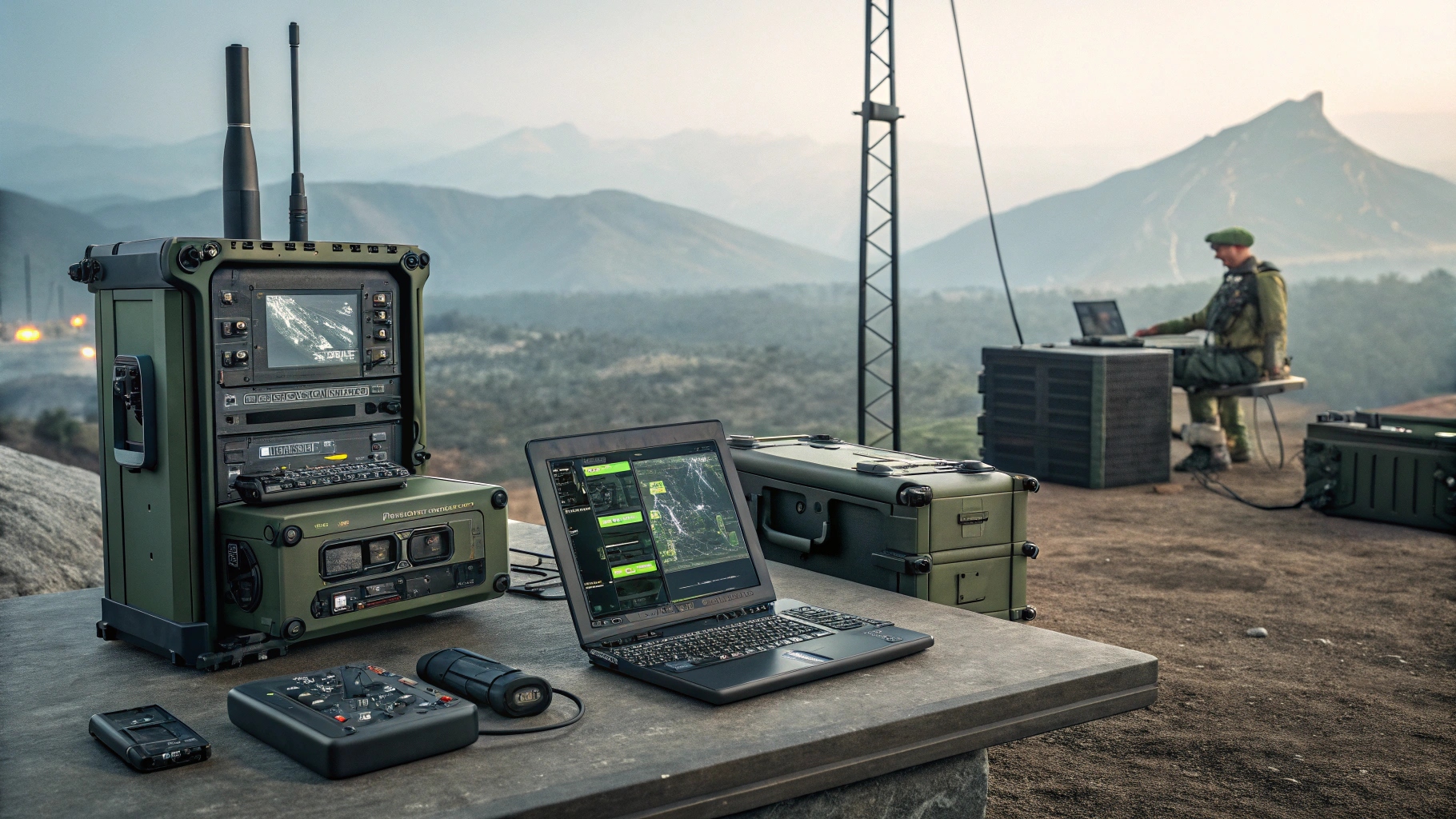
The Indian Air Force has strengthened its air surveillance capabilities by inducting the 55Zh6ME Nebo-UM Very High Frequency (VHF) radar, a long-range three-dimensional system designed to improve the detection of stealth aircraft, cruise missiles, and ballistic missile threats. The mobile radar is expected to become a key component of India’s evolving integrated air defense network.
The Nebo-UM operates in the VHF bands of 133–144 MHz and 216–225 MHz, utilizing long-wavelength radio signals that are particularly effective against low-observable aircraft. Unlike higher-frequency fire-control radars commonly used for target engagement, VHF radars interact differently with stealth aircraft, reducing the effectiveness of radar-evading designs.
Operational reports indicate that the radar can identify stealth aircraft, including China’s J-20 and future J-35 fighters, at ranges beyond 250 kilometers, while conventional aircraft, cruise missiles, and ballistic missiles can be detected at distances of up to 600 kilometers. These capabilities provide the IAF with valuable early-warning coverage against a wide range of aerial threats.
As the newest member of Russia’s Nebo anti-stealth radar series, the Nebo-UM incorporates advanced digital signal processing technologies to improve target detection, suppress electronic jamming, and eliminate ground clutter. It also represents a major improvement over previous VHF surveillance radars by offering full three-dimensional tracking, allowing operators to determine a target’s range, direction, and altitude simultaneously.
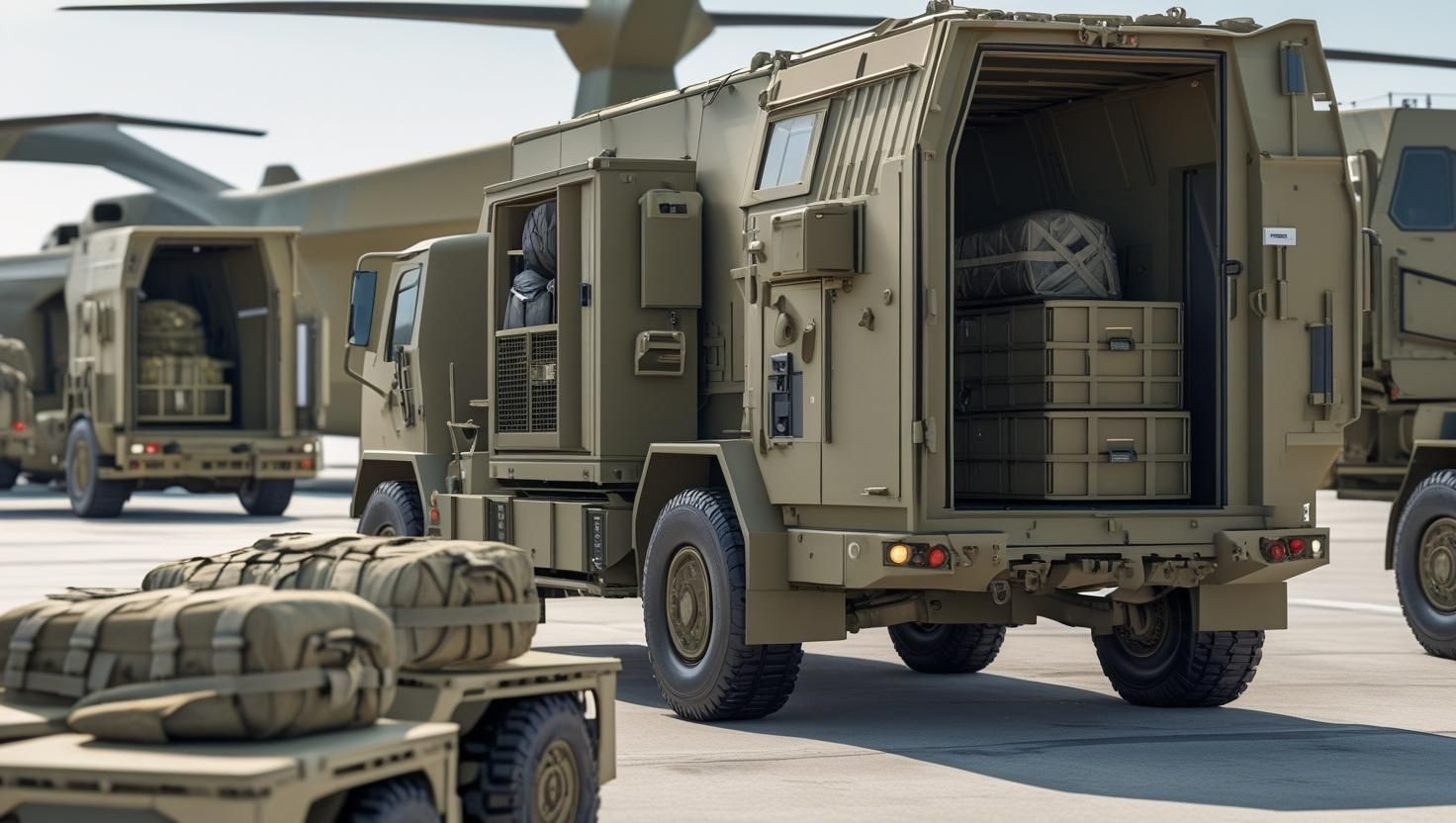
The system is designed to integrate seamlessly with networked air defense architectures, enabling the exchange of target data with long-range surface-to-air missile systems, including platforms comparable to the S-300 and S-400. This allows engagement radars to quickly lock onto targets initially detected by the VHF radar. Mounted on high-mobility military trucks, the Nebo-UM can be rapidly relocated, increasing operational flexibility and reducing vulnerability to enemy countermeasures.
The radar’s induction is particularly relevant as stealth aircraft become more common in the Indo-Pacific theater. While stealth technology minimizes detection by high-frequency radars, the Nebo-UM’s meter-wave VHF signals are better suited for identifying low-observable platforms during the early stages of detection. It also complements the wider Nebo radar family, which includes the Nebo-SVU, Nebo-U, and the advanced Nebo-M integrated multi-band radar system that combines VHF, L-band, and X/S-band sensors for comprehensive air surveillance and precision target tracking.