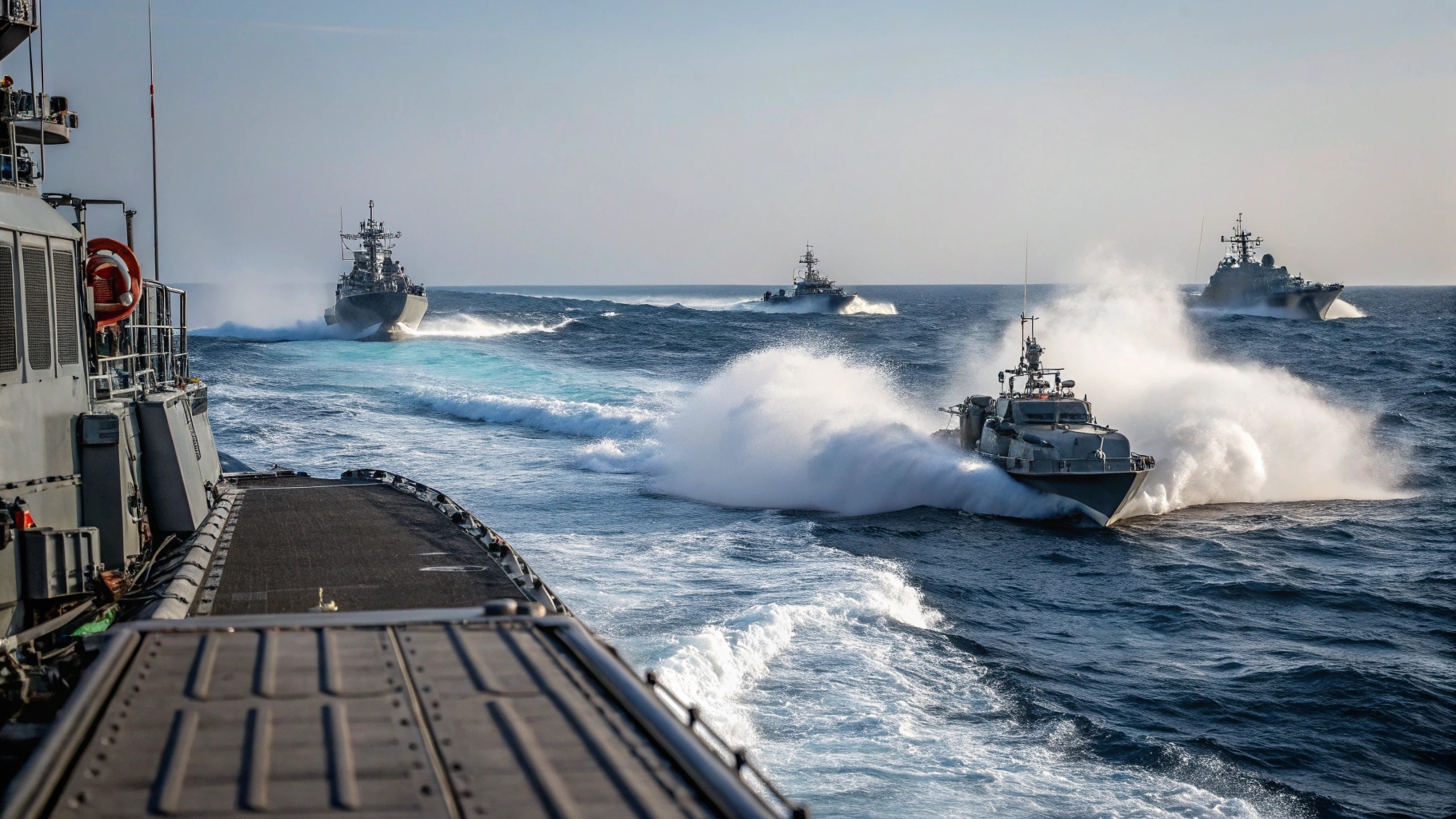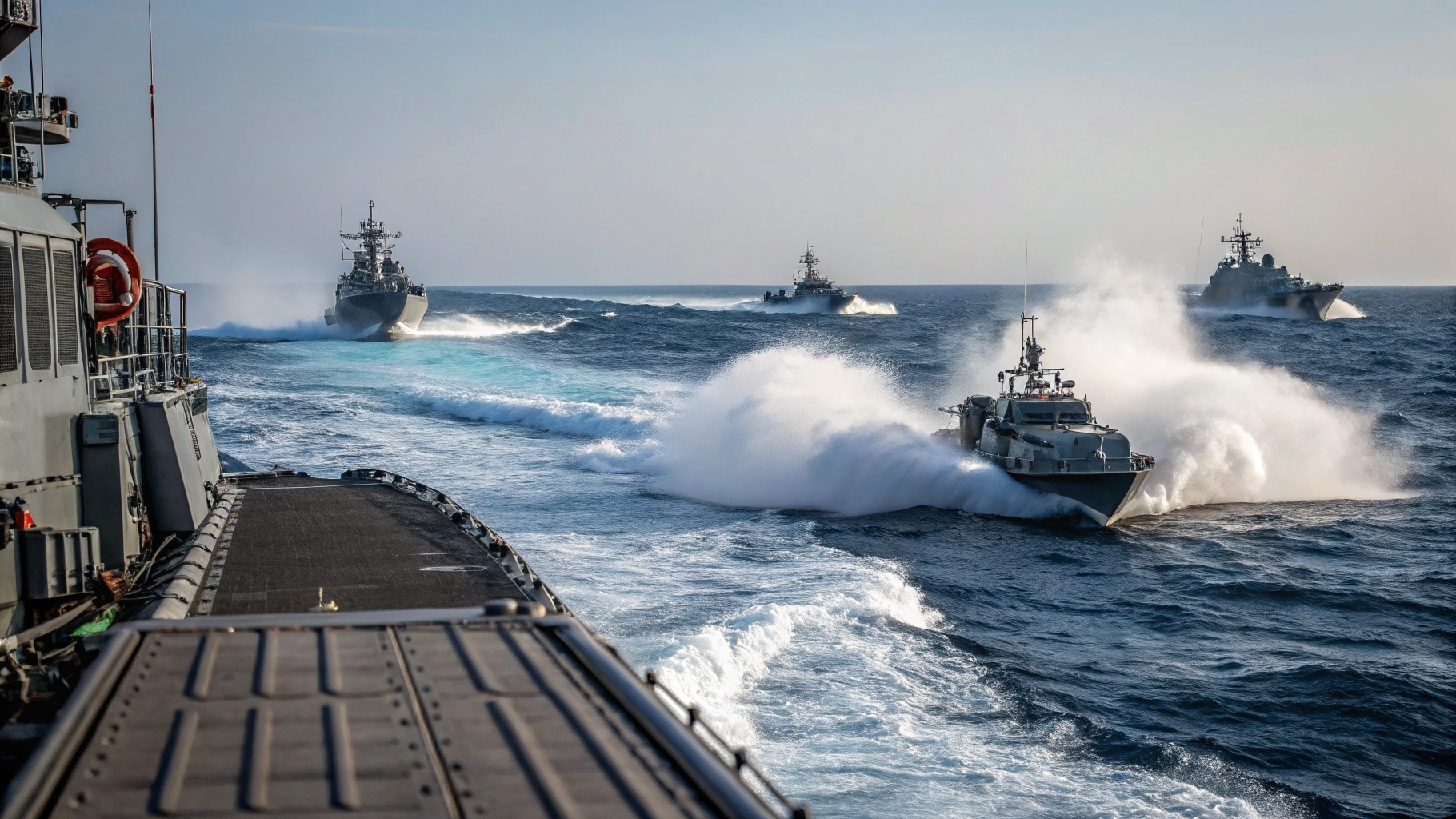
Taiwanese officials have reported that China has deployed more than 100 vessels — including navy ships, coast guard cutters, and auxiliary maritime platforms — across a vast area stretching from the Yellow Sea to the South China Sea and the Western Pacific. The large-scale deployment was disclosed Saturday amid rising regional tensions.
A Taiwanese security official told AFP anonymously that the maritime buildup started before US President Donald Trump met Chinese President Xi Jinping in Beijing and grew even larger after the summit ended.
The development comes as Taiwan faces renewed uncertainty over US support after Trump suggested that American arms sales to Taiwan could become part of broader negotiations with Beijing. China claims Taiwan as its own territory and has repeatedly warned that it may use force to achieve reunification. Taiwan relies heavily on US military backing as a deterrent against potential Chinese aggression.
Taiwan National Security Council chief Joseph Wu posted a map on X dated May 23 that depicted what he called “China’s Maritime Deployment.” The graphic showed Chinese naval and coast guard vessels operating from waters near the Korean Peninsula down through the South China Sea and into the Western Pacific.
According to the security official, the deployment also includes marine research and survey ships. While the exact mission of the flotilla remains unclear, Chinese naval and coast guard forces have previously carried out training exercises and patrol operations across these maritime zones.
China has significantly intensified military pressure on Taiwan over recent years, conducting near-daily air and naval operations around the island while also staging several large-scale military drills.
In Taipei, thousands of demonstrators gathered Saturday to support the government’s push for higher defence spending, with many waving Taiwanese and American flags during the rally.
President Lai Ching-te’s administration had proposed nearly $40 billion in additional defence allocations for critical military systems, including US-made weaponry and domestically produced drones. However, the opposition-led parliament rejected the broader package and instead approved about $25 billion focused mainly on US arms procurement.
Since Trump’s comments regarding arms sales, Taiwan’s government has worked to reassure both domestic and international audiences that US policy toward the island remains unchanged. Officials continue to argue that arms sales are a core component of Washington’s security commitment to Taiwan.
Beijing, however, reaffirmed its opposition to such sales. A Chinese foreign ministry spokesperson stated Friday that China’s resistance to US weapons transfers to Taiwan remains “clear, consistent and firm.” Trump also referred to “the Taiwan problem” this week when questioned about possible discussions with President Lai over future arms sales.