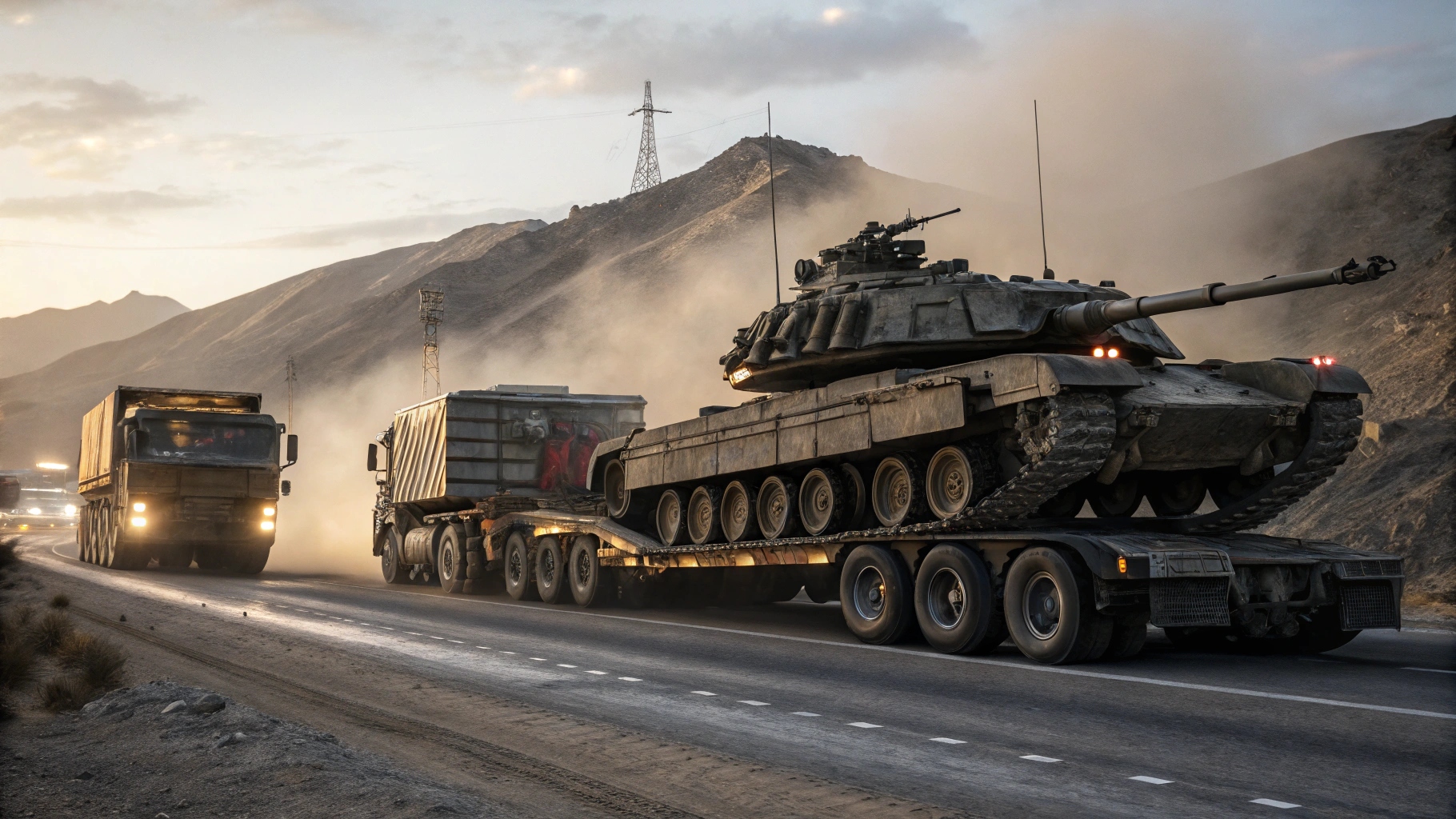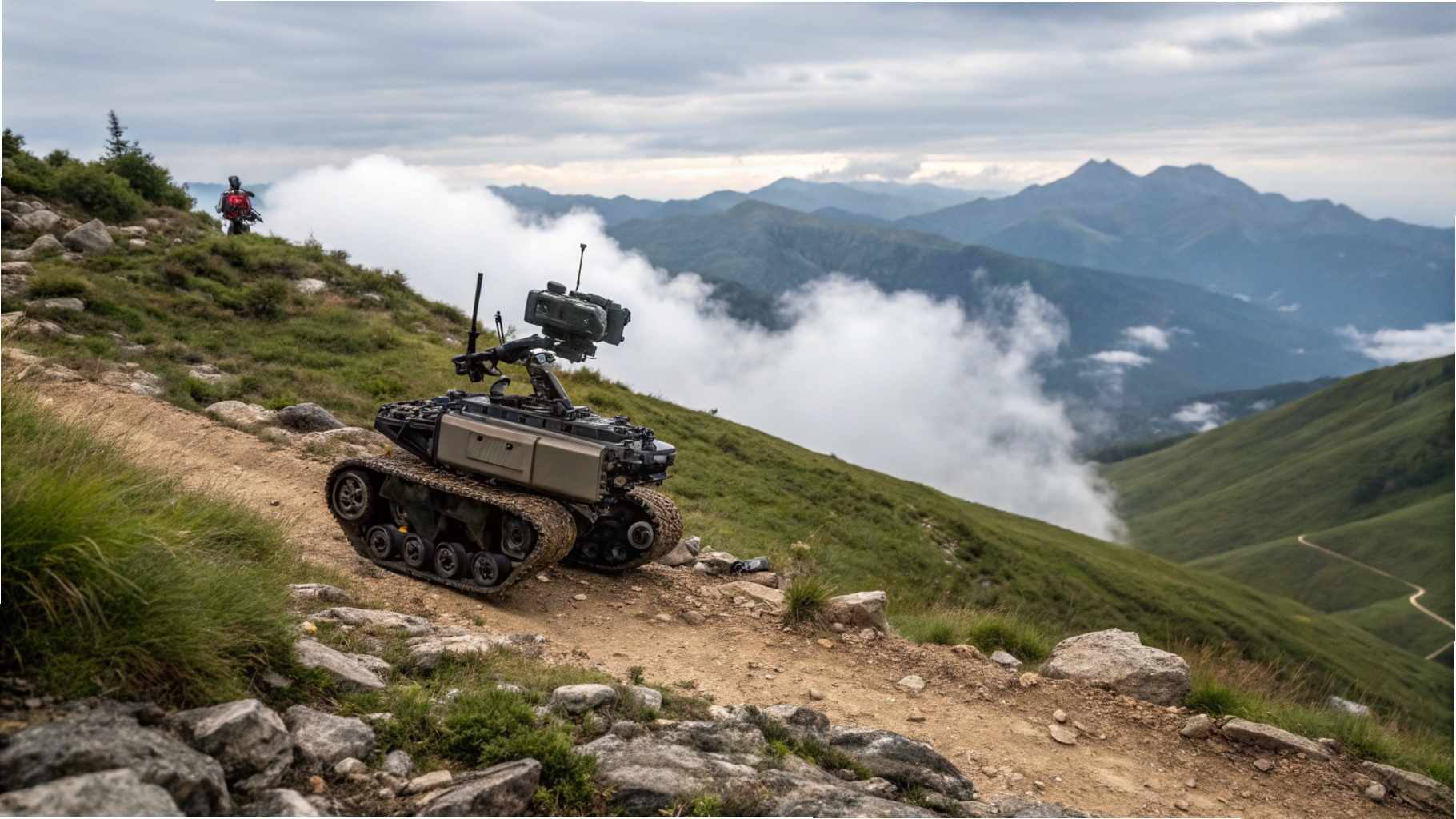
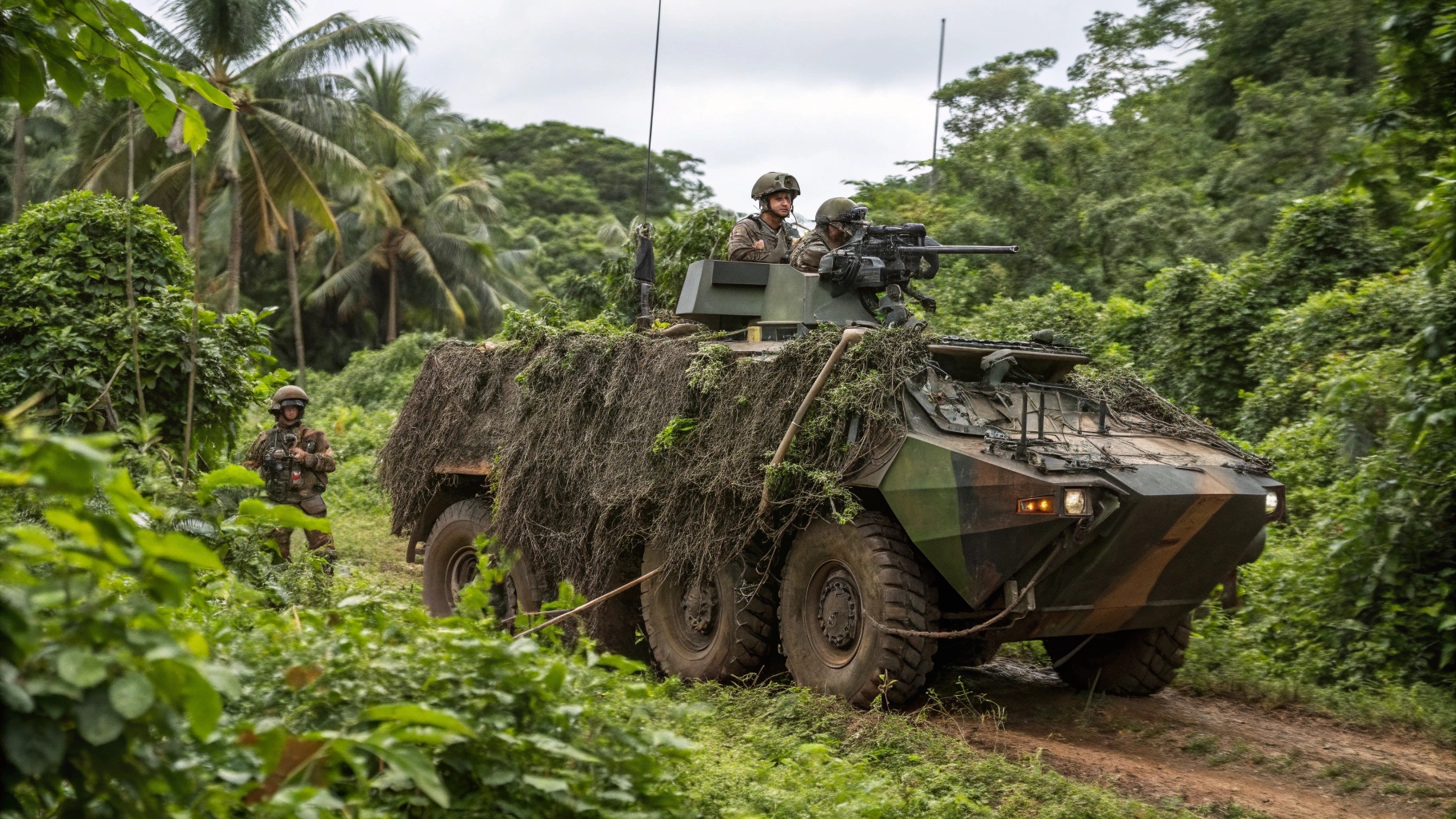
The Indian Army’s Zorawar Light Tank is slated to integrate a next-generation Adaptive Thermal Camouflage System designed to lower infrared visibility and enhance protection against modern reconnaissance and targeting technologies such as UAVs, thermal imaging devices, and electro-optical sensors.
The Flexible Adaptive Thermal Camouflage Pads under development represent one of the most advanced thermal management efforts for an Indian armored platform to date, specifically optimized for operations in extreme environments like high-altitude Himalayan regions where thermal contrast makes vehicles highly vulnerable to detection.
The system will feature modular thermal panels capable of both heating and cooling operations, actively controlling surface temperatures to blend with surrounding environmental conditions. This dynamic approach goes beyond passive camouflage by continuously adjusting infrared output to reduce detection probability.
Each panel will be managed by FPGA-based control units embedded in flexible circuit architectures and equipped with onboard thermal sensors for real-time environmental monitoring. The design integrates conductive ink heating layers and flexible Peltier cooling elements, enabling precise thermal regulation depending on operational needs.
Constructed on flexible Kapton or PET substrates with insulation layers, each module will measure approximately 200 mm by 200 mm and be mounted using hook-and-loop systems with detachable electrical interfaces. A modular power distribution network will allow rapid replacement and maintenance in field conditions.
The system is designed to operate across a wide thermal range from -30°C to 50°C, with each panel powered by a dedicated 3.3V rechargeable lithium-ion battery providing up to three hours of standalone operation. This decentralized energy setup ensures resilience even under combat damage or partial system failure.
This development reflects India’s increasing emphasis on survivability technologies in an era where battlefield awareness is dominated by infrared sensors, drone surveillance, and precision-guided weapons. By replicating surrounding thermal signatures such as snowfields or rocky terrain, the system could significantly reduce enemy detection and engagement effectiveness.
While similar adaptive camouflage concepts have been explored in countries like Sweden, Israel, and China, fully flexible active thermal management systems remain rare globally due to their technical complexity and power requirements.