
The economics of air defence are undergoing a fundamental transformation, driven by lessons emerging from recent conflicts in Eastern Europe and the Middle East. Modern militaries are increasingly finding that sophisticated and expensive air defence networks can be strained not by advanced fighter aircraft or stealth bombers, but by large numbers of low-cost drones and loitering munitions. These relatively inexpensive systems can force defenders to expend costly interceptor missiles, creating an unsustainable cost imbalance over time.
This shift is influencing defence planning across the world, including in India. While the country has invested heavily in advanced air defence assets such as the S-400 Triumf, Barak-8, Akash, and Spyder systems, military planners are now confronting a different challenge: protecting airbases, logistics hubs, ammunition depots, naval assets, and frontline formations from mass drone attacks without rapidly depleting missile inventories.
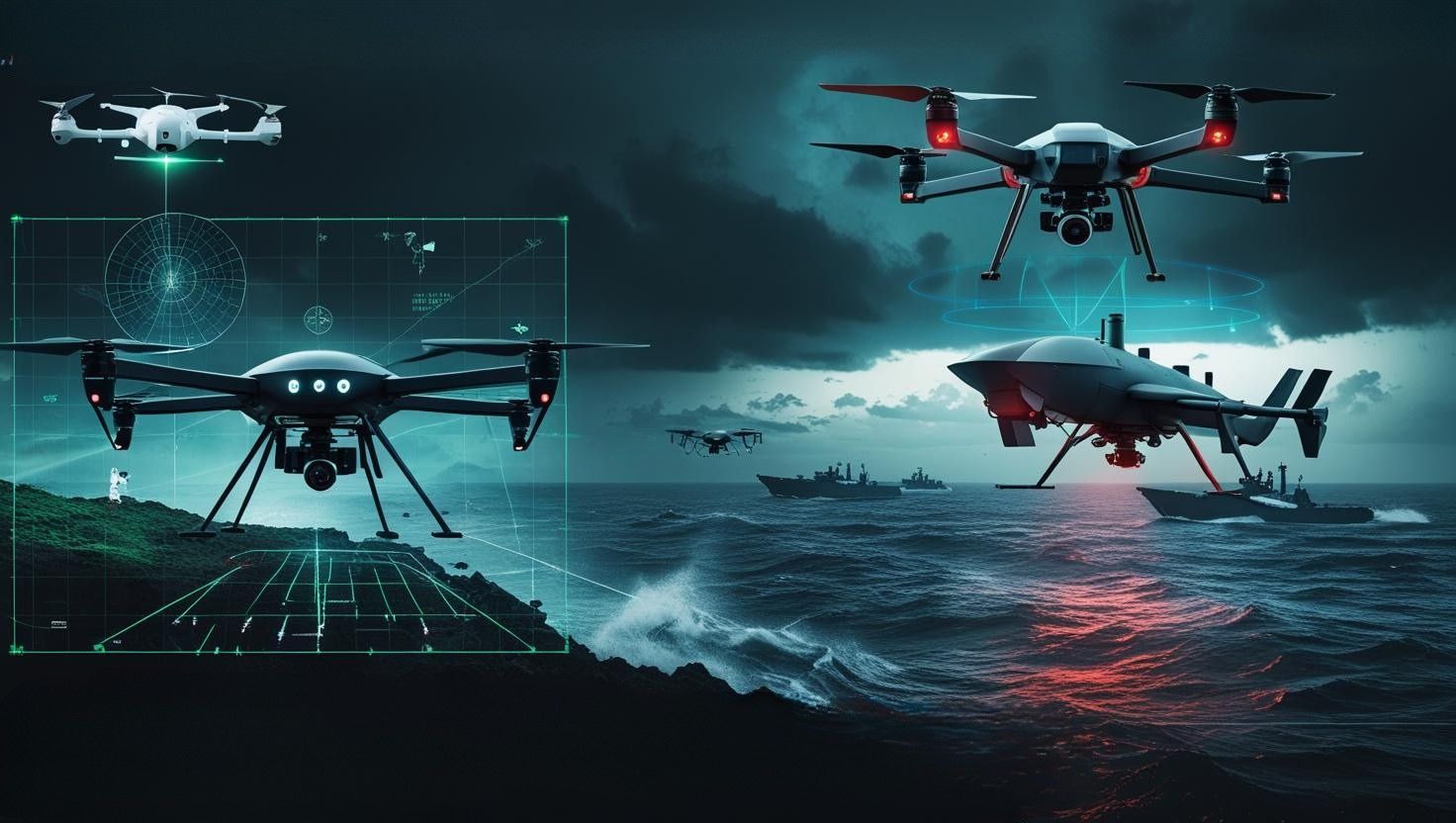
Recent conflicts have demonstrated that adversaries no longer require expensive cruise missiles or stealth aircraft to overwhelm defences. Swarms of low-flying drones launched simultaneously from multiple directions can saturate radar networks, strain command systems, and exhaust interceptor stockpiles. The widespread use of Iranian-origin Shahed drones in Ukraine and the Middle East highlighted how inexpensive one-way attack systems can impose disproportionately high costs on defenders forced to employ expensive missiles in response.
For India, the challenge is magnified by the vast geographical scope of its security environment. Defending extensive border infrastructure, military bases, mobile formations, and naval forces across multiple fronts requires a more sustainable and scalable approach to air defence. This has led to growing interest in Counter-Rocket, Artillery, and Mortar (C-RAM) systems and Directed Energy Weapons (DEWs) as critical components of future defensive architectures.
A central element of India’s response is the Defence Research and Development Organisation’s expanding directed energy weapons programme. Unlike traditional interceptors, laser systems dramatically reduce engagement costs by replacing expensive missiles with energy-based effects. Instead of spending lakhs or crores on a single interception, the cost per engagement is largely limited to electrical power consumption.
Among the most significant developments is DRDO’s mobile 10-kilowatt MK-II(A) laser weapon system, which reportedly received initial procurement approval from the Indian Air Force in late 2025. Designed primarily for counter-drone operations, the system can engage small unmanned aerial systems and loitering munitions at ranges of approximately two kilometres.
The appeal of laser-based systems lies in their ability to engage targets almost instantaneously while maintaining what is effectively an unlimited magazine, provided electrical power is available. With engagement costs reportedly as low as a few hundred rupees per shot, these systems offer a highly sustainable solution for defending fixed installations against repeated drone incursions.
India’s ambitions extend well beyond tactical laser systems. The more powerful DURGA-II programme aims to develop a 100-kilowatt-class directed energy weapon capable of engaging larger and more resilient targets, including advanced loitering munitions, artillery projectiles, and potentially certain cruise missile threats under favourable conditions. Such systems destroy targets through concentrated thermal energy that damages critical structures, sensors, and control systems rather than relying on blast or fragmentation effects.
The strategic value of DURGA-II becomes particularly apparent in naval and mobile land applications. Future shipborne variants could provide warships and aircraft carriers with cost-effective protection against drone swarms and anti-ship missile attacks, while land-based systems could accompany armoured formations to defend against kamikaze drones and low-altitude threats during manoeuvre operations.
Despite their advantages, directed energy weapons are not a complete solution. Environmental conditions such as rain, fog, dust, smoke, and battlefield aerosols can significantly reduce laser effectiveness. As a result, military planners increasingly favour layered air defence architectures that combine directed energy systems with traditional kinetic interceptors.
One of India’s most promising developments in this area is the Bhargavastra micro-missile system. Developed by the private sector, reportedly involving Solar Group and Economic Explosives Limited, the system has been specifically designed to counter drone swarms. Instead of employing large and expensive surface-to-air missiles, Bhargavastra uses compact guided interceptors capable of engaging multiple aerial threats at relatively low cost and at ranges extending beyond six kilometres.
Micro-missile systems provide an important capability against autonomous drones that are resistant to conventional electronic warfare measures. As unmanned systems increasingly incorporate onboard navigation, artificial intelligence, and machine-vision targeting, kinetic interception remains essential even in heavily contested electromagnetic environments.
India is also revitalising legacy gun-based air defence platforms to serve as the innermost layer of protection. Systems such as the Bofors L-70 and ZU-23-2 are being upgraded with electro-optical sights, thermal imagers, digital fire-control systems, and programmable airburst ammunition. These improvements significantly enhance their effectiveness against drones and loitering munitions by allowing fragmentation clouds to destroy targets without requiring direct hits.
Ultimately, the effectiveness of any future C-RAM architecture depends not only on weapons but also on sensor integration and battle management. Rapid detection, identification, prioritisation, and engagement of threats are essential in environments where hundreds of aerial targets may appear simultaneously.
This is where the Indian Air Force’s Integrated Air Command and Control System (IACCS) becomes increasingly important. By linking radars, electronic warfare assets, anti-drone systems, directed energy weapons, and missile interceptors into a unified network, India can create a responsive and resilient multi-layered defence structure.
Future systems such as the Indrajal anti-drone dome concept could further strengthen this architecture through artificial intelligence-driven threat assessment and engagement management. As aerial swarm attacks become more sophisticated and numerous, AI-assisted battle management may become indispensable for ensuring that defensive systems can respond quickly enough to protect critical military and civilian infrastructure.