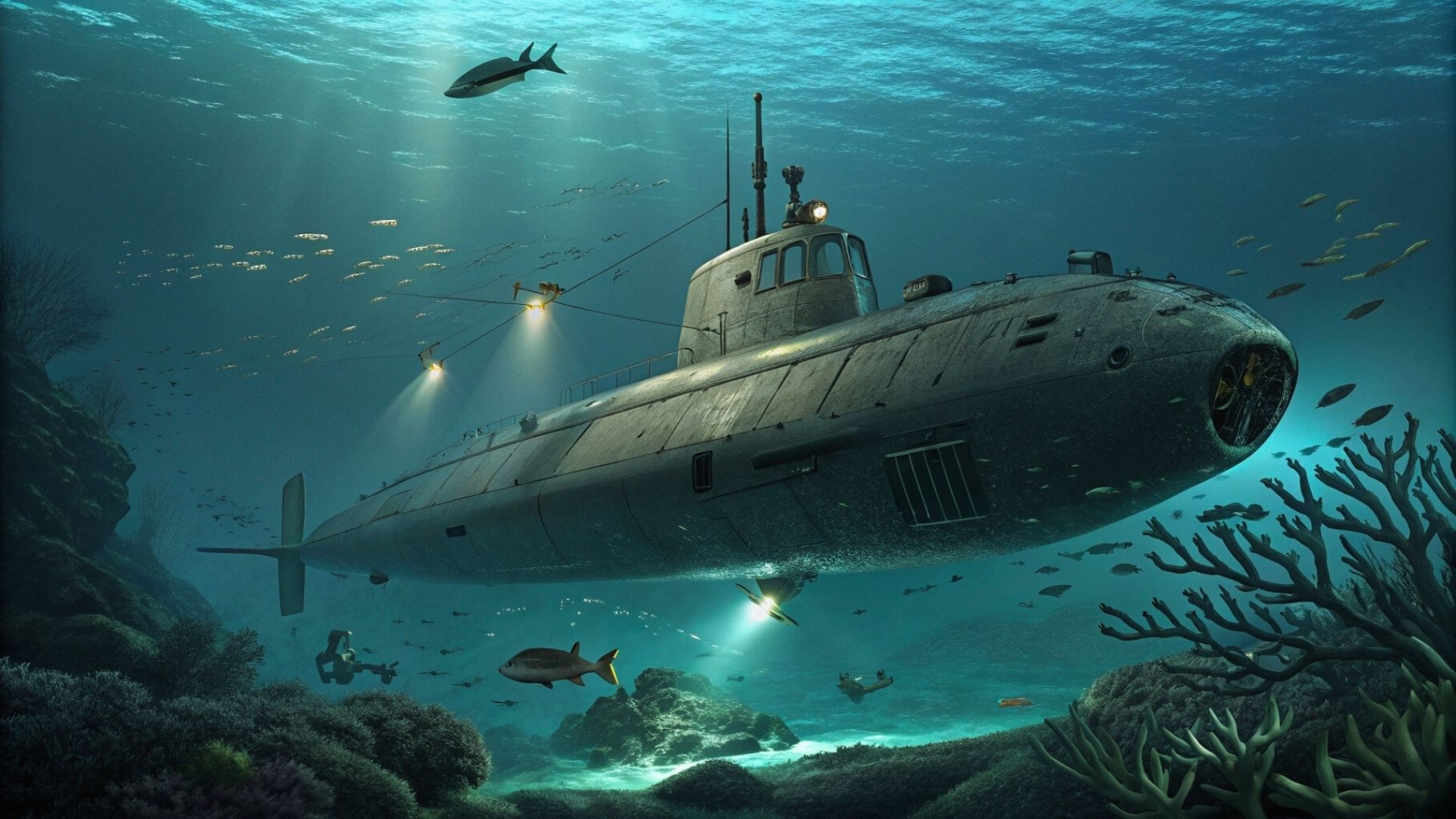
The Indian Navy is advancing the modernization of its submarine survivability infrastructure with a strong emphasis on next-generation Fire Warning Systems (FWS), Automatic Fire Detection Systems (AFDS), and integrated onboard safety networks. Recent procurement and maintenance initiatives undertaken in 2026 reflect a broader effort to deploy indigenous, cyber-secure, and highly automated safety solutions tailored for the unique operational demands of underwater platforms.
This modernization drive forms part of the Navy’s wider underwater warfare and deep-submergence capability enhancement programme, which has gained momentum as India expands long-duration submarine operations and prepares for the integration of Air Independent Propulsion (AIP) technology across its fleet.
The upgrades are primarily focused on the Kalvari-class Scorpene submarines and the Sindhughosh-class Kilo submarines, both of which are receiving enhancements aimed at improving operational resilience, automation, and crew safety during extended underwater deployments.
A key development in 2026 has been the issuance of an Annual Maintenance Contract covering four Automatic Fire Detection Systems installed aboard submarines. These systems continuously monitor critical compartments such as battery sections, propulsion spaces, machinery rooms, and enclosed operational areas where even minor fire incidents can quickly escalate into life-threatening emergencies.
Unlike surface warships, submarines operate in confined and pressurized environments where fire, smoke, toxic gases, or thermal events can compromise both crew survival and vessel integrity within a short period. Consequently, fire detection and suppression systems are considered essential survivability assets rather than conventional damage-control equipment.
The modernization programme also includes refurbishment and upgrades of SCADA-enabled fire control systems. Acting as the digital backbone of onboard safety management, SCADA networks link detection sensors with automated firefighting mechanisms, enabling rapid response to potential hazards.
Such integration allows submarines to automatically isolate affected compartments, activate CO₂ flooding systems, deploy water-mist suppression measures, and regulate ventilation systems immediately after a fire threat is detected, significantly reducing response times.
The Navy is simultaneously enhancing portable firefighting capabilities through the procurement of specialised high-capacity fire pumps and ruggedised CO₂ extinguishers designed specifically for submarine operations. These systems are engineered to function reliably within confined spaces, high-pressure atmospheres, and vibration-intensive conditions encountered during submerged missions.
Perhaps the most significant shift in the Navy’s survivability strategy is the adoption of intelligent multi-criteria fire detection technologies. Traditional systems relied heavily on smoke detection alone, increasing the likelihood of false alarms or delayed threat identification. In a submarine environment, unnecessary suppression actions triggered by false alerts can themselves create operational challenges.
To address this, newer requirements increasingly call for dual-sensor architectures that combine ionisation-based smoke detection with thermal sensing technologies. This approach improves detection accuracy while minimizing false positives.
Furthermore, these advanced detection systems are being integrated into the submarine’s Integrated Monitoring and Control System (IMCS), enabling real-time situational awareness through a centralized survivability dashboard. This allows crews to rapidly isolate affected areas, control ventilation, and monitor atmospheric conditions throughout the vessel, enhancing overall operational safety and mission endurance.