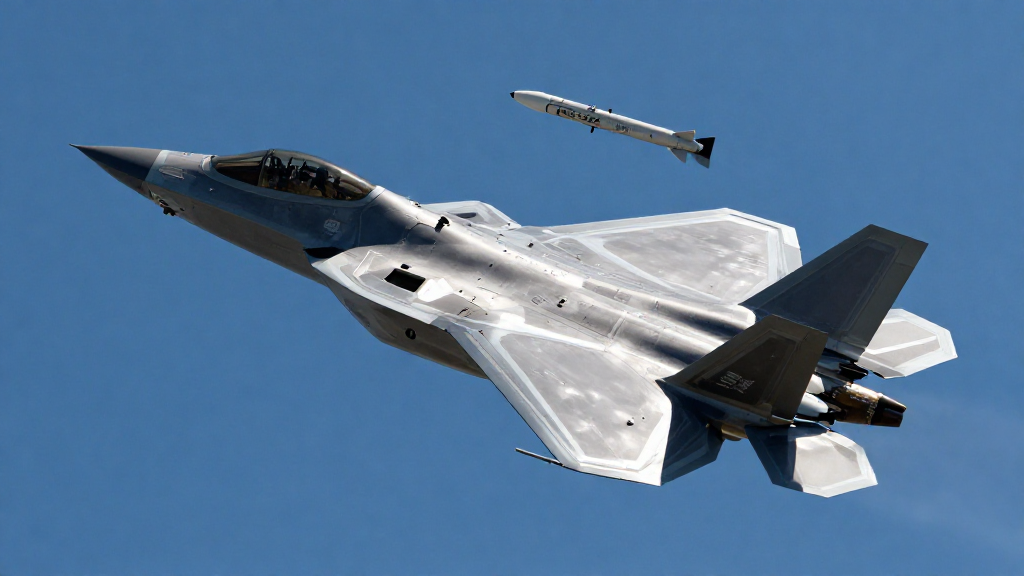

India is advancing plans for large-scale domestic production of the Israeli-developed Rampage air-launched precision strike missile after its extensive operational use by the Indian Air Force (IAF) during Operation Sindoor in May 2025. The missile reportedly demonstrated high accuracy in strikes against cross-border targets when launched from Su-30MKI and Jaguar fighter aircraft, reinforcing confidence in its combat performance among Indian defence planners.
Following the weapon’s battlefield success, New Delhi has moved to expand its missile inventory while reducing dependence on foreign supply chains. Under the government’s broader “Make in India” initiative, the focus is shifting from emergency imports to licensed local production, with the dual objective of enhancing strategic self-reliance and reducing procurement costs.
Known in Indian service as the High Speed Low Drag-Mark 2 (HSLD-Mk2), the missile has emerged as an important component of India’s growing stand-off strike arsenal. Derived from Israel’s EXTRA artillery rocket system, the Rampage has been transformed into a precision-guided air-launched weapon that offers a cost-effective alternative to conventional cruise missiles.
Weighing approximately 570 kilograms, the missile features a compact design that enables integration across multiple fighter platforms without requiring significant modifications. Defence officials value the system for combining long-range precision strike capabilities with relatively affordable production costs.
Capable of speeds ranging from Mach 1.0 to Mach 1.6, the missile follows a high-speed ballistic-like trajectory before diving steeply onto its target. This attack profile makes it particularly effective against hardened targets such as command bunkers, radar installations, air-defence sites, ammunition depots, and runway infrastructure. With a strike range estimated between 150 and 250 kilometres, depending on launch conditions, the missile allows Indian aircraft to engage targets while remaining outside the reach of many enemy surface-to-air missile systems.
A key advantage of the HSLD-Mk2 programme is its rapid integration across multiple strike platforms. The missile has already been integrated with Su-30MKI multirole fighters and Jaguar strike aircraft, both of which reportedly employed it extensively during Operation Sindoor. Integration efforts are also expanding to additional Indian Air Force and Indian Navy platforms, providing a flexible stand-off strike capability across different operational environments.
Its relatively lightweight and compact design allows aircraft to carry multiple missiles during a single sortie, enabling saturation attacks against enemy air-defence networks and critical military infrastructure. Defence analysts believe widespread deployment of domestically produced HSLD-Mk2 missiles could significantly strengthen India’s ability to conduct Suppression of Enemy Air Defences (SEAD) operations in future conflicts.
The localisation programme is expected to begin with Semi-Knocked-Down (SKD) assembly between late 2026 and early 2027, with imported subsystems being assembled, tested, and integrated in India. The second phase, planned for 2027–2028, will focus on increasing indigenous content through the local production of airframes, guidance systems, control surfaces, power systems, mission computers, and potentially propulsion-related components. Beyond 2028, India aims to scale production for both domestic use and exports, positioning the HSLD-Mk2 as an affordable precision-strike solution for friendly nations seeking alternatives to costly Western cruise missiles.