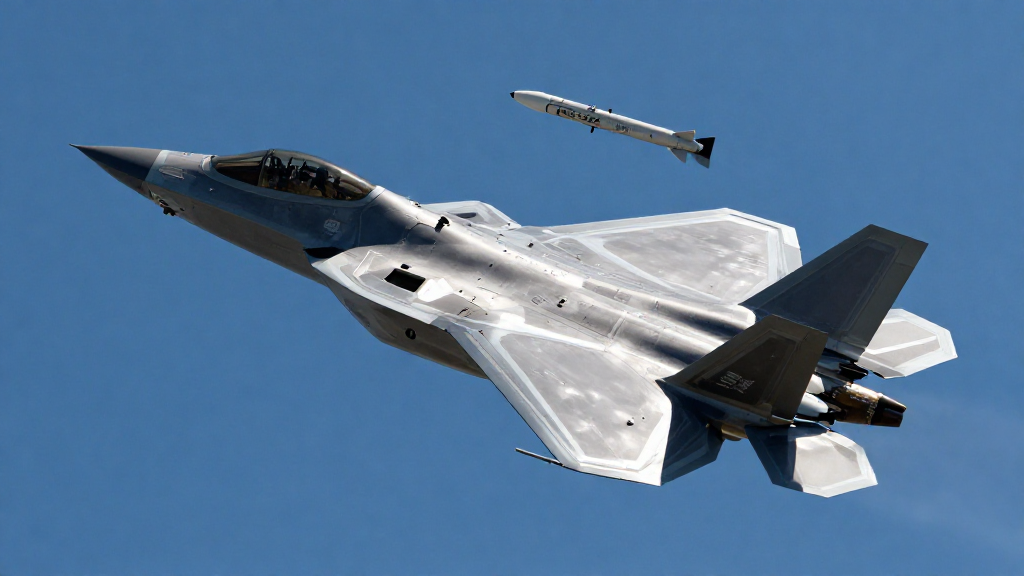

India is quietly reshaping its beyond-visual-range air combat capabilities through a mix of imported and domestically developed missile systems, creating a future BVRAAM portfolio designed to rival some of the most advanced arsenals in the region. While the United States develops the AIM-260 JATM, the Indian Air Force is pursuing a diversified missile roadmap focused on extended reach, multi-platform integration, and indigenous technological growth.
At the forefront of this effort is the Russian R-37M, an ultra-long-range air-to-air missile expected to strengthen the IAF’s ability to engage threats at unprecedented distances. Capable of reaching hypersonic speeds and carrying a substantial warhead, the missile is intended to neutralize high-value airborne assets and long-range fighter threats before they can influence the battlespace. The Su-30MKI is expected to serve as its primary launch platform, providing India with a significant stand-off engagement advantage.
India’s indigenous Astra Mk II is set to play an equally important role in the coming years. Designed with dual-pulse rocket propulsion, the missile is projected to deliver a range of up to 240 kilometers while maintaining high-speed performance. Its compatibility with multiple fighter types—including the Rafale, Tejas, MiG-29UPG, and Su-30MKI—makes it a versatile weapon that supports fleet-wide standardization and reduces reliance on foreign suppliers.
Looking further into the future, the Gandiva missile program represents India’s ambition to master advanced ramjet-powered air-to-air weaponry. Utilizing a solid-fuel ducted ramjet engine, Gandiva is expected to offer superior range, sustained speed, and enhanced endgame performance compared to conventional rocket-powered missiles. The weapon is envisioned as a key component of India’s next-generation air combat ecosystem and a major milestone in indigenous missile development.
The combination of these three systems creates a comprehensive and layered BVRAAM architecture. The R-37M provides immediate ultra-long-range capability, Astra Mk II delivers a domestically produced multi-role solution, and Gandiva introduces advanced propulsion technologies for future engagements. Together, they position the Indian Air Force to address evolving regional threats while advancing its goal of achieving greater self-reliance in critical defense technologies.