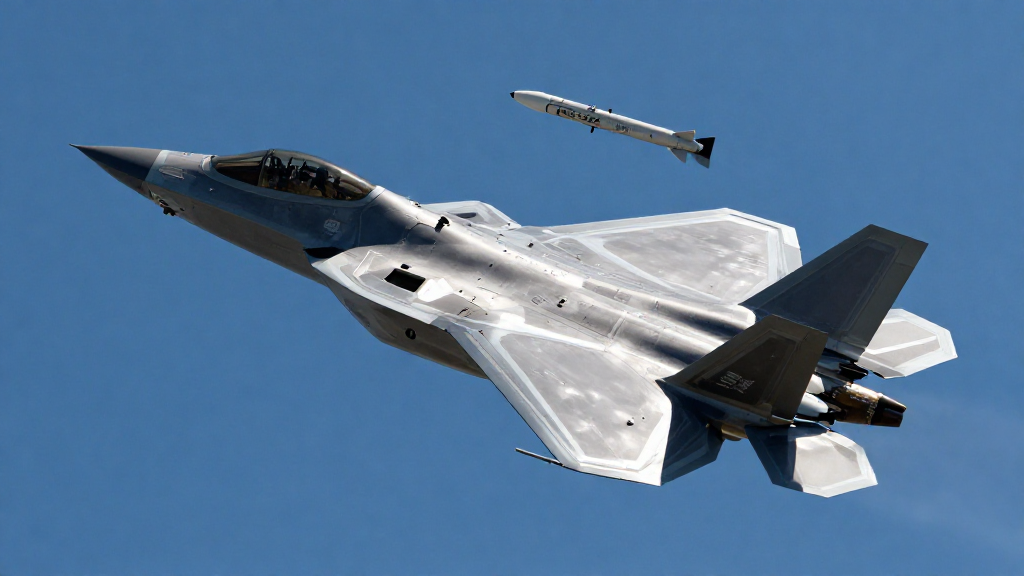

India’s DRDO is advancing the development of the Astra Mk3, a next-generation Very Long-Range Beyond Visual Range Air-to-Air Missile (VLR-BVRAAM) that is expected to become the country’s first indigenous weapon in this class. Designed to provide the Indian Air Force (IAF) with a powerful long-range air combat capability, the missile is also intended to reduce reliance on imported systems. However, full-scale production is unlikely before the early 2030s, requiring the IAF to continue operating existing long-range missiles for several more years.
The Astra Mk3 marks a significant technological leap over the earlier Astra variants. While the MkI and MkII use traditional solid rocket motors, the Mk3 incorporates Solid Fuel Ducted Ramjet (SFDR) propulsion, enabling continuous thrust during flight. This allows the missile to retain greater speed and energy during terminal engagements, improving its effectiveness against fast and maneuvering targets.
Its propulsion technology places it alongside advanced missiles such as the Meteor, which has set the benchmark for modern beyond-visual-range air combat.
The Astra Mk3 is projected to engage targets at distances exceeding 300 kilometers under optimal conditions while offering a substantially larger no-escape zone than current Indian missiles. This capability is expected to improve India’s ability to counter modern threats, including aircraft equipped with China’s PL-15 missile.
An important benefit of the programme is its economic and strategic value. Indigenous manufacturing will significantly lower acquisition costs, ensure uninterrupted production, and provide India with complete control over future upgrades, software modifications, and maintenance support. It will also allow the IAF to procure larger quantities of advanced missiles without depending on foreign supply chains.
Despite these advantages, developing a ramjet-powered missile involves considerable technical complexity. The SFDR propulsion system requires extensive validation alongside comprehensive flight testing, seeker qualification, datalink verification, electronic warfare evaluation, and user trials before operational clearance can be granted.
Even after successful development, production facilities and manufacturing processes must be established before large-scale deliveries can begin. Consequently, defence analysts expect widespread operational deployment only in the early 2030s.
During this transition period, the IAF will continue to rely on the Meteor for very-long-range engagements while expanding the deployment of the Astra MkII, which offers engagement ranges of approximately 220–240 kilometers and is expected to become India’s primary indigenous long-range air-to-air missile.
In the future, the IAF is expected to operate a layered missile portfolio comprising the Astra MkI for medium-range combat, the Astra MkII for long-range engagements, and the Astra Mk3 for very-long-range missions against high-value aerial targets. This multi-layered approach aligns with the operational doctrine adopted by leading air forces around the world.
Beyond enhancing combat capability, the Astra Mk3 programme will help India master critical technologies such as solid-fuel ramjet propulsion, advanced radar seekers, secure high-speed datalinks, and long-range guidance systems, strengthening the country’s indigenous missile development ecosystem for future generations.