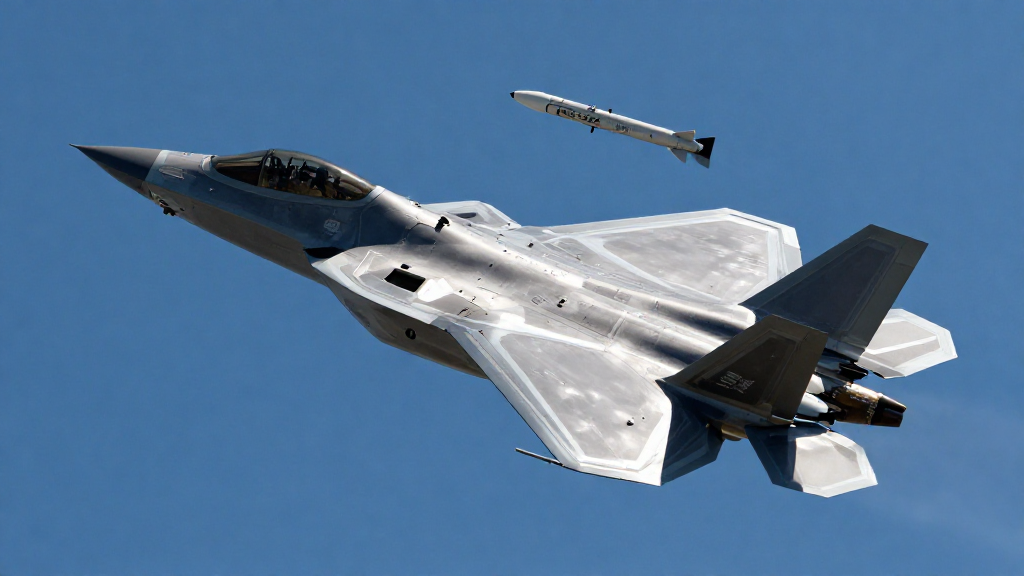

The MiG-35 represents Russia’s approach to practical air combat capability rather than an attempt to replicate the stealth-centric philosophy of fifth-generation fighters.
Derived from the battle-tested MiG-29 family, the aircraft combines modern avionics, upgraded sensors, and multirole flexibility into a comparatively affordable platform designed for contemporary warfare.
While it may not possess the low-observable characteristics of stealth aircraft, the MiG-35 focuses on adaptability, survivability, and cost-efficient combat performance.
Understanding the MiG-35
The MiG-35 is an extensively modernized version of the MiG-29 designed for operations in complex and heavily defended airspaces.
Produced by Mikoyan under the United Aircraft Corporation umbrella, the fighter incorporates upgraded mission systems, improved avionics, and enhanced combat capability while retaining the agility that made earlier MiG fighters well known.
The aircraft is intended to perform a wide range of missions, including air superiority, strike operations, and reconnaissance under all-weather combat conditions.
Development Background
The MiG-35 evolved from modernization programmes involving the MiG-29M and carrier-capable MiG-29K variants. Russia accelerated development during the early 2000s to modernize its tactical aviation fleet while also creating a more affordable export alternative to heavier aircraft like the Su-35.
First publicly unveiled in 2007, the fighter has undergone several upgrades over the years. Although adopted in limited numbers by Russia, procurement levels have remained relatively modest due to financial constraints and competition from other fighter programmes.
Aircraft Variants
The MiG-35 platform currently exists in two primary configurations:
MiG-35: Single-seat frontline multirole fighter
MiG-35D: Twin-seat combat trainer and strike aircraft
Both variants share nearly identical performance characteristics, with the two-seat version offering greater operational and training flexibility.
Operational Capabilities
Engines and Maneuverability
The fighter is powered by upgraded RD-33 engines that provide improved thrust output, fuel efficiency, and lower smoke emissions compared to older MiG-29 models. Engine lifespan has also been significantly increased.
Some variants feature thrust-vectoring technology, allowing the aircraft to perform highly agile maneuvers during close-range engagements and complex aerial combat scenarios.
Radar and Sensor Systems
The MiG-35 is equipped with the Zhuk-AE or Zhuk-AM radar capable of tracking up to 30 airborne targets at distances of around 160 kilometers and simultaneously engaging multiple threats.
An advanced optoelectronic targeting system further improves the aircraft’s capability to detect, monitor, and engage targets during both day and night operations. Combined, these systems provide strong multi-target engagement capability and improved situational awareness.
Weapons Integration
Designed as a true multirole fighter, the MiG-35 can carry a wide variety of air-to-air missiles, air-to-ground munitions, and precision-guided weapons. Its flexible mission architecture allows rapid transition between strike, air combat, and reconnaissance roles.
Major Advantages
Flexible multirole performance across air combat, strike, and reconnaissance missions
Advanced radar and electro-optical systems for long-range target tracking and engagement
Excellent agility enhanced by aerodynamic improvements and thrust-vectoring capability
Improved battlefield awareness through integrated avionics systems
Lower operating and acquisition costs compared to stealth fighters
Greater reliability and reduced maintenance demands compared to older MiG aircraft
Key Drawbacks
Absence of stealth design limits survivability against advanced air-defense networks
Small production numbers restrict broader deployment and integration
Competes internally with more heavily armed Russian platforms such as the Su-35
Export opportunities remain limited due to sanctions and geopolitical challenges
Operational and Global Context
The MiG-35 has primarily served within Russia and has achieved limited export penetration despite being marketed as a cost-effective multirole fighter.
Globally, it competes with aircraft such as the F-16 and the JF-17, offering a balance between affordability and advanced combat capability. However, it lacks the stealth and deep network integration increasingly associated with modern Western combat aircraft.
Looking Ahead
The MiG-35’s future remains uncertain but still strategically relevant for nations seeking capable non-stealth fighters at manageable cost.
As global air combat shifts toward stealth aircraft, networked warfare, and unmanned systems, the MiG-35 may ultimately serve as a transitional platform rather than a long-term centerpiece of future air forces.
Even so, it highlights an important reality of modern military aviation: combat effectiveness is not determined solely by possessing the most advanced aircraft, but by fielding a fighter that best matches a nation’s operational doctrine, budget, and strategic needs.