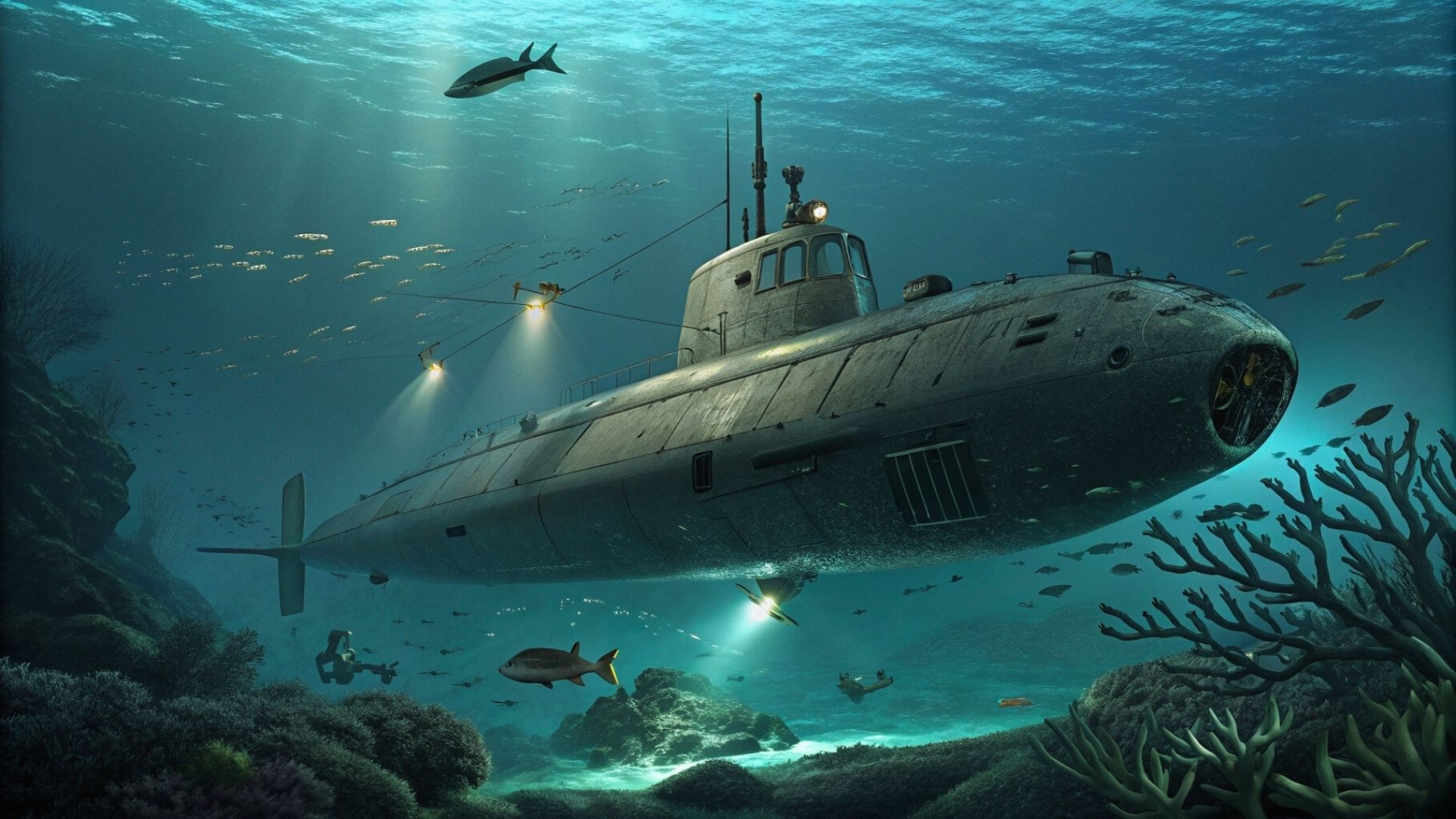
Naval warfare today extends far below the ocean surface, where silence and stealth often determine victory.
The MK 48 torpedo is one of the most powerful weapons operating in this hidden battlespace, providing submarines with the capability to hunt and destroy enemy ships and submarines with deadly efficiency.
In an era of rising maritime tensions, the torpedo’s role has become more relevant than ever.
Understanding the MK 48
The MK 48 is a heavyweight torpedo launched from submarines and guided through a combination of wire-link communication and acoustic homing technology.
Once fired, it uses both active and passive sonar to locate and engage hostile submarines or surface combatants.
Unlike lightweight torpedoes built for short-range defense, the MK 48 is designed for offensive deep-water warfare against strategic naval targets. Its destructive capability was highlighted recently when an MK 48 reportedly sank Iran’s IRIS Dena warship.
Development History
The weapon was originally designed during the Cold War to replace the aging MK 37 torpedo and provide US Navy submarines with superior long-range attack capability.
Over time, contractors such as Lockheed Martin and SAIC introduced a series of upgrades to keep the system effective against evolving threats. ADCAP enhancements improved the torpedo’s sonar systems, guidance accuracy, and resistance to decoys and acoustic countermeasures.
Evolution Through Mod Variants
The MK 48 has evolved through several modernization stages, with each Mod upgrade improving performance while retaining the original framework.
Mod 4: Improved reliability and acoustic targeting performance.
Mod 5 (ADCAP): Added advanced signal processing and improved target identification against quiet submarines.
Mod 6: Introduced better sonar processing and stronger resistance to enemy countermeasures.
Mod 7: Features upgraded autonomous tracking and enhanced fire-control integration.
Combat Operation
Once launched from a submarine, the MK 48 initially operates in a quiet transit mode to reduce detectability while approaching the target area.
During its mid-course phase, the torpedo uses wire guidance from the submarine alongside onboard sonar systems. Active sonar helps search for and lock onto targets, while passive sonar detects enemy noise signatures without exposing the torpedo’s own location.
As it enters the terminal phase, the weapon switches to autonomous attack mode. Advanced acoustic tracking enables the torpedo to maintain contact with maneuvering targets and overcome countermeasures before impact.
Main Features
Top speed above 55 knots for rapid engagement.
Real-time targeting updates through wire guidance.
Active and passive sonar supported by advanced digital processing.
Effective in deep-ocean and contested maritime environments.
Carries a large high-explosive warhead capable of crippling major warships.
Advantages
Delivers precise strikes against moving targets.
Effective against both submarines and surface vessels.
Flexible guidance allows tactical updates during flight.
Long operational history with proven battlefield reliability.
Challenges
Dependent on submarine launch platforms.
Sophisticated enemy decoys and electronic warfare systems can reduce effectiveness.
Limited endurance compared to long-range standoff weapons.
Service and Deployment
The MK 48 is deployed on Los Angeles-, Seawolf-, and Virginia-class submarines, where it serves as the US Navy’s primary underwater strike weapon.
It is widely used in deterrence missions, sea-denial operations, and high-end naval combat where stealth is critical.
Its design and operational concepts have also influenced heavyweight torpedo programs in allied navies across the world.
Looking Ahead
With undersea warfare becoming more technologically demanding, the MK 48 is expected to receive further upgrades focused on autonomy, target recognition, and countermeasure resistance.
Even as technology evolves, the torpedo’s mission remains unchanged: providing submarines with a silent and highly lethal capability to strike enemy forces before they can respond.