
India’s Astra Mk3 long-range air-to-air missile programme, linked to the SFDR-based “Gandiva” project, is preparing to enter its most critical development stage as integrated airborne testing is expected to intensify during the 2027–2028 period ahead of production clearance.
The upcoming trial phase is expected to determine whether India can successfully field an indigenous Beyond-Visual-Range Air-to-Air Missile capable of engaging advanced maneuvering aerial threats at ranges reportedly reaching 350 kilometers.
Under the current development roadmap, the Astra Mk3 programme is shifting from propulsion validation activities toward full airborne integration and operational combat-envelope testing.
The 2026 development cycle has largely concentrated on validating the missile’s Solid Fuel Ducted Ramjet propulsion architecture. Unlike traditional rocket-powered BVRAAMs that lose momentum after motor burnout, the SFDR system enables sustained powered flight, allowing the missile to retain high speed and maneuverability during the terminal interception phase.
Previous FT-01 and FT-02 trials conducted from Chandipur reportedly validated important propulsion parameters, including ramjet combustion stability, booster separation, and fuel-flow throttling characteristics. These trials are regarded as crucial because the SFDR system forms the technological foundation of Astra Mk3’s extended-range engagement capability.
With propulsion validation progressing successfully, DRDO has reportedly shifted its focus toward electronic systems integration and sensor refinement. One of the programme’s most important technologies is the indigenous Gallium Nitride AESA terminal seeker, designed to deliver improved target tracking, stronger resistance to electronic jamming, and superior target discrimination capability compared to previous seeker technologies.
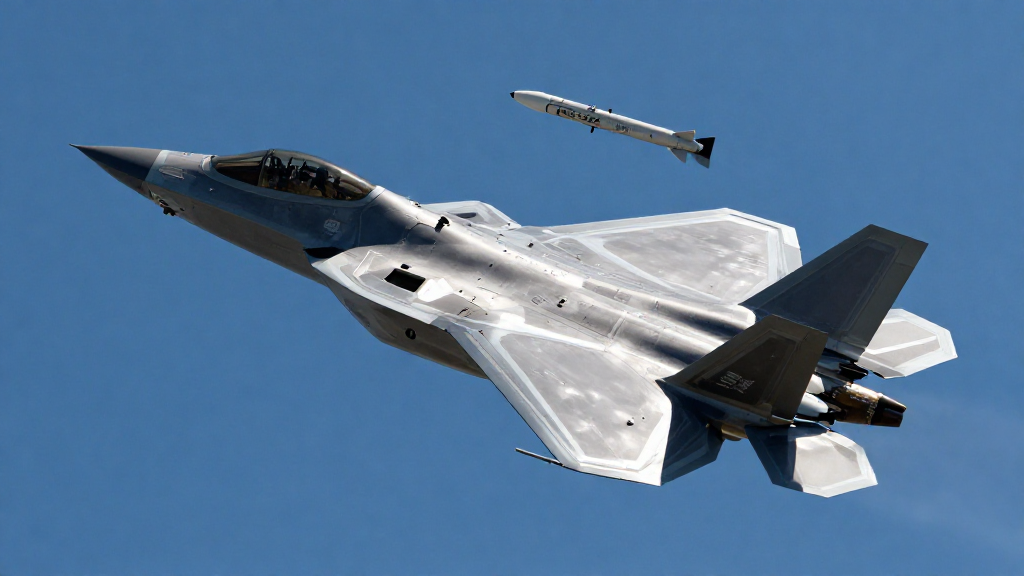
The airborne integration campaign is expected to begin in 2027 using the Indian Air Force’s Su-30MKI fighter fleet as the primary launch platform. The Su-30MKI was selected due to its large payload capacity, advanced avionics architecture, and extensive experience integrating indigenous weapon systems.
During the early 2027 phase, testing is expected to focus mainly on captive carriage and systems integration rather than immediate live firings. These trials will examine aerodynamic compatibility, missile separation characteristics, and digital communication stability between the missile and the aircraft’s combat management systems.
A major focus area will reportedly be validation of the missile’s two-way datalink system to ensure stable communication throughout various stages of flight. The captive-flight programme is also expected to validate safe missile release during high-G combat maneuvers, a critical operational requirement for frontline fighter deployment.
Such trials are particularly important because ramjet-powered missiles impose very different aerodynamic and thermal loads compared to conventional rocket-powered air-to-air weapons.
The programme is then expected to move into full live-firing and combat-envelope validation during 2028. This phase is likely to involve multiple engagements against highly maneuverable aerial targets, drone systems, and potentially low-RCS targets designed to simulate stealth aircraft threats.
One of the key objectives of the 2028 trials will be verifying the missile’s reported 350-kilometer engagement range under realistic battlefield conditions. DRDO and the Indian Air Force are also expected to evaluate the missile’s terminal homing capability under intense electronic warfare conditions, where ECCM performance becomes essential.
The GaN AESA seeker’s ability to maintain target lock in hostile jamming environments could become one of the decisive factors influencing operational approval. The live-fire campaign will also assess the SFDR propulsion system’s ability to sustain high terminal energy at extended ranges, overcoming limitations commonly associated with conventional rocket-powered missiles.
If the programme proceeds successfully, Astra Mk3 could emerge as India’s most sophisticated indigenous BVRAAM platform. It is expected to offer capabilities significantly beyond Astra Mk1 and Astra Mk2, positioning India among the few nations operating advanced ramjet-powered long-range air-to-air missiles.
The missile’s combination of SFDR propulsion, advanced GaN AESA seeker technology, long-range engagement capability, and robust ECCM performance is intended to strengthen the Indian Air Force’s ability to engage high-value airborne assets including AWACS aircraft, aerial refueling tankers, electronic warfare platforms, and long-range strike fighters from extended stand-off distances.
Current projections reportedly aim to complete the live-fire evaluation phase by the end of 2028, paving the way for formal production clearance shortly afterward.