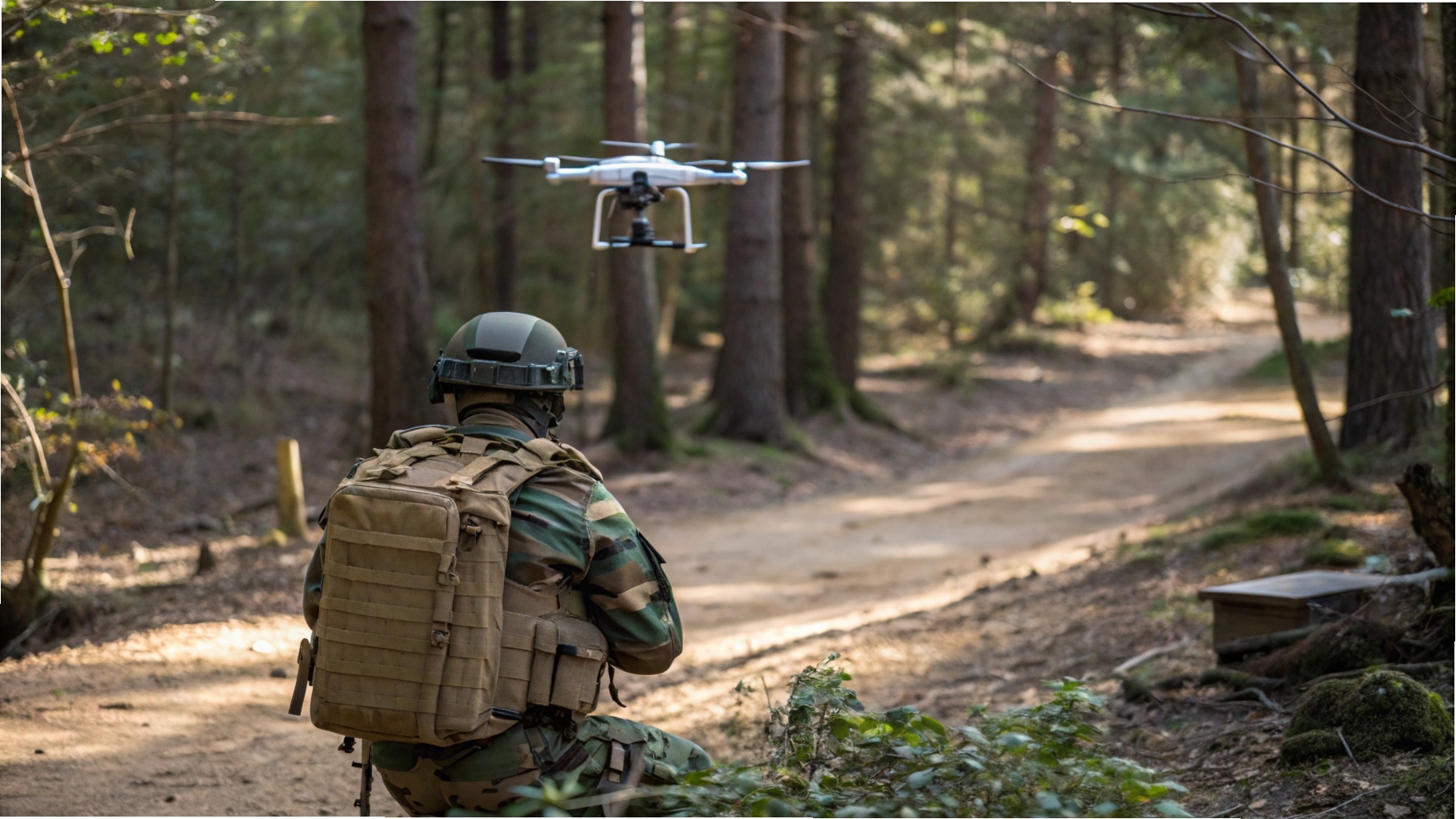
Germany is planning to deploy around 8,300 unmanned aerial systems (UAS) by 2029, a relatively conservative target compared to NATO allies rapidly expanding their drone fleets amid growing global reliance on unmanned warfare.
The procurement list, detailed in a German defense agency paper reviewed by Bloomberg, includes approximately 5,700 reconnaissance drones, 560 interceptor systems, and 2,070 loitering munitions. Some systems may feature multiple launchers and controllers, while others with long-range strike capabilities of up to 600 miles (966 kilometers) are being evaluated.
Balancing Caution and Capacity
Berlin’s restrained approach contrasts sharply with Ukraine and Russia, where drones have accounted for nearly 70 percent of casualties during over three years of conflict. German officials argue that large-scale orders risk becoming obsolete as technology evolves, preferring the option to scale up production during crises rather than commit to stockpiling.
However, domestic manufacturers warn this strategy could hinder the growth of Germany’s indigenous drone industry. Florian Seibel, co-founder of Stark Defense and CEO of Quantum Systems, noted that companies cannot justify building factories without firm government commitments.
Defense Strategy in Context
The drone acquisition is part of Germany’s broader plan to nearly double its defense budget to €161.8 billion ($189.4 billion) within four years, driven by Russia’s invasion of Ukraine and concerns over future US support for Europe.
While most funds are earmarked for tanks, aircraft, and conventional weapons, drones remain a secondary priority. Meanwhile, Berlin has stepped up direct support for Kyiv, recently announcing the delivery of two additional US-made Patriot air defense systems, with more launchers and components expected in the coming months.