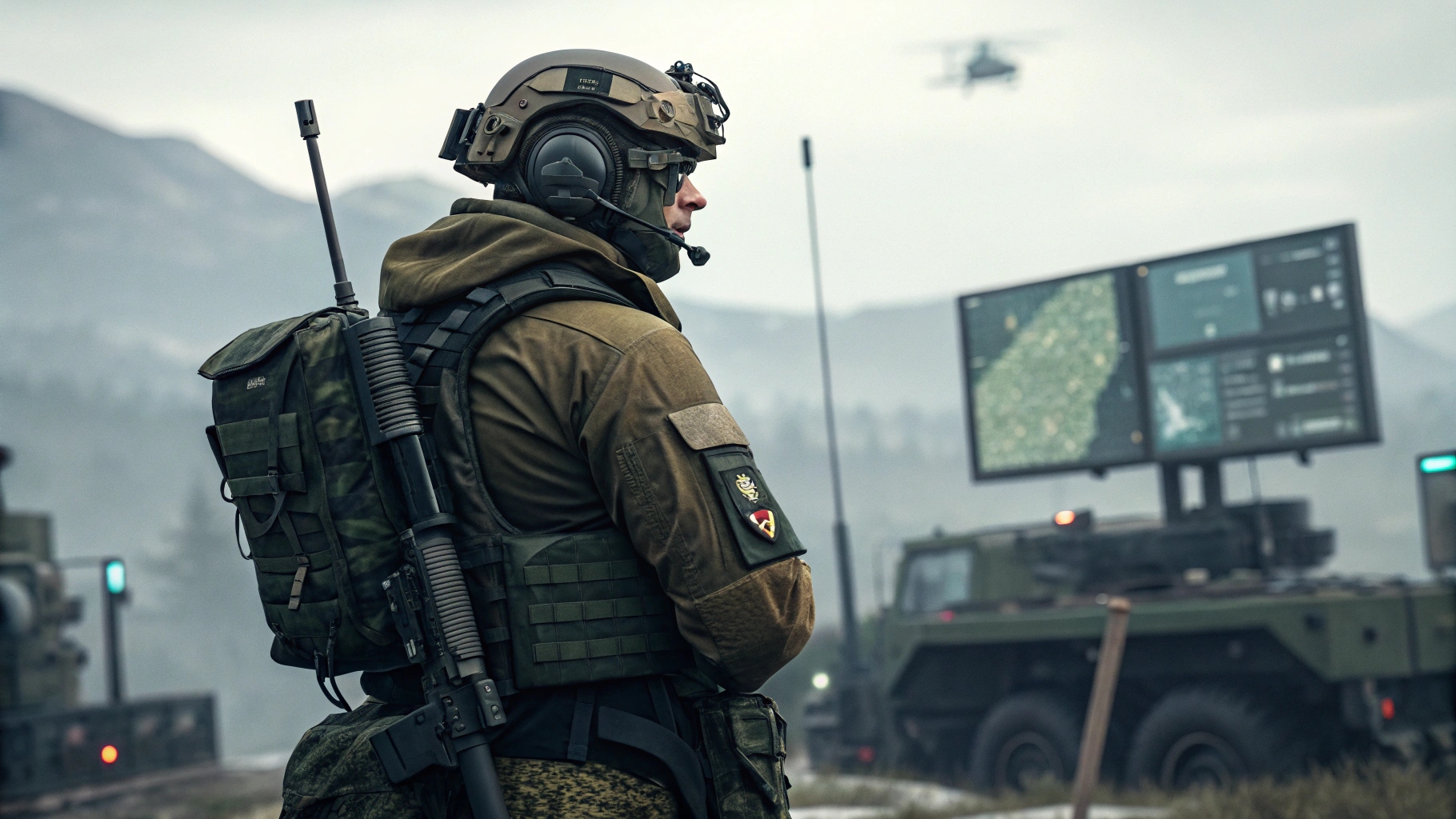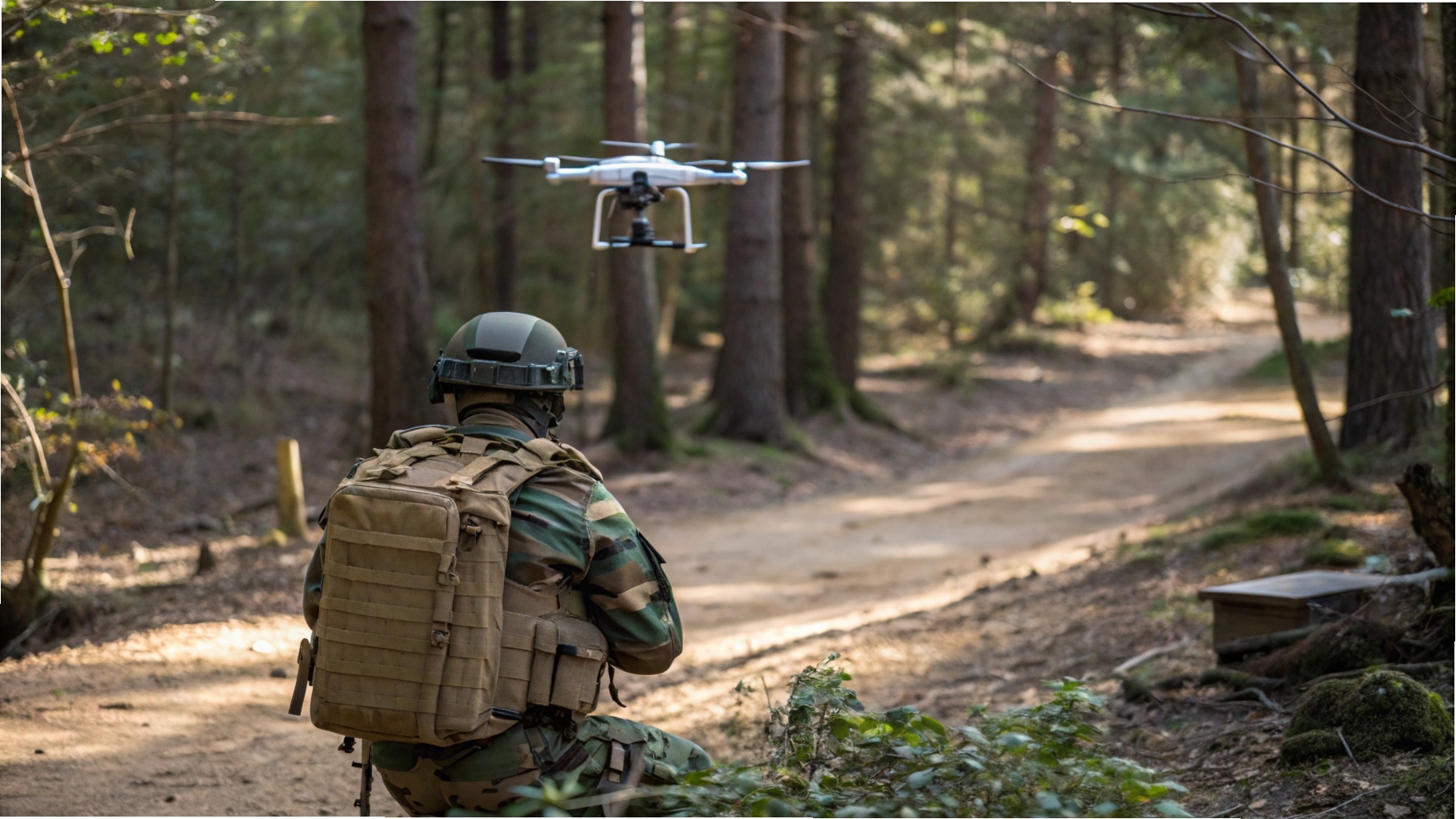

SSS Defence has delivered its indigenous T-12 semi-automatic shotgun to the Indian Army Northern Command as part of the military’s expanding effort to counter low-flying drones and FPV unmanned aerial threats on the battlefield.
While the quantity supplied remains undisclosed, the move reflects a broader international trend toward employing combat shotguns in anti-drone roles — a tactic that gained major relevance during the Russo-Ukrainian War.
The T-12 is being showcased at the Northtech Symposium 2026, which has become an important venue for displaying indigenous defense technologies focused on drones, infantry modernization, and electronic warfare.
Features of the T-12 Shotgun
The T-12 is a 12-gauge semi-automatic weapon fitted with a 20-inch nitride-coated barrel and supports detachable magazines with capacities of five and ten rounds.
Entirely designed and produced in India, the shotgun incorporates a full-length Picatinny rail system, enabling the integration of optics, thermal sights, reflex sights, and other mission-specific accessories for both combat and counter-drone use.
Weighing roughly 3.8 kilograms, the weapon uses lightweight yet durable 7075-T6 aluminum construction for its upper and lower receivers, helping maintain maneuverability and structural strength in harsh combat conditions.
Field demonstrations reportedly showed the T-12 successfully engaging drone targets at distances close to 90 meters, emphasizing its intended use against low-altitude FPV drones and quadcopters.
Battlefield Shift Toward Anti-Drone Shotguns
The increasing use of shotguns for drone defense has largely been driven by operational lessons from the Russo-Ukrainian War, where both Russian and Ukrainian forces have heavily utilized FPV drones for surveillance and attack missions.
Conventional rifles often struggle to hit fast-moving, low-flying drones because of their small size and maneuverability. In contrast, shotguns fire multiple pellets simultaneously, significantly improving the probability of damaging drone propellers, electronics, or control systems.
Even limited pellet impacts can destabilize UAVs and render them ineffective, turning combat shotguns into valuable close-range defensive tools in trench warfare, urban combat, and frontline force-protection scenarios.
International Developments in Counter-Drone Weapons
Globally, several military forces and manufacturers are adapting shotgun systems specifically for anti-drone operations. Platforms seen in Ukraine include the Vepr-12, Remington Model 870 variants, and the Turkish Hatsan Escort BTS-12.
Meanwhile, Benelli has developed the M4 A.I. Drone Guardian, an anti-drone adaptation of the Benelli M4 capable of reportedly engaging UAVs at distances between 50 and 100 meters depending on operating conditions.
Other close-range counter-drone technologies are also emerging worldwide. Russia has reportedly tested net-launching ammunition for GP-series grenade launchers, while the United States Army is advancing its Precision Grenadier System initiative to support future drone-interception capabilities.
Another important aspect of the T-12 is its shared component architecture with other SSS Defence firearms. Standardization across the company’s weapon family is intended to reduce logistical complexity, simplify maintenance, and ease training requirements for forces already using SSS Defence systems.