
The US Department of Defense has awarded Raytheon a five-year contract worth up to $6.3 billion to manufacture and sustain Standard Missile-3 Block IB (SM-3 IB) interceptors. The agreement includes two additional option years and forms part of five major contracts announced in February to accelerate missile production and replenish US missile defense inventories.
The award follows a separate $24.4 billion, five-year contract granted to Raytheon for producing Standard Missile-6 (SM-6) interceptors for the US Navy. Both systems support ship-based missile defense, but they serve different operational purposes. The SM-3 primarily intercepts ballistic missiles during their midcourse phase, whereas the SM-6 provides broader air and missile defense capabilities.
SM-3 Block IB Capabilities
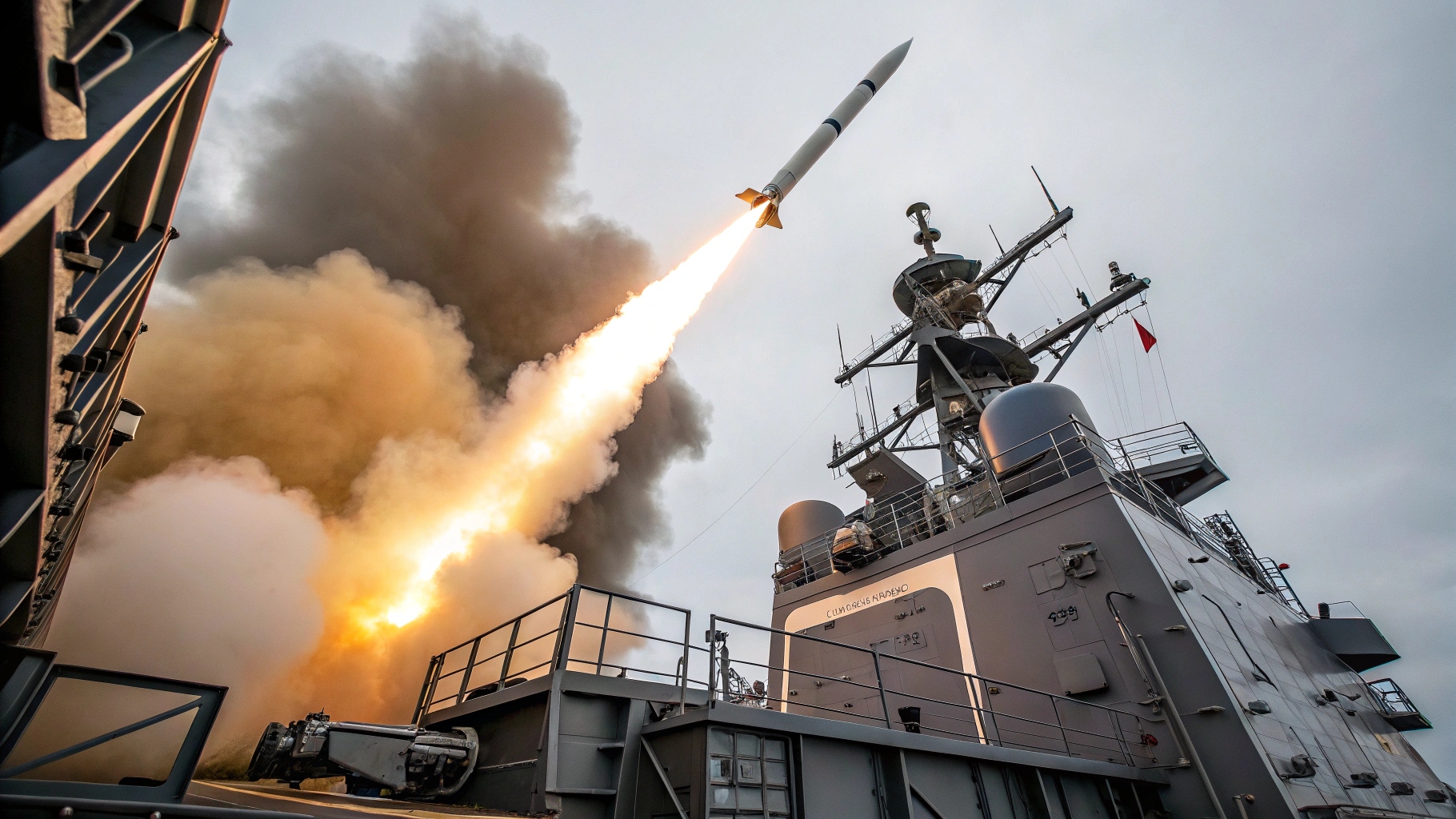
The SM-3 Block IB is a ship- and land-based interceptor designed to destroy short- to intermediate-range ballistic missiles during midcourse flight. It is an integral component of the US Navy’s integrated air and missile defense architecture and was first used in combat in 2024.
With an estimated unit cost of $10 million to $15 million, the Block IB is considerably less expensive than the SM-3 Block IIA, which is estimated to cost between $35 million and $40 million per interceptor. Its lower price could support larger procurement volumes and strengthen the affordability of missile defense operations.
The interceptor reportedly has a range of up to 559 miles (900 kilometers) and an engagement altitude of approximately 311 miles (500 kilometers). Its dual-color infrared seeker enhances target discrimination, while a throttleable divert-and-attitude-control system enables precise maneuvering during the final stages of interception.
The contract reinforces the US Department of Defense’s efforts to expand interceptor production capacity, strengthen ballistic missile defense readiness, and maintain reliable supplies of advanced defensive weapons amid evolving global security threats.