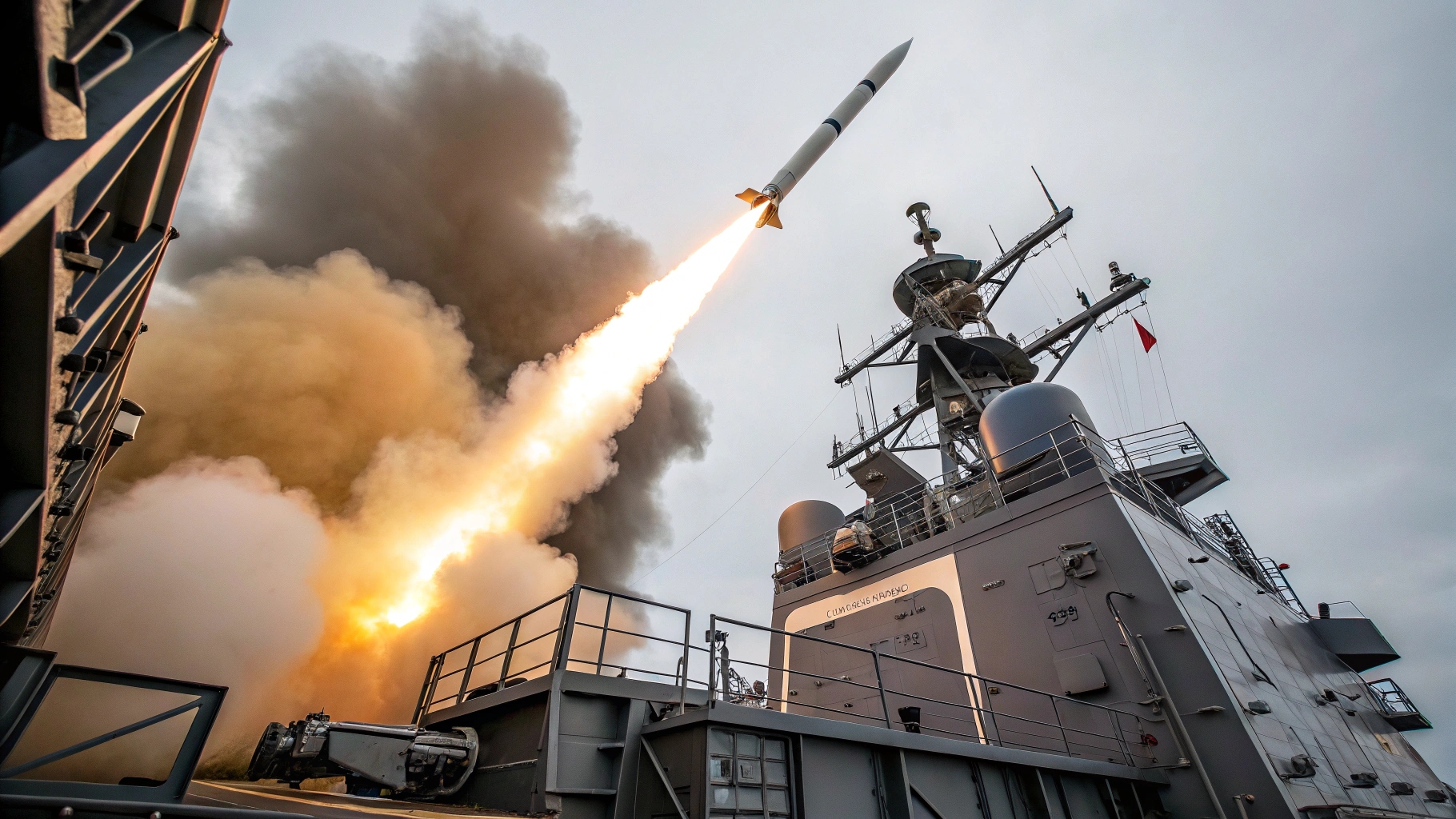

Lockheed Martin has introduced PAC-3 Edge, a next-generation interceptor designed to address emerging hypersonic and advanced missile threats. The system builds on the combat-proven technologies of the company’s Patriot Advanced Capability-3 Missile Segment Enhancement (PAC-3 MSE) interceptor family.
Developed for the US Army’s Future Interceptor program, PAC-3 Edge is intended to engage targets at greater ranges and altitudes. Tim Cahill, president of Lockheed Martin’s Missiles and Fire Control business, reportedly confirmed to Breaking Defense that the company is competing against another undisclosed contender for the program. Lockheed Martin is targeting initial testing in 2027, with potential deployment planned for 2031.
PAC-3 Edge Capabilities and Technology
PAC-3 Edge is designed to expand the US Army’s Integrated Air and Missile Defense (IAMD) capabilities against aircraft, missiles, and hypersonic threats. The interceptor is being developed to integrate with existing and future defense infrastructure, including the Integrated Battle Command System, M903 launcher, containerized launchers, and HIMARS Flex.
The system will incorporate a newly developed in-house seeker and a three-pulse solid rocket motor designed by Northrop Grumman. The propulsion system is intended to deliver controlled thrust throughout flight, while upgraded guidance and control technologies aim to enhance interception performance at extended ranges and higher altitudes.
Lockheed Martin has invested $250 million in its Strigo Product Center and plans an additional $800 million investment in seeker technology. These investments are intended to improve interceptor precision, maneuverability, and effectiveness against increasingly sophisticated aerial threats.
Production Expansion and Future Outlook
PAC-3 Edge will be manufactured at Lockheed Martin’s facility in Camden, Arkansas. The company is also constructing a new automated production facility for PAC-3 MSE interceptors as part of a broader initiative to triple production output over seven years. Following the transition to the new facility, the existing production line is expected to undergo upgrades to support PAC-3 Edge manufacturing.
The development of PAC-3 Edge highlights the growing emphasis on advanced interceptor technologies as the US Army seeks to strengthen its integrated air and missile defense architecture. If successfully developed and deployed, the system could enhance the military’s ability to counter high-speed, high-altitude, and increasingly complex missile threats.