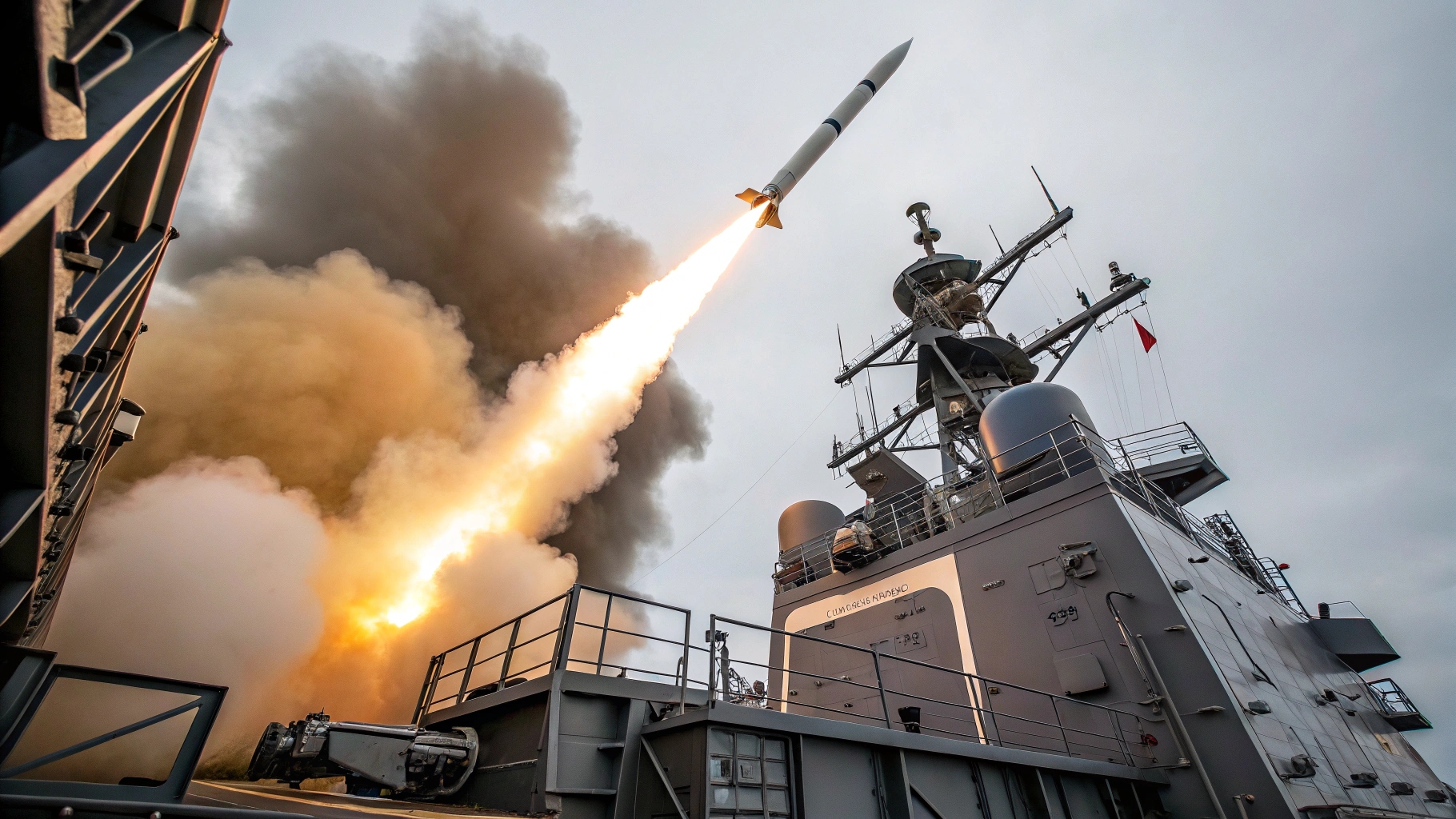

Vertotech Aerospace, a Bengaluru-based defense startup, is developing V-RUDRA, an indigenous medium-range Surface-to-Air Missile concept designed to address a broad range of aerial threats. The proposed missile is expected to combine a 120-kilometer engagement range, Mach 4.5 speed, and dual-mode radar and electro-optical guidance.
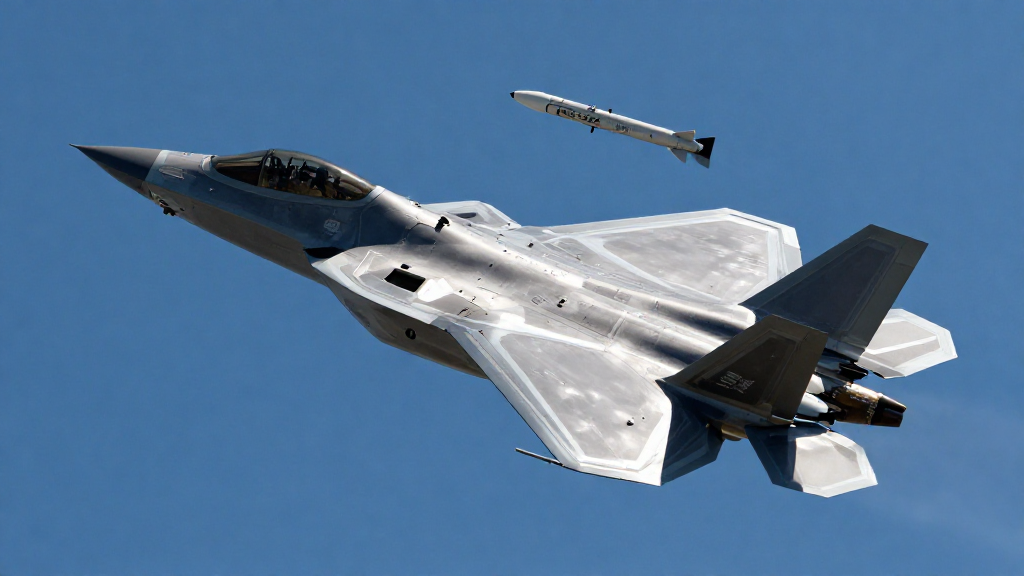
The company says V-RUDRA could engage targets at distances of up to 120 kilometers while traveling at approximately Mach 4.5. Its intended targets include fighter aircraft, helicopters, UAVs, cruise missiles, and other airborne threats operating within the missile’s engagement range.
One of the system’s notable characteristics is its proposed multi-sensor guidance architecture. V-RUDRA is designed to combine radar-based tracking with electro-optical guidance rather than depending entirely on radar. This could provide greater operational flexibility when electronic warfare and jamming interfere with conventional radar-guided engagements.
The radar component would provide long-range detection and tracking, while the electro-optical system could contribute to target identification and terminal-stage guidance. Such sensor diversity could improve resilience against electronic countermeasures and support engagements against difficult or highly maneuverable targets.
The missile’s proposed 120-kilometer range places it within the medium-range air-defense segment. Such systems are generally intended to create protective zones around military bases, command centers, strategic infrastructure, industrial sites, and deployed forces.
V-RUDRA’s reported Mach 4.5 speed could also provide rapid interception against incoming threats. A high-velocity interceptor can reduce the time available for an approaching aircraft or missile to respond, while its extended range could provide defenders with greater engagement depth.
Despite the release of basic performance targets, Vertotech Aerospace has yet to disclose several critical aspects of the system. Details regarding propulsion, missile dimensions, launcher design, warhead configuration, seeker technology, supporting radars, command-and-control systems, development milestones, and technology readiness remain unavailable.
The development of a capable medium-range SAM would require significant work across propulsion, guidance, sensing, communications, software, command-and-control, and radar technologies. Extensive testing would also be necessary to demonstrate reliability and validate the system under realistic operational conditions.
India already fields a diverse layered air-defense network that includes Akash, Akash-NG, MRSAM, QRSAM, VL-SRSAM, S-400 Triumf, and other specialized systems. A private-sector initiative such as V-RUDRA could complement these capabilities if the concept progresses successfully through development and testing.
India’s defense innovation ecosystem has increasingly encouraged startups and private companies to participate in advanced military technology programs. Initiatives including iDEX, TDF, Make-I, and Make-II have created opportunities for domestic companies to develop technologies covering missiles, electronic warfare, autonomous platforms, aerospace systems, and other defense applications.
V-RUDRA is still at the concept or developmental stage, and its eventual capabilities will depend on successful technology development, testing, and qualification. Nevertheless, the project highlights the growing role of Indian private-sector companies in pursuing sophisticated indigenous missile systems and could potentially add another capability to the country’s expanding air-defense architecture.