
India and France have developed a longstanding strategic partnership since formally establishing bilateral strategic relations in 1998. Over the years, cooperation has expanded beyond conventional defence procurement to include military exercises, maritime security, advanced aerospace technologies, defence research and space exploration. This multifaceted relationship has become an important component of India’s international defence engagement and contributes to maintaining security and stability across the Indo-Pacific region.
Expanding Defence and Aerospace Cooperation Through the Rafale Programme
A major milestone in bilateral defence cooperation was achieved on 28 April 2025, when India and France signed an Inter-Governmental Agreement for the acquisition of 26 Rafale-Marine fighter aircraft for the Indian Navy. Valued at approximately ₹63,000 crore, the agreement covers 22 single-seat carrier-capable fighters and four twin-seat trainer aircraft.
Beyond aircraft procurement, the package includes weapons, simulators, pilot training, associated equipment and long-term logistics support. It also provides additional equipment for the Indian Air Force’s existing Rafale fleet. Deliveries are scheduled to begin in late 2028 or early 2029, with completion expected by 2030.
The agreement also carries significant industrial and technological implications for India’s aerospace sector. It incorporates provisions for technology transfer to facilitate the integration of indigenous Indian weapons and supports the development of domestic aerospace infrastructure. Planned industrial activities include a Rafale fuselage manufacturing facility and maintenance, repair and overhaul (MRO) capabilities for engines, sensors and weapons systems. These initiatives are expected to strengthen India’s aerospace supply chain and contribute to its long-term defence self-reliance objectives.
Designed specifically for aircraft-carrier operations, the Rafale-Marine incorporates several modifications compared with the conventional land-based Rafale. These include reinforced landing gear, an arrestor hook and a launch-bar-equipped nose landing gear, enabling the aircraft to operate from carrier decks using specialised launch and recovery systems.
The aircraft is intended to undertake multiple missions, including fleet air defence, maritime strike, reconnaissance and attacks against shore-based targets. Its acquisition will make India the first country outside France to operate the naval Rafale variant.
The programme builds upon the earlier acquisition of 36 Rafale fighters by the Indian Air Force under the 2016 agreement. Operating common aircraft families across the Air Force and Navy is expected to support training standardisation, maintenance coordination, logistics management and joint operational planning.
Advancing Indigenous Submarine Manufacturing Through Project-75
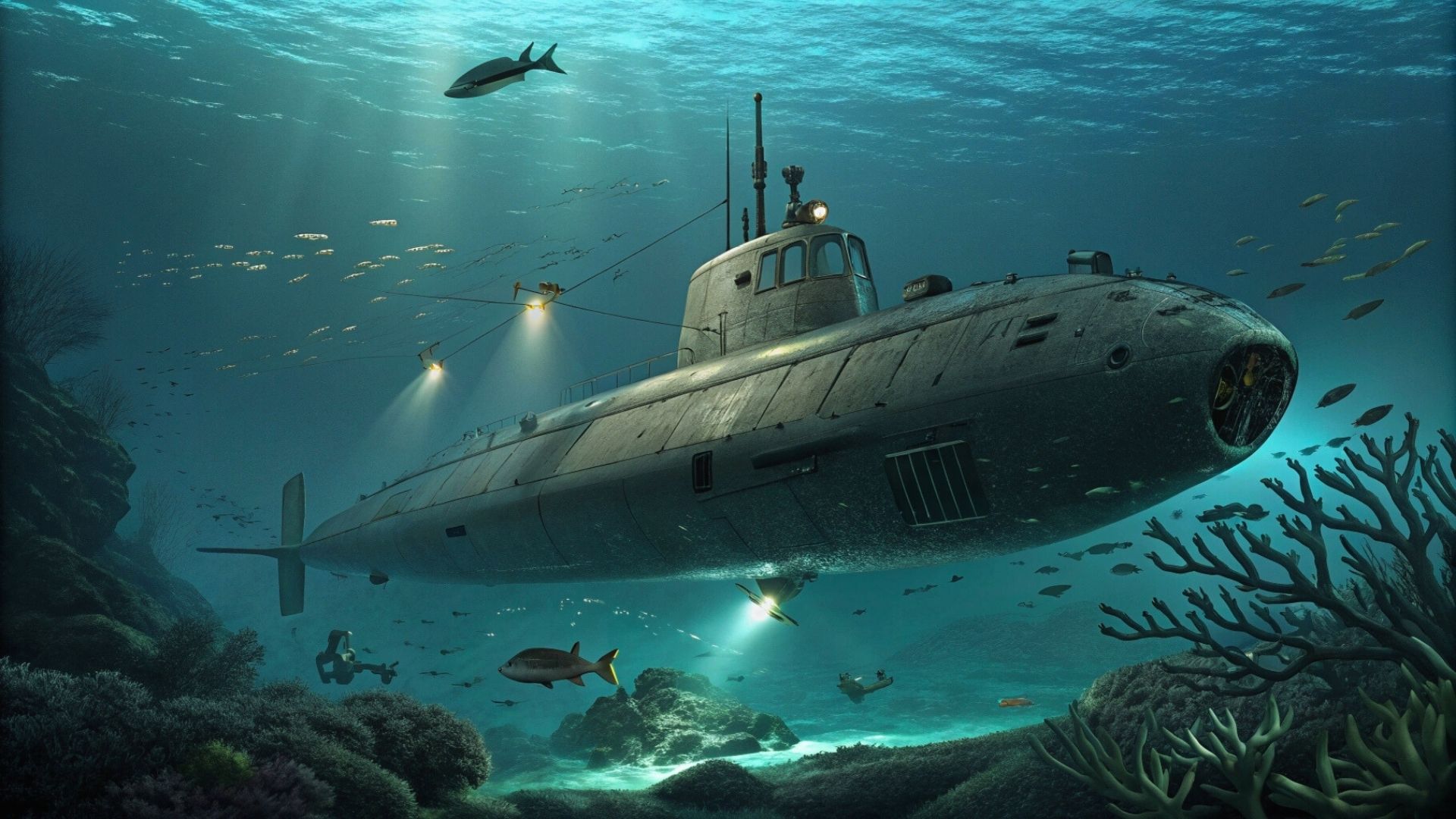
Another important example of India-France defence-industrial cooperation is Project-75, under which six Kalvari-class Scorpene submarines have been constructed at Mazagon Dock Shipbuilders Limited (MDL) in Mumbai in collaboration with France’s Naval Group.
The six submarines are INS Kalvari, INS Khanderi, INS Karanj, INS Vela, INS Vagir and INS Vagsheer. The programme has contributed significantly to India’s domestic submarine construction capabilities, workforce development and integration of advanced naval technologies.
Project-75 has also supported the development of a wider Indian industrial ecosystem involving submarine components, engineering systems, equipment manufacturing and specialised maintenance capabilities. The experience gained through the programme provides an important foundation for future indigenous submarine development initiatives.
Strengthening Military Interoperability Through Joint Exercises
Regular military exercises remain central to the India-France defence relationship, providing opportunities for both countries to improve operational coordination, exchange expertise and develop interoperability across different military environments.
The bilateral naval exercise Varuna originated from naval interactions that began in 1993 and has evolved into a major component of maritime cooperation. The exercise involves warships, submarines, maritime patrol aircraft, carrier-based platforms and fighter aircraft, allowing both navies to conduct complex maritime operations and improve their combined operational readiness.
Air force cooperation is strengthened through Exercise Garuda, which brings together fighter aircraft, transport platforms and airborne surveillance assets for joint operational training. The exercise provides opportunities to exchange expertise in air combat tactics, mission planning and coordinated aerial operations.
Similarly, Exercise Shakti facilitates cooperation between the Indian and French armies through joint training focused on counter-terrorism operations, tactical procedures and combat activities across varied geographical conditions. These exercises collectively strengthen military-to-military engagement and improve the ability of both countries to operate together during multinational and security-related missions.
Expanding Maritime Security and Indo-Pacific Cooperation
Maritime cooperation has become increasingly important as India and France pursue shared objectives for a free, open, inclusive and rules-based Indo-Pacific. Both countries recognise the strategic importance of maintaining secure sea lanes, protecting maritime infrastructure and addressing emerging security challenges across the Indian Ocean region.
A key area of collaboration is Maritime Domain Awareness (MDA), supported by information-sharing arrangements and cooperation involving India’s Information Fusion Centre for the Indian Ocean Region. These initiatives improve maritime information exchange and support coordinated monitoring of shipping movements and potential security threats.
The two countries also participate in multinational maritime activities, including the French-led La Pérouse exercise, alongside regular naval port visits, training programmes and operational engagements.
Their cooperation addresses several common maritime challenges, including piracy, illegal fishing, maritime terrorism and threats to commercial shipping routes. These activities reinforce bilateral naval engagement while contributing to wider maritime security efforts across the Indo-Pacific.
Deepening Strategic Collaboration in Space Technology
Space cooperation represents another important dimension of the India-France relationship. The Indian Space Research Organisation (ISRO) and France’s National Centre for Space Studies (CNES) collaborate across Earth observation, satellite navigation, launch technologies, climate monitoring and Space Situational Awareness (SSA).
One of the major collaborative initiatives is the TRISHNA mission (Thermal infraRed Imaging Satellite for High-resolution Natural Resource Assessment). The mission is designed to provide high-resolution thermal imaging data for monitoring land surface temperatures, agricultural conditions, water resources and environmental changes. The satellite is being prepared for a planned launch in 2027.
Cooperation in Space Situational Awareness has also gained importance as the growing number of satellites and orbital objects increases the need for monitoring space debris and protecting critical space infrastructure. Through scientific collaboration and information exchange, both countries are working to strengthen the safety and sustainability of space activities.
Advancing Defence Research and Emerging Technologies
Defence research and technological development form another major pillar of bilateral cooperation. India’s Defence Research and Development Organisation (DRDO) and France’s Direction Générale de l’Armement (DGA) maintain structured engagement through dedicated working groups that explore opportunities for joint research, technology development and industrial collaboration.
Priority areas include artificial intelligence, cybersecurity, advanced propulsion systems and other emerging defence technologies. These initiatives are intended to encourage technology exchange, support indigenous research capabilities and identify opportunities for co-development and co-production.
The growing emphasis on advanced technologies also complements India’s broader objective of strengthening domestic defence manufacturing while reducing long-term dependence on overseas suppliers. Regular high-level engagement, including the annual Defence Ministerial Dialogue, provides strategic direction for cooperation across defence procurement, industrial partnerships and technological development.
Rafale-Marine Carrier Trials Highlight Growing Defence Partnership
The expanding depth of India-France defence cooperation was further demonstrated on 29 October 2026, when a Rafale-Marine fighter successfully completed its maiden landing and subsequent take-off from India’s aircraft carrier INS Vikrant.
The carrier trials are intended to validate the aircraft’s compatibility with the vessel’s Short Take-Off But Arrested Recovery (STOBAR) configuration. The demonstration followed earlier shore-based evaluations at the Shore Based Test Facility at INS Hansa in Goa.
Successful completion of the carrier demonstration represents an important development in the integration of the Rafale-Marine into India’s naval aviation framework. It also provides a foundation for further evaluation of carrier operations ahead of the aircraft’s planned induction into Indian Navy service.
Future Outlook of India-France Defence Cooperation
India and France continue to expand their strategic relationship through a combination of defence procurement, indigenous manufacturing, military interoperability, maritime security and advanced technological collaboration. From Rafale fighter aircraft and Scorpene submarines to joint space missions and emerging defence technologies, the partnership has developed into a broad industrial and strategic engagement.
As India accelerates its military modernisation and strengthens its domestic aerospace and naval manufacturing capabilities, collaboration with France is expected to create further opportunities in co-development, technology transfer, maintenance infrastructure and advanced defence systems.
The continued expansion of this partnership will remain significant for India’s long-term defence preparedness, industrial development and strategic engagement across the Indo-Pacific region.