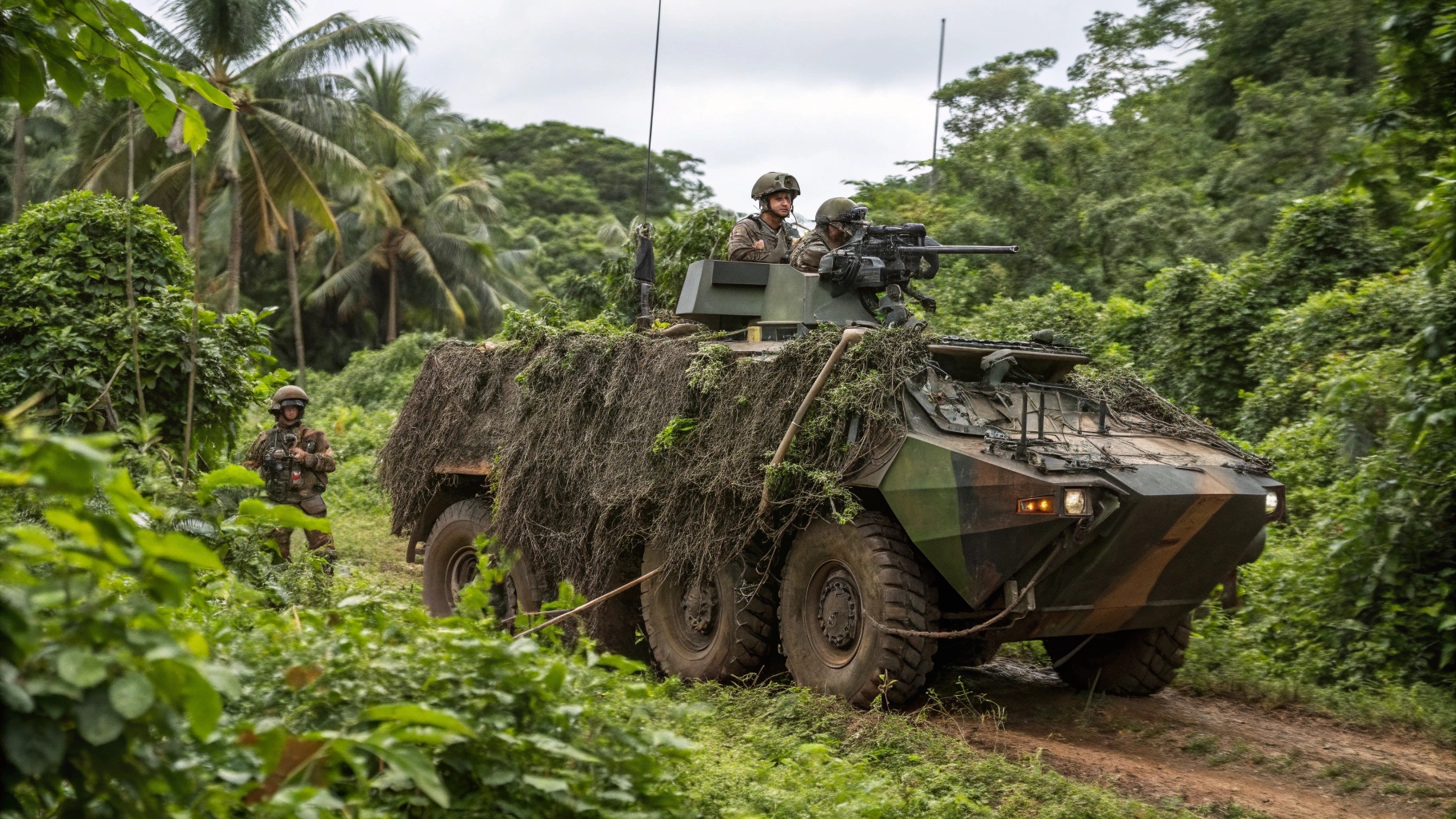
South Korea has officially revealed the prototype of its next-generation KAAV II amphibious assault vehicle after more than ten years of development work.
Built by Hanwha Aerospace, the KAAV II has been designed to improve operational mobility and stability during amphibious missions, allowing troops to move more efficiently between naval and ground combat operations.
The vehicle is capable of traveling through water at speeds of up to 20 km/h (12.4 mph), though details regarding its top speed on land have not yet been released. It also incorporates a larger internal troop compartment and enhanced armor protection to improve survivability against evolving battlefield threats.
The KAAV II programme began in 2015 as part of South Korea’s effort to replace the aging KAAV-7A1 fleet, a platform derived from a design dating back to the 1970s. Despite more than 170 vehicles remaining operational, the older fleet has become increasingly outdated compared to modern armored warfare systems.
Greater Offensive Capability
One of the key upgrades on the KAAV II is its 40mm automatic cannon, giving the vehicle expanded capability against drones, lightly armored targets, and fortified enemy positions.
The weapon uses cased telescoped ammunition technology, where the projectile is fully enclosed within the cartridge, increasing ammunition storage efficiency and reducing space requirements inside the vehicle.
The cannon reportedly offers an effective engagement range of up to 4 kilometers and improved armor penetration over traditional medium-caliber weapons.
Capable of firing up to 200 rounds per minute, the system provides the flexibility to engage infantry, armored vehicles, helicopters, and unmanned aerial threats without changing weapon systems.
According to reports, the KAAV II is powered by an 850-horsepower engine during land operations, while maritime propulsion can increase to approximately 2,700 horsepower for amphibious maneuvering.
The platform also integrates upgraded sensors and command-and-control systems designed to improve situational awareness and coordination during operations in heavily contested environments.