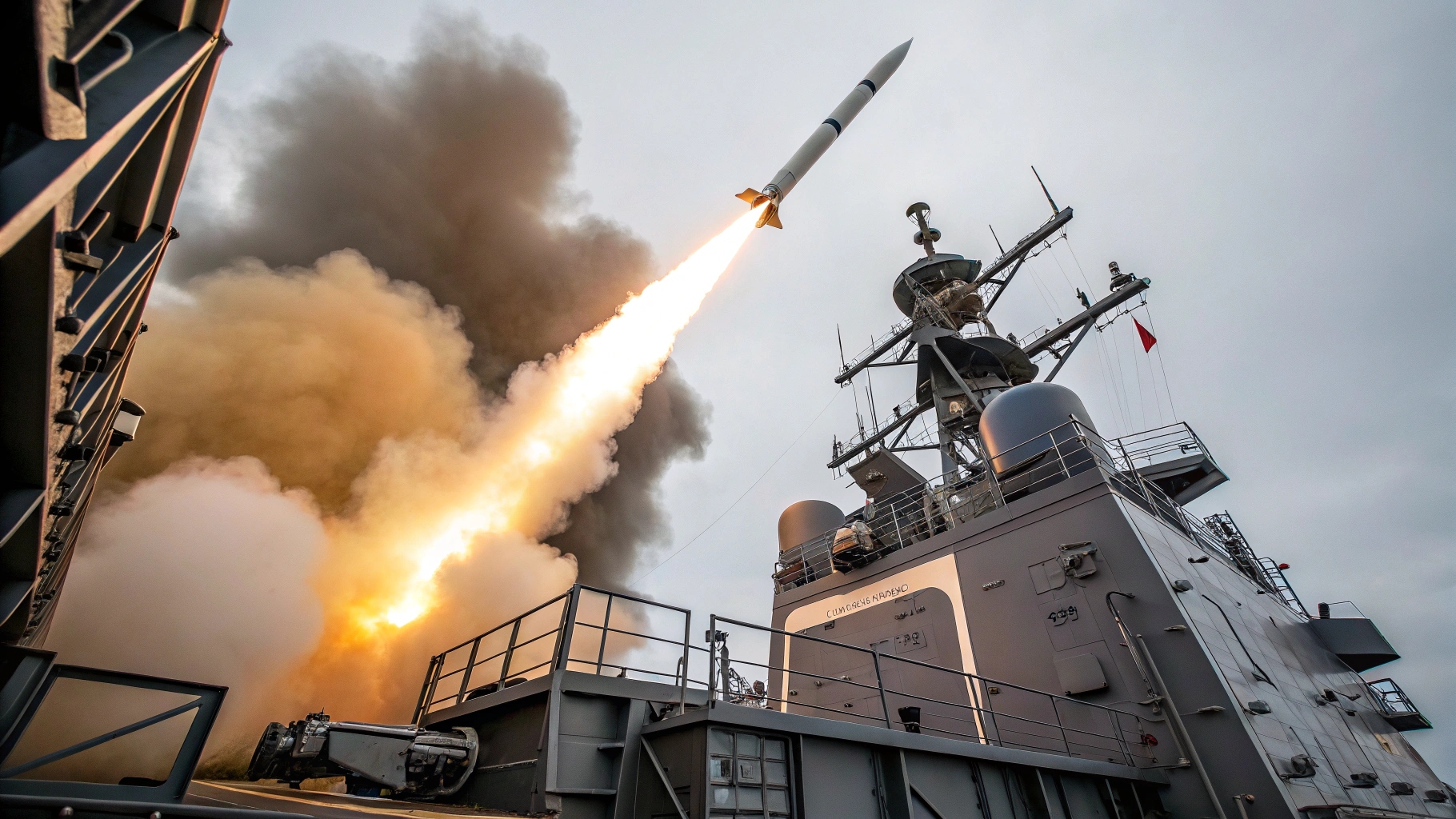

Lockheed Martin has unveiled the PAC-3 Edge, a next-generation interceptor designed to enhance the Patriot air and missile defence system’s ability to counter hypersonic weapons and other advanced aerial threats.
The interceptor is being developed under the US Army’s Future Interceptor programme, which aims to provide a more capable successor to the existing Patriot Advanced Capability-3 Missile Segment Enhancement (PAC-3 MSE).
Designed to engage threats at greater distances and higher altitudes than current Patriot interceptors, the PAC-3 Edge incorporates several technological improvements intended to strengthen interception capabilities against increasingly sophisticated missile systems.
Key upgrades include a newly developed seeker, enhanced flight-control systems and a multi-pulse solid rocket motor supplied by Northrop Grumman. These technologies are intended to improve target detection, tracking, flight precision and interception performance against fast-moving and highly manoeuvrable aerial threats.
Advanced Capabilities for Hypersonic Missile Defence
Hypersonic weapons pose a significant challenge to modern air and missile defence networks. Travelling at speeds exceeding Mach 5, these weapons can manoeuvre during flight, complicating detection, tracking and interception by conventional defensive systems.
The PAC-3 Edge is intended to address these challenges through a combination of improved sensing capabilities, enhanced manoeuvrability and a propulsion system capable of delivering thrust at multiple stages of flight.
Its advanced seeker is expected to improve the interceptor’s ability to identify and track challenging targets, while the upgraded flight-control architecture is designed to support more precise manoeuvres during engagement. The multi-pulse rocket motor is intended to provide additional flexibility in managing propulsion throughout the interception sequence.
Together, these enhancements aim to expand engagement opportunities against advanced ballistic and manoeuvring missile threats. However, the interceptor’s actual performance against hypersonic weapons will need to be established through development trials and operational testing.
According to Lockheed Martin, the PAC-3 Edge builds on the established PAC-3 MSE architecture, drawing on existing design experience while introducing substantially upgraded technologies.
Company officials have indicated that the new interceptor will offer greater manoeuvrability, power and velocity than current Patriot interceptors, potentially extending the defensive reach of the US Army’s layered air and missile defence network.
Development Timeline and Cost Considerations
Lockheed Martin expects the PAC-3 Edge to cost approximately the same as the existing PAC-3 MSE, despite its planned capability enhancements.
The company intends to begin flight testing in 2027, with deployment targeted for 2031, subject to successful development, testing and programme progress.
The development reflects the US military’s broader effort to modernise its air and missile defence capabilities as potential adversaries advance their ballistic, cruise and hypersonic missile programmes.
US Expands PAC-3 Interceptor Production
The PAC-3 Edge initiative comes as Washington seeks to increase interceptor availability amid rising international demand and concerns over the proliferation of advanced missile technologies.
Separately, the US Army awarded Lockheed Martin a contract valued at up to approximately $58.6 billion to expand production of existing PAC-3 interceptors.
As part of the production expansion, the company is working to increase annual manufacturing capacity from approximately 600 interceptors to around 2,000. The initiative is intended to replenish US military inventories while supporting allied countries that operate Patriot-based air defence systems.
Expanding production of the current PAC-3 family and developing the PAC-3 Edge address complementary priorities: meeting immediate interceptor requirements and preparing for more demanding future threats.
Strengthening Future Air and Missile Defence
The PAC-3 Edge represents an effort to combine the operational experience of the existing Patriot interceptor family with next-generation sensing, propulsion and flight-control technologies.
If development and testing proceed as planned, the interceptor could provide the US Army with an enhanced capability to address increasingly complex aerial threats, including highly manoeuvrable missiles.
The programme also highlights the growing importance of advanced interceptors in modern integrated air and missile defence networks. As hypersonic and other sophisticated missile systems continue to evolve, the PAC-3 Edge will be one of the programmes to watch as the United States seeks to maintain the effectiveness of its defensive capabilities.