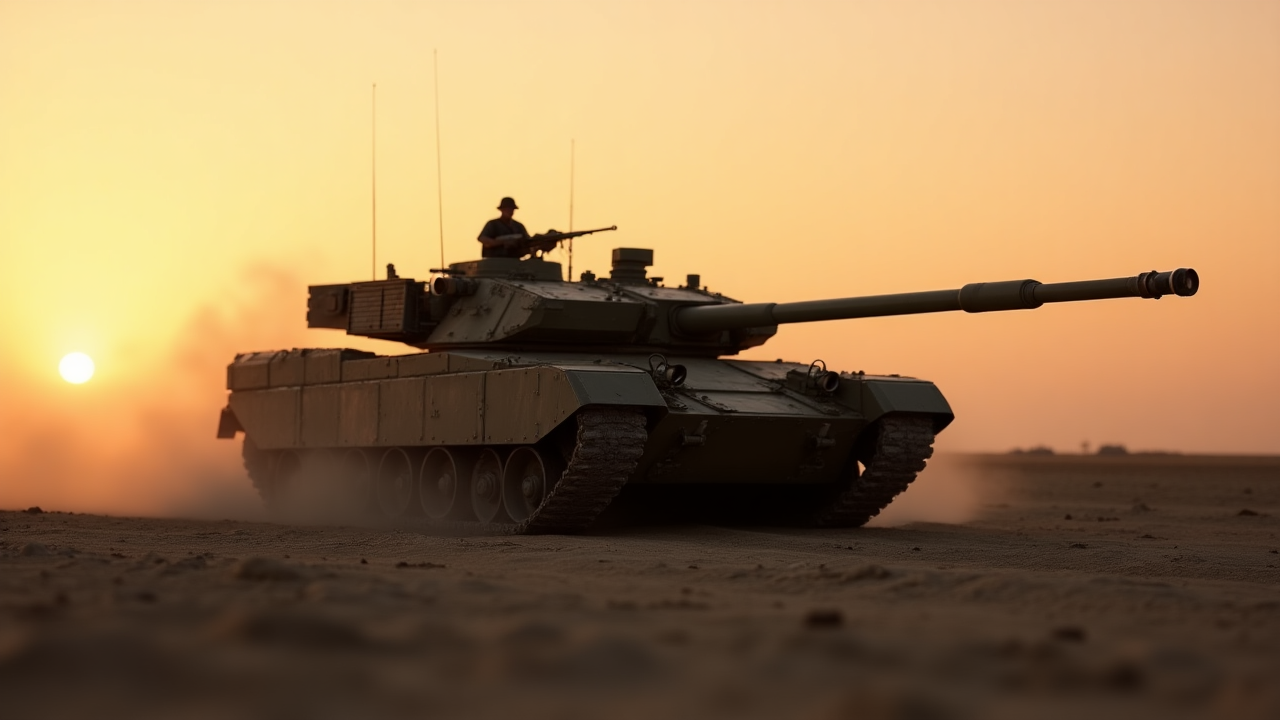
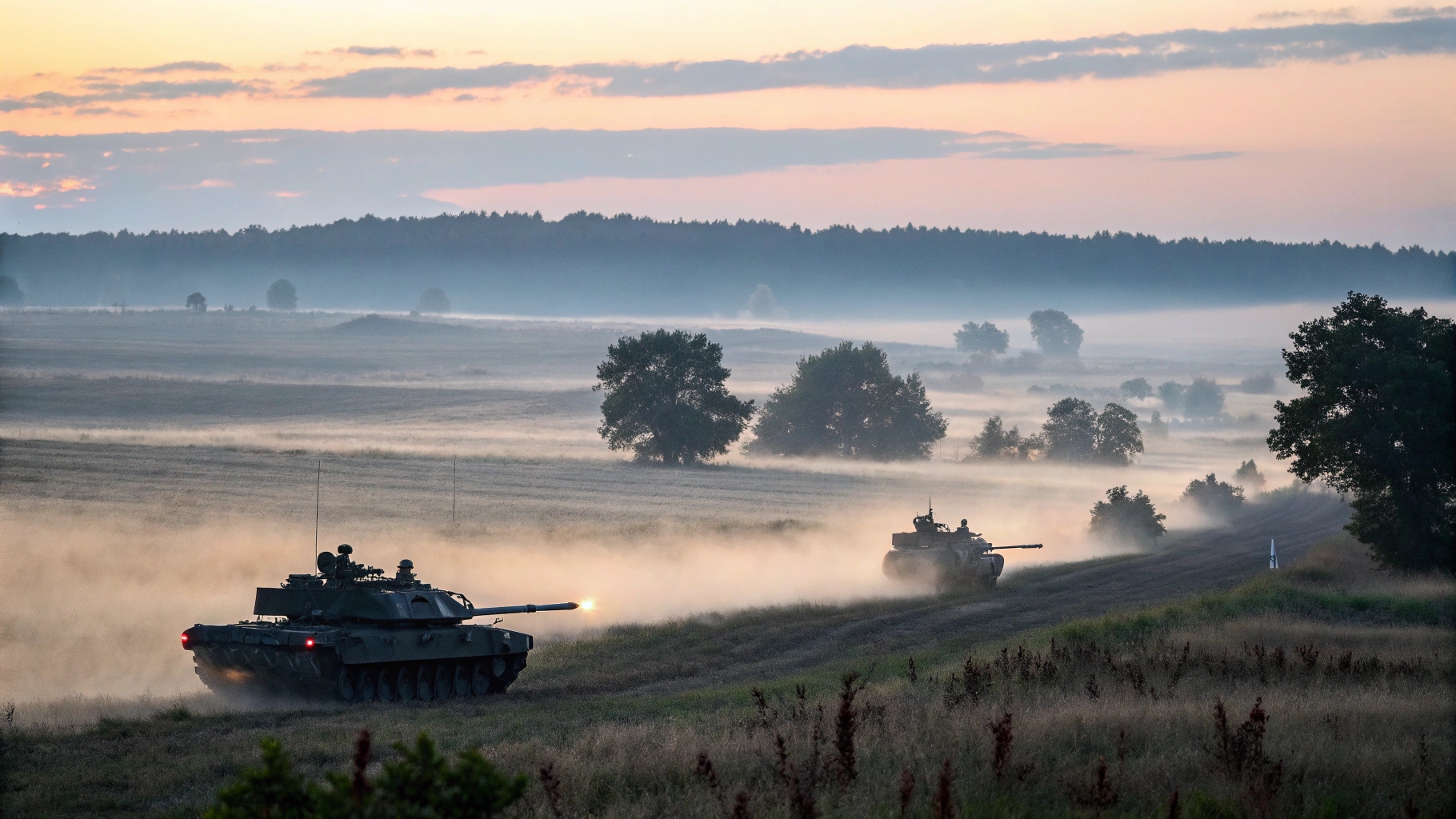
Fast, lethal, and highly adaptable, the Leopard tank has been regarded as one of the world’s most capable armored fighting vehicles for decades. From its Cold War origins to today’s digitally networked variants equipped with advanced armor and fire-control systems, the tank combines mobility, firepower, and protection, making it a trusted benchmark in modern armored warfare. This guide explores why the Leopard family continues to rank among the most respected main battle tanks worldwide.
History and Design Philosophy
The Leopard series was conceived during the Cold War to meet the demands of high-intensity armored warfare in Europe. Developed by West Germany in the early 1960s, the program aimed to field a modern armored platform capable of countering potential Soviet armored formations across Central Europe. The design emphasized a balanced mix of battlefield mobility, survivability, and combat capability.
The first production model, the Leopard 1, entered service in 1965 and prioritized speed and firepower rather than heavy armor. Its successor, the Leopard 2, introduced in 1979, significantly enhanced survivability while preserving the mobility that defined the series. The Leopard concept relied on the belief that agility and precise long-range gunnery could compensate for vulnerabilities to anti-tank weapons.
Understanding the Leopard Tank Series
The Leopard family represents Germany’s flagship line of main battle tanks, developed by Krauss-Maffei Wegmann, now part of KNDS. The series is widely recognized for integrating maneuverability, protection, and striking power within a single platform.
The Leopard 1 featured a 105mm L7 rifled gun and a reliable diesel powerplant, enabling excellent maneuverability across European terrain. Widely exported, it helped shape modern tank design and influenced armored warfare doctrines around the world.
The Leopard 2 marked a major technological leap, incorporating composite armor, a powerful 120mm smoothbore cannon, and advanced fire-control systems. Continuous upgrades—from the 2A4 through the 2A7 variants—have strengthened protection against both kinetic and chemical threats, improved sensors, and integrated networked battlefield capabilities. These improvements have allowed the Leopard 2 to remain a highly capable and upgradeable platform for modern military forces.
Global Service and Combat History
The Leopard tank has achieved widespread international adoption, serving in numerous countries including Canada, Norway, Sweden, Czech Republic, Brazil, Hungary, and Ukraine. Its broad export success reflects a strong global reputation for reliability and performance.
Although the Leopard has seen less direct combat than platforms such as the M1 Abrams, it has been widely deployed in peacekeeping missions, stabilization operations, and military exercises around the world. Ongoing upgrades have ensured that the platform remains relevant against modern threats such as anti-tank guided missiles and improvised explosive devices.
Over decades of development—from the speed-focused Leopard 1 to the highly survivable and network-enabled Leopard 2 variants—the tank has proven adaptable to evolving battlefield conditions. Its proven reliability, powerful armament, and long-term upgrade potential ensure that the Leopard series will continue to play a major role in modern armored warfare.