
The Defence Research and Development Organisation (DRDO) is moving forward with the development of an advanced 300 kW Directed Energy Weapon (DEW), highlighting India’s growing focus on next-generation combat technologies. The high-power laser system, designed for engagements at ranges of up to 20 kilometres, represents a major advancement in India’s pursuit of precision-based, speed-of-light air defence capabilities.
The project is being led by DRDO’s Centre for High Energy Systems and Sciences (CHESS), which specializes in directed energy research. The laser weapon is intended to counter emerging aerial threats such as drones, loitering munitions, missiles, and potentially fast-moving airborne targets through the use of concentrated energy beams instead of traditional kinetic interceptors.
At the core of the system is a continuous-output 300 kW laser source supported by advanced beam-generation and energy-management technologies. The design incorporates high-gain supersonic nozzle systems, centrifugal bubble-based mechanisms, and sealed exhaust control technologies to maintain stable and efficient beam performance during sustained operation.
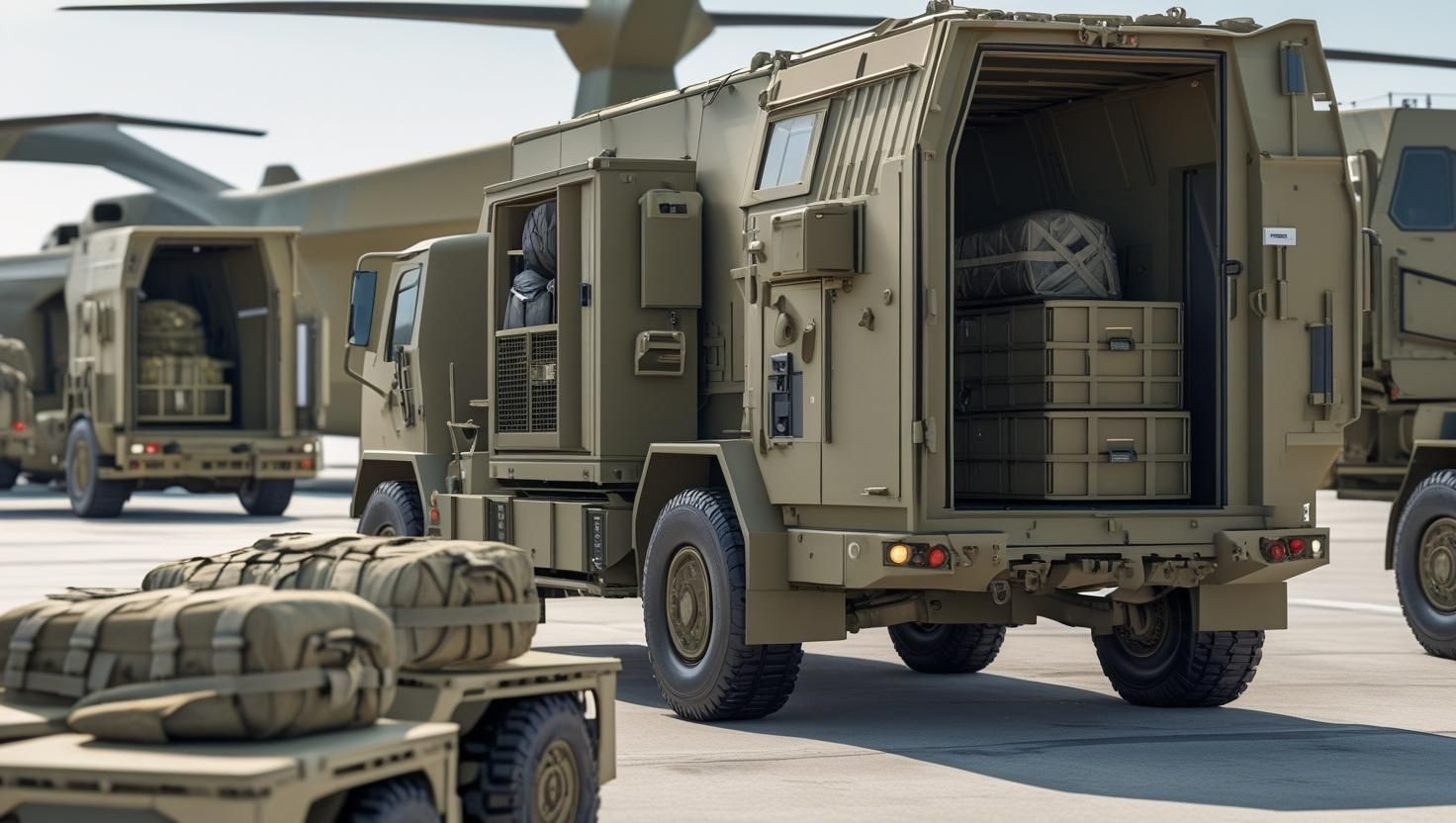
The weapon is equipped with a sophisticated beam control system that enables precise targeting at long distances. With a beam quality factor of less than 2 (M² < 2), the laser maintains strong coherence and focus, allowing it to concentrate energy effectively onto small aerial targets even at extended ranges. The system’s 60 cm output aperture further enhances beam projection and engagement capability. A key advantage of the DEW architecture is its scalability. The 300 kW unit is designed as a modular baseline that can potentially be combined with additional modules through beam-combining techniques to achieve significantly higher power outputs, including future megawatt-class laser systems. This flexible design allows adaptation for different operational scenarios, from tactical air defence to strategic counter-missile applications. The system is expected to be deployed in a mobile ground-based configuration, mounted across multiple vehicles along with dedicated command and control units. Its mobility will allow rapid deployment across various operational environments while providing effective layered defence against emerging threats such as drone swarms and low-cost aerial systems. Compared to conventional missile-based air defence systems, directed energy weapons offer several operational benefits, including near-instant target engagement, large ammunition capacity limited primarily by power availability, and substantially lower cost per engagement. These features make DEWs particularly suitable for countering mass drone attacks and other asymmetric threats. However, the development of high-energy laser systems continues to face challenges related to power supply, thermal regulation, and atmospheric distortion, which can reduce effectiveness over long distances. DRDO is actively working on advanced cooling solutions and adaptive beam-control technologies to improve reliability and maintain consistent performance under operational conditions.