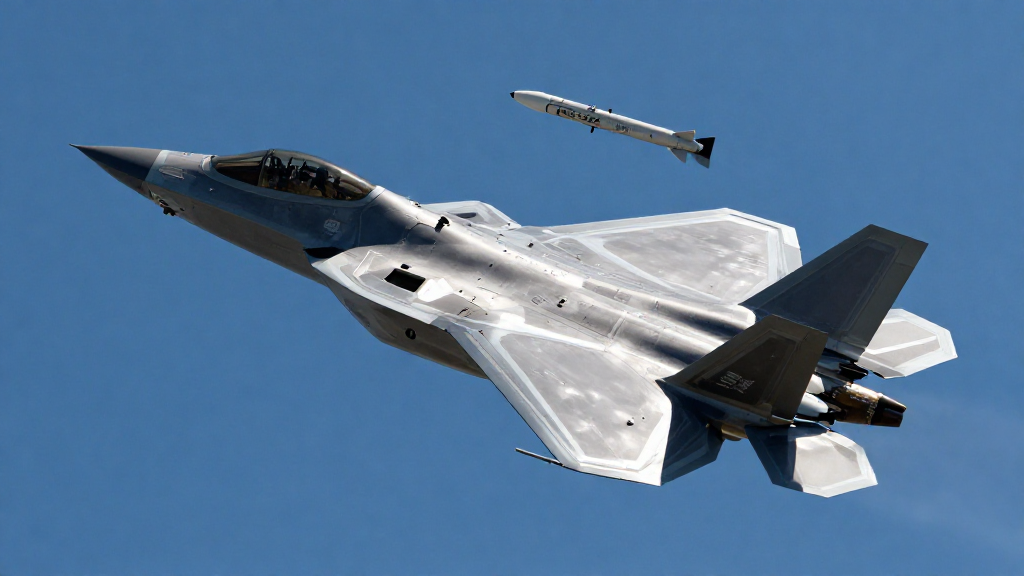

The Gas Turbine Research Establishment (GTRE) has taken a major step in advancing India’s aero-engine self-reliance by issuing an Expression of Interest (EoI) for the indigenous development and production of a “Ready-to-Fit” High Energy Ignition (HEI) Unit along with high-tension ignition cables. The program targets a crucial subsystem in modern jet engines that plays a central role in engine performance, reliability, and survivability during combat operations.
The HEI system is regarded as a critical technology for future Indian fighter engines, particularly the 110–120 kN class engine being developed for the AMCA and Tejas Mk2 programs. In high-performance combat aircraft, ignition reliability is essential for maintaining operational readiness and ensuring safe engine operation under extreme conditions.
The technology is based on capacitor-discharge ignition, where an exciter transforms low-voltage aircraft power into high-voltage pulses capable of generating sparks between 4 and 12 Joules. These high-energy sparks are vital for initiating combustion in situations where traditional ignition systems may prove inadequate.
A major operational requirement for the HEI system is high-altitude engine relight capability. Fighter aircraft flying at high altitudes encounter low-pressure, low-temperature environments that make combustion difficult to sustain or restart after a flameout. The HEI system must provide rapid and precisely controlled ignition to immediately relight the engine, ensuring aircraft safety and mission continuity.
The system also plays a key role in cold-weather engine starts, especially for Indian Air Force deployments in regions such as Ladakh. Extreme cold conditions can significantly hinder engine startup performance, and the HEI system is designed to ensure reliable ignition and stable operation even in sub-zero environments.
According to GTRE’s EoI, the project scope includes development of the exciter box, igniter plugs, and high-tension ignition cables. The selected Indian industry partner will be responsible for end-to-end engineering, testing, qualification, and certification of flight-ready hardware, making the project a highly specialized aerospace undertaking.
The tender process, identified under IDs 53953242 and 53948514, has been extended until April 21, 2026, to provide industry participants additional preparation time. The indigenous HEI system is intended for integration into the Advanced High Thrust Combat Engine (AHTCE), which is expected to power future Indian combat aircraft platforms.
The initiative also supports the Development-cum-Production Partner (DcPP) framework, under which Indian companies are integrated into the development process from the outset. This strategy is aimed at improving supply-chain security, reducing dependence on foreign vendors, and enabling scalable production capabilities.
The importance of indigenous development became particularly evident after Operation Sindoor in May 2025 highlighted vulnerabilities in India’s defence logistics network. Disruptions involving imported components such as ignition cables and connectors demonstrated how dependence on overseas suppliers could impact fleet availability.
By developing a fully indigenous HEI system, India will also secure complete intellectual property ownership, unlike imported systems associated with GE F404 and F414-powered platforms. This will allow unrestricted future upgrades, modifications, and cross-platform integration without licensing limitations.
The long-term significance of the project extends beyond the AMCA and Tejas Mk2 programs. The HEI architecture developed under this initiative is expected to become a standardized ignition solution for several upcoming platforms, including the Ghatak UCAV powered by the Dry Kaveri engine and future propulsion systems planned for AMCA Mk2 aircraft.