
Poland has finalized a 16-billion Norwegian krone ($1.65-billion) contract with a Kongsberg Defence & Aerospace–PGZ consortium for the supply of next-generation counter-UAS systems, strengthening the country’s defences against the growing threat posed by unmanned aerial platforms.
The contract, awarded as part of the San air defence initiative, covers the delivery of 18 counter-drone batteries based on Kongsberg’s Protector remote-controlled weapon stations. These batteries will combine multiple kinetic and non-kinetic effectors, including guns, missiles, and interceptor drones, to deliver a multi-layered air defence capability.
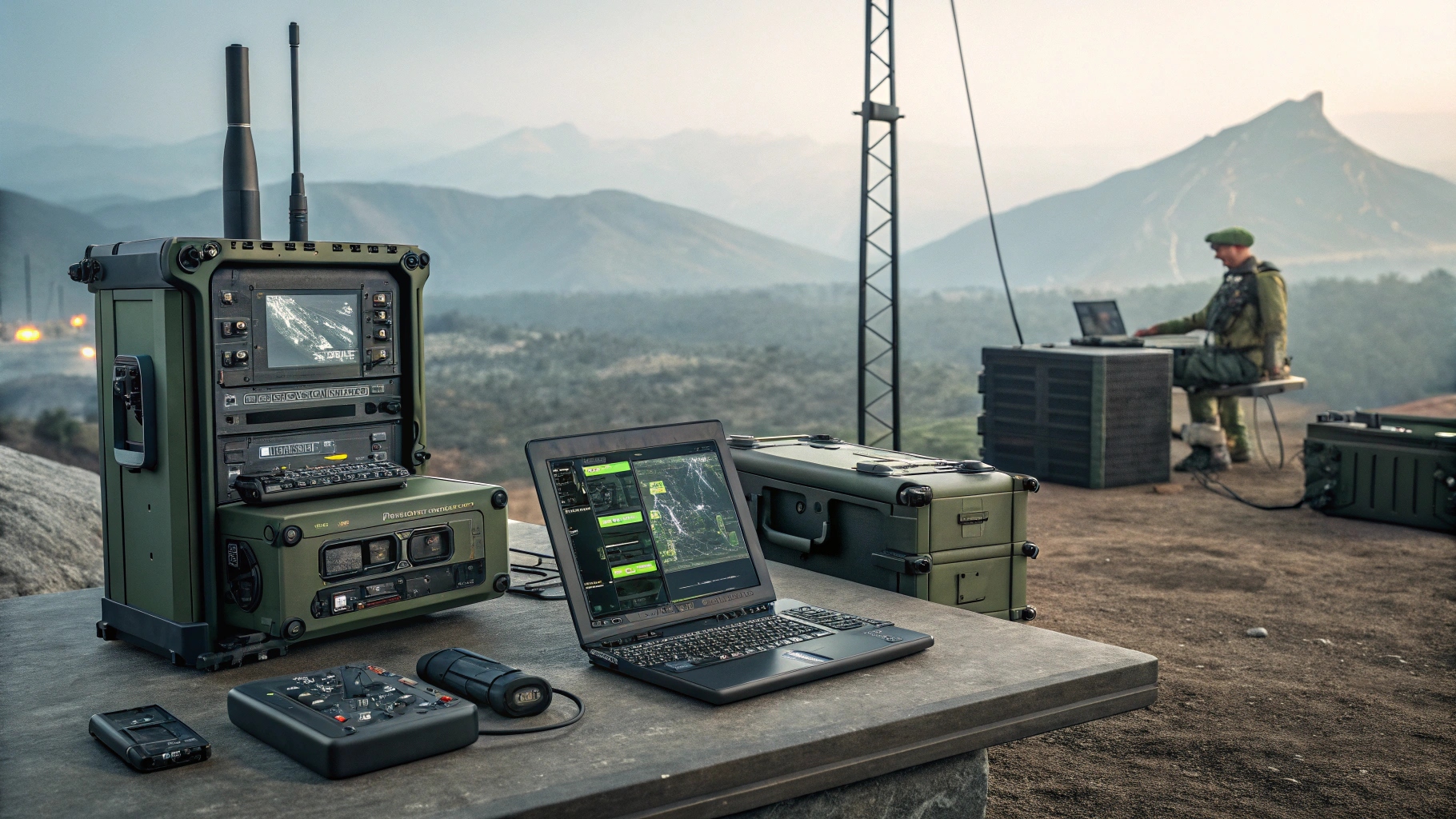
Advanced Protection Systems, a PGZ subcontractor, will be responsible for the command-and-control element of the programme, integrating sensors and effectors while ensuring compatibility with Poland’s existing and future air defence infrastructure.
The Protector family is designed for broad operational flexibility, supporting deployment on both land and maritime platforms in fixed or mobile roles. The product line includes the MCT30 Medium Caliber Turret, as well as the RS4 and RS6 remote weapon stations, each optimized for different operational requirements.
Its modular design allows operators to remotely control a wide range of weapon payloads, from small-calibre arms to medium-calibre automatic cannons. Supported systems include 5.56mm machine guns, 30×113mm cannons, and heavier calibres such as 30×173mm and 40×180mm.
Equipped with advanced sensor and imaging systems, Protector weapon stations provide adaptable day- and night-time operational capability. The RS4 offers full 360-degree rotation at up to 90 degrees per second, with an elevation range from –20 to +60 degrees and elevation speeds of up to 70 degrees per second, enabling fast reaction and precise engagement.
The San programme aims to deliver a comprehensive air defence shield capable of countering both unmanned aerial systems and conventional crewed aircraft. The architecture will comprise more than a dozen batteries featuring a mix of artillery effectors, rockets, interceptor drones, and electronic or non-kinetic countermeasures.
Each battery will be equipped with a comprehensive sensor suite, combining active radar, passive RF detection, and electro-optical sensors to ensure reliable detection, classification, and tracking of airborne threats.